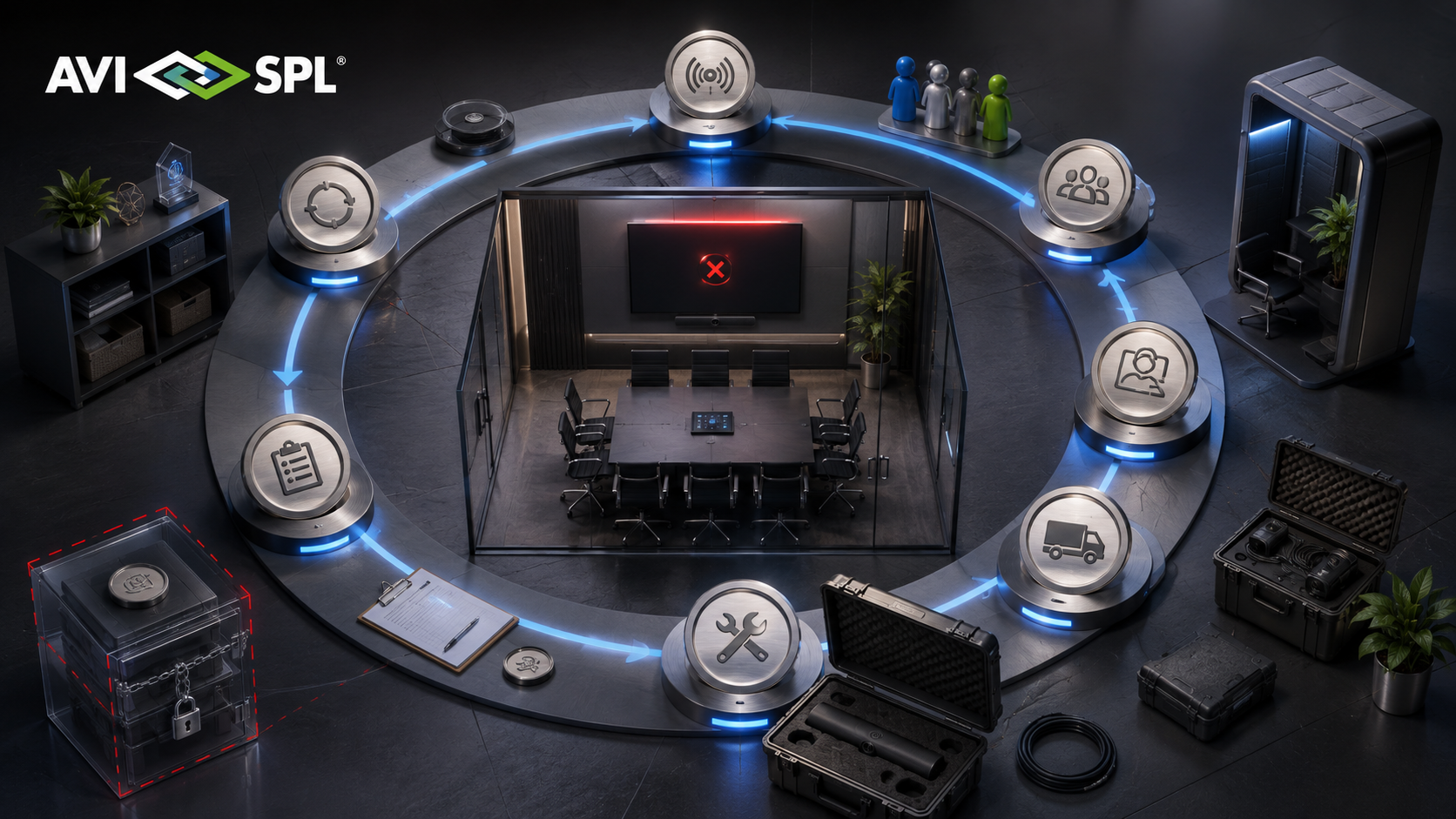
Video endpoints are a crucial part of business infrastructure. As per research by Metrigy, video meetings were the no. 1 UC investment in 2021, while traditional telephony saw among the lowest spending. Companies need robust hardware infrastructure to support productive video experiences, allowing users to connect from a location of their choice, gain from a host of powerful features, and enjoy interoperability with different UC platforms and devices. All of this hinges on choosing the right video endpoints.
Video endpoints refer to hardware equipment that helps in conducting video-based communication sessions, be in meetings, webinars, conferences, or video-based customer support. As per Grand View Research, endpoints occupied a sizable 47% of the enterprise video conferencing market in 2021, owing to increased adoption. Companies that are able to assess their requirements carefully and choose the best video endpoints for their needs can benefit from this multi-billion-dollar market.
Choosing the Right Video Endpoints: Your Options
There are a variety of options available to business users when selecting video endpoints:
- Desktop conferencing endpoints - Participating in a video conference requires a camera, a screen, and a microphone and speaker mix for audio. From fully integrated standalone devices to audio endpoints and cameras, as well as broadcast boxes, desktop conferencing hardware options exist in any combination of these three.
- Laptop as a video endpoint - Instead of desktop conferencing endpoints, one can simply use the camera and audio features of a laptop or desktop PC. Here, quality remains a challenge since there is no assurance that built-in hardware will deliver the same high-definition and clarity as specialized equipment.
- Meeting room equipment - Room-based conferencing technology is often constructed around a huge screen and equipped with specialized microphones to capture sounds from across the room without any interruptions. As a room kit, the complete video endpoint configuration may be provided.
- Transcoding equipment - To enable video endpoints to communicate with each other, businesses can choose equipment that operates on the same signals, preferably from the same vendor. In the absence of transcoding equipment, multipoint control units (MCUs) or hardware bridges are necessary.
- Screens and whiteboards - Smart displays and interactive whiteboards make it possible to improve collaboration in the conference space. Meeting attendees may annotate or add comments to a document or file across locations – by simply connecting to their own devices. The alternative is to utilize the interactive whiteboard as a platform for brainstorming.
- Peripherals - In addition to the basic video endpoints, businesses may require accessories such as an additional camera, microphone, or speaker. Numerous high-quality cameras also include auto-framing functions that zoom in on the speaker, therefore eliminating camera management challenges. In a big room, the microphone must be able to pick up each individual's speech while avoiding background noise.
How to Choose the Right Video Endpoint for Your Company?
Here are the top considerations to remember:
1. What is the cost of the video endpoint?
Before deciding which tech to invest in, determine if it will be profitable. There is no reason to incur substantial costs if there is no business demand or requirement to support it. Is the cost acceptable? Does the cost meet the budget? Will it be helpful for as long as such technology can carry value? It may be more viable to rent video endpoints “as a service” instead of making an outright purchase.
2. Is the video endpoint system secure?
Due to the ever-present danger of hacking and system infiltration, videoconferencing security is vital. Ask the endpoint vendor pertinent questions and verify that they have the appropriate encryption protocols and other security measures to safeguard your and your customers' data.
3. What is the degree of accessibility?
Employees using the technology must find a use for it and adoption should be seamless. It does not make sense to invest in video endpoints that not everyone can use or one that necessitates IT support. Also, ensure one must ensure compatibility between the videoconferencing equipment and the devices used by consumers and other stakeholders.
4. How much upkeep effort does it require?