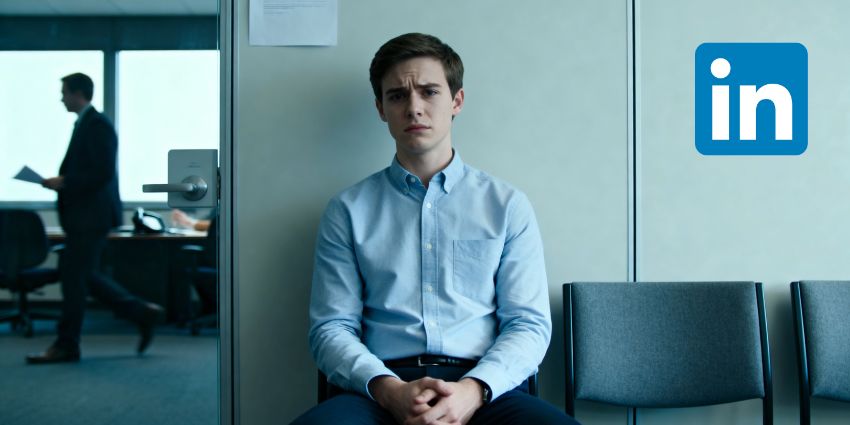
Job hugging, the trend of employees staying in roles despite feeling disengaged, has surged over the past year, new research from LinkedIn has found. Although focused on the UK labor market, the trend has been percolating across multiple countries as the wider economic outlook becomes more uncertain.
Janine Chamberlin, Head of LinkedIn UK, described the situation plainly: professionals are exploring the market, sometimes progressing through interviews, but ultimately choosing to stay put. "It’s changing the game for recruiters," she said.
The data backs that up: 57% of recruiters say they are now spending more time persuading candidates to move than they did previously.
The research signals a structural shift rather than a temporary dip. With hesitation embedded on both sides of the hiring table, UK hiring fell 10% in January 2026 compared to the same month a year earlier and remains below pre-pandemic levels.
The Numbers Behind the Standoff
With 71% of recruiters reporting a rise in the behavior, the detail in LinkedIn’s findings paints a difficult picture for anyone trying to move talent in the current climate.
Although economic conditions are playing a role in job hugging, they are not the only factor. A quarter of respondents cited economic uncertainty as the reason for staying in their current role, but 19% said the search process itself has become too exhausting to pursue. Seventy-three percent said finding a new job had become harder over the past year.
On the recruiter side, 61% have increased proactive outreach to passive candidates, those not actively applying, in an attempt to keep pipelines moving. Many are turning to technology to manage the workload: 57% say AI is now essential to how they source candidates, 89% plan to increase their use of it, and 60% say it has helped them identify candidates with skills they would not otherwise have found.
The challenge, however, is not simply one of sourcing. Candidates are entering conversations, progressing through processes, and then pulling back. The funnel is leaking at the decision stage, not the awareness stage, and that requires a different fix.
Chamberlin noted that the response from talent teams increasingly focuses on trust-building rather than vacancy-filling:
"It’s no longer just about filling a vacancy; it’s about building trust and showing long-term opportunity and security."
What HR Teams Can Do in a Reluctant Market
The implication for HCM leaders is that recruitment strategy needs to adapt to the psychology of the moment. The most telling figure in LinkedIn’s research is that 81% of recruiters say candidates now require greater assurance about job security before making a move.