It’s easy to overlook the importance of hardware in today’s hybrid workplace – we’re all becoming increasingly reliant on cloud-based software and applications that we can access from any device. But some endpoints still have a major impact on team success: like communication displays.
Communication displays are all of the displays throughout your office or workplace that help keep information and people aligned. They’re the tools that allow business leaders to rapidly share announcements and data with both in-office and remote teams, recognize top achievers, and manage a range of desk, meeting, and office spaces simultaneously.
They’re also the tools that team members use to track down information, book spaces for focus or collaborative work, navigate buildings and connect with distributed colleagues for video conferences, brainstorming sessions, and more.
Even simple digital signage solutions have the potential to increase employee engagement by 350%, enhance workplace motivation, and accelerate decision-making. Here’s everything you need to know about the growing value of communication displays in today’s workplace.
The Types of Communication Displays in Modern Workplaces
In the flexible workplace, technology has become critical to how teams interact, share updates, and accomplish goals together. Employees need more than just the right software to stay connected and aligned; they need hardware that bridges the gaps between colleagues.
Communication displays come in a range of forms – some help teams and business leaders navigate office spaces, while others enhance hybrid meetings. However, all of these solutions have a shared benefit: they synchronize, synergize, and energize teams. Some of the most common types of communication displays you’ll need to consider include:
Collaboration Displays
Similar to the term “communication displays”, the phrase “collaboration display” can refer to a wide range of different solutions with varying features.
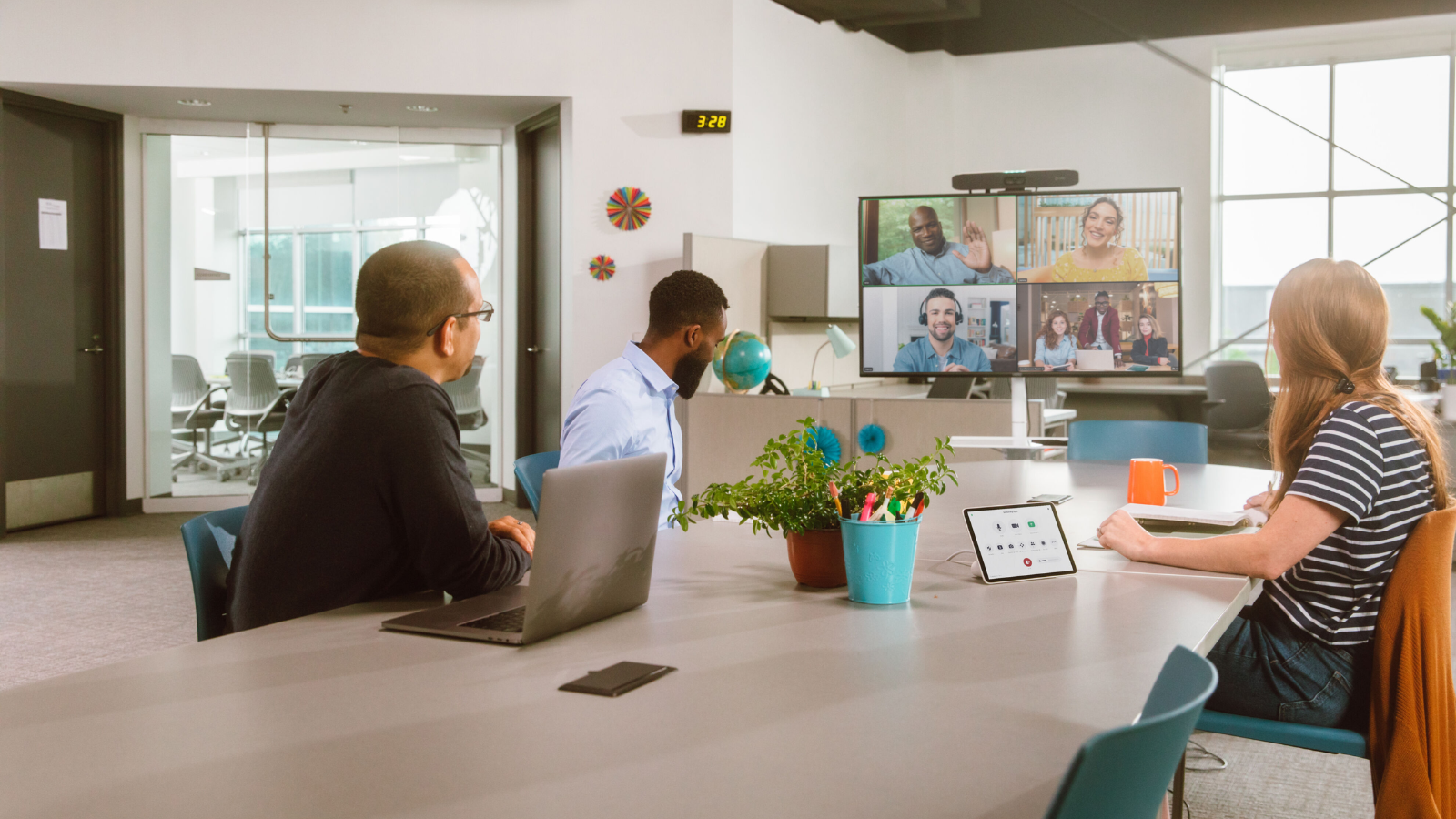
Typically, these screens live in meeting rooms, integrating with unified communication and collaboration systems like Microsoft Teams, Zoom Rooms, or Webex Teams. They’re used for video conferencing, digital whiteboarding, and group brainstorming sessions.
Some solutions, specifically designed for hybrid teams, come with built-in cameras, microphones and speakers – like the Cisco Board Pro G2. All-in-one collaboration displays can even feature interactive elements (touchscreens for digital whiteboarding), and AI-powered assistants. Other solutions are intended for more specific types of meetings.
For instance, the DTEN Onboard doesn’t have a built-in camera and microphone, but it does make it easy for teams to brainstorm with a touchscreen interface that integrates with tools like Microsoft Teams. Most solutions will also include tools for screen sharing, note-taking, and presentations.
Plus, many cutting-edge collaboration displays also support “Bring Your Own Meeting” capabilities, so users can easily connect them to their favorite conferencing apps.
Digital Signage
Digital signage might seem like one of the more straightforward categories to explore when you’re investing in communication displays. However, today’s solutions are becoming increasingly intuitive. These screens are like dynamic bulletin boards, giving business leaders and supervisors an easy way to share information, alerts, announcements, and data with all kinds of teams.
Many solutions integrate with workplace management applications, allowing companies to create digital maps that employees and visitors can use to navigate an office space, or check the availability of meeting rooms and focus spaces.
Today’s digital signage solutions aren’t just for navigation; they’re valuable communication tools that make it easy for organizations to share information business-wide with just a couple of clicks. These tools can even enhance company culture by announcing employee achievements, sharing motivational quotes, or displaying leaderboards of top performers.
Some solutions also include touch capabilities that can be connected to real-time polls or surveys, allowing employees to share feedback in seconds.
Personal Displays
Personal displays are commonly overlooked by organizations investing in communication-focused hardware. However, these tools are becoming increasingly crucial in the age of flexible work. Many of today’s team members rely on their own smartphones, tablets, and laptops to tune into meetings inside and outside of the office, or access critical information.
While not everyone thinks of personal gadgets as “Communication Displays,” in essence, each of these devices is a mobile signboard for important company updates, collaborative apps, and direct messaging channels.
Additionally, it’s worth remembering that personal devices are becoming more relevant in modern meeting rooms as companies embrace the era of “BYOD” connectivity. Personal displays give team members a convenient way to join meetings and stay connected wherever they are.
How Communication Displays Improve Employee Experiences
Investing in cutting-edge communication displays, from digital signage to interactive meeting room screens, doesn’t just make your office space look more modern. These tools can radically enhance how employees feel about their workplace.
From knowledge sharing and team bonding to heightened productivity and efficient resource management, the effects can be seen in everything from day-to-day operations to bottom-line results.
Improving Knowledge Sharing
Sharing knowledge and insights throughout an organization is crucial to keeping team members aligned, motivated, and focused. However, many companies still struggle to keep everyone in the loop. Simply hoping everyone in your team receives and reads your latest email or Slack message isn’t always the best way to disseminate information – particularly in emergency situations.
Communication displays can help in various ways. Digital signage solutions are ideal for broadcasting company news, policy changes, and performance metrics in a space where everyone can see them.
How displays improve knowledge sharing – making it easy to disseminate important information and updates among teams regardless of location. How they improve decision-making by offering access to valuable data and inspire innovation and creativity. Screens can also share room and desk availability insights or issue emergency alerts when risks arise. Plus, during meetings, collaboration displays give everyone the opportunity to share and work with the same information.
Strengthening Productivity and Efficiency
The link between strong communication and higher productivity is clear. In fact, one study found that 64% of business leaders and 55% of knowledge workers believe effective communication is a key factor in boosting team output. Communication displays help to minimize knowledge gaps between teams – enhancing productivity and efficiency.