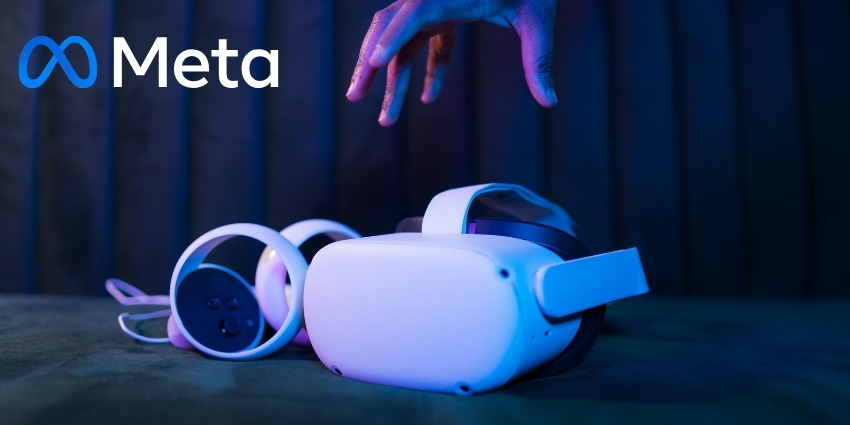

Originally announced in Spring 2024, the Meta for Education program is gradually beginning to roll out to teachers, schools, and training institutions across the US and UK. This initiative is empowering schools to leverage XR headsets, like the Meta Quest 3 and Quest 3S, alongside cutting-edge software specifically created for the educational landscape.
Similar to the “Meta Quest for Business” model, introduced last year, the educational solutions are intended to help administrators, trainers, and teachers access specific XR experiences and applications that should revolutionize the future of learning.
Not only will they be able to experiment with a huge range of inspirational and academic applications via the Meta Horizon platform, but teachers will gain access to device management tools and resources that help them to boost device security, and keep on top of firmware updates.
Here’s everything you need to know about the Meta for Education program.
What is Meta for Education?
Meta for Education is a beta program that combines cutting-edge software, artificial intelligence, and extended reality to enhance learning in the modern world. This program is gradually being introduced to participating institutions in Meta’s community, such as the San Diego State University, and the Imperial College in London.
The program combines access to Meta’s latest headsets, such as the Meta Quest 3, and the Quest 3S, with custom-built applications and software. Although the program is still in its “beta” stages, Meta has already released various professional development and training courses designed in partnership with technology leaders.
For instance, there’s the Meta Immersive Learning Academy, where creators can develop their skills in Meta Spark. Users can tap into Unity software to build new apps and tools. Plus, Meta is currently in the process of building out a unique app library, with more than 50 resources tuned to different teaching use cases.
As mentioned above, perhaps the most significant feature of the program is the inclusion of specialized device management software for educational leaders. Just like businesses can onboard users onto headsets, track device health, and apply software or firmware updates to headsets remotely with Meta for Business, educational groups will get a similar experience.
The inclusion of endpoint device management software should make it easier for teachers and training providers to deliver unique XR experiences to users at scale, manage hardware, and keep security risks to a minimum.
Why Did Meta Create this Program?
According to Nick Clegg, Meta’s President of Global Affairs, education and training providers represent a significant market for the XR landscape. Already, countless organizations are using XR software (such as metaverse as a service) solutions, and headsets to immerse students in unique educational experiences linked to art, science, development and more.
Meta believes that learning in the future should be social and experiential. According to a blog post shared by Meta, extended reality and the metaverse opens the door to more interactive, collaborative learning, which could be the key to making education more powerful and accessible in the future.
Additionally, Meta says that by enabling easy access to XR experiences, they’ll be giving educators a more convenient way to sidestep the barriers of traditional classrooms. Instead of telling students what happened during a particular historical event, teachers will be able to allow learners to “walk through” a moment in history and experience it for themselves. They’ll be able to take classes on field trips to the world’s best museums without huge travel expenses or unnecessary risks.
Of course, Meta isn’t the only company that’s aware of the value that XR has to offer education. As the company noted in its blog post, innovators like the Morehouse college have already discovered that learners in VR achieved better test scores than their counterparts. Additionally, a survey by the XR association found these technologies could improve engagement in classrooms.
However, in the past, many early adopters struggled to introduce immersion into classrooms at scale. Leaders had to invest separately in hardware, applications, custom-built software, and endpoint management solutions and manage them all independently.
With Meta for Education, the XR leader hopes to give academic institutions a more streamlined, convenient way to experiment with immersive technologies.
How Are Educators Using Meta for Education?
In November 2024, Meta announced it had already started “Beta testing.” Its Meta for Education program has over a dozen universities and colleges across the US and UK. These groups are currently trialing VR and XR prototypes and programs within their own classrooms, giving Meta the feedback it needs to enhance the program before it becomes “generally” available.
These universities aren’t just taking advantage of Meta’s software and headsets. They’re also benefiting from Meta’s ongoing partnership with VictoryXR, which has allowed the company to develop some of the first digital twin “metaversaties” in Europe.
With Meta headsets, teachers and students at the University of Basque Country in Spain, the University of Hannover in Germany, and Leeds University can jump into unique metaverse environments from anywhere. They can explore virtual versions of campuses and classrooms remotely, socialize with other students, and complete tasks in a digital world.
According to Meta, these digital twin universities represent a significant leap forward in educational technology, offering new ways to make classrooms and experiences more accessible to the masses. While the University of Leeds is currently using the technology in Performing Arts and Theatre-led classes, the University of Basque is hosting classes in Physiotherapy and Anatomy.
Together with their European partners, Meta also gives educators access to new XR training resources. For instance, France Immersive Learning worked with Meta to create an English language guidebook covering tips and best practices for deploying XR systems in education settings.
The Challenges of XR in Education
Meta and many other XR innovators believe immersive experiences are crucial to the future of education. Countless studies have shown that virtual, mixed, and augmented reality can help to make educational experiences more enjoyable, memorable, and effective. What’s more, these technologies ensure that remote learners can dive fully into unique classroom experiences from anywhere.
The Morehouse College even found that attendance rates increased by 10% on average, and grades improved by 11% when they began using XR solutions.
However, there are still challenges to overcome. First of all, for instance, Meta hasn’t released a lot of information about how much its program is going to cost. Meta Quest for Business, for instance, costs an average of $14.99 per month, per device. This could mean that the Meta for Education program isn’t an option for every institution, depending on their budget.
Secondly, Meta won’t be making this program available to every school. The company has said the initiative will only be available to schools serving students over 13 years old. Additionally, it will only be accessible in regions where Meta’s Quest for Business solution is already supported. This could change in the years ahead, of course.
Meta’s Approach to Building the Future of Education
Meta’s team knows already that many educational institutions are familiar with the benefits of extended reality. However, Nick Clegg noted that adoption of these technologies has been somewhat slow for numerous reasons. It’s not just that some XR devices and software have been prohibitively expensive and complex to access in the past.
According to Clegg, extended reality can’t really become a commonplace component in future classrooms until teachers feel they have complete visibility into and control over the experience. After all, educational leaders need to ensure that their students are safe, and protected when they’re in the metaverse. This is particularly true as the risks associated with cyberbullying and misinformation in the digital world continue to grow.
By creating an all-in-one solution that gives educators more control over the apps and experiences users get in XR, Meta hopes to “normalize” and simplify the use of immersive technologies in the educational landscape. They believe that their technology will help to make XR a ubiquitous part of the learning experience, just like laptops or computers.
It remains to be seen whether Meta’s educational experiment will pay off and address all of the concerns that schools, training institutions, and universities have with the metaverse. However, Meta’s efforts do have the potential to make a huge impact on the future of learning. Soon, the “metaverse” could drive more immersive academic experiences for everyone.