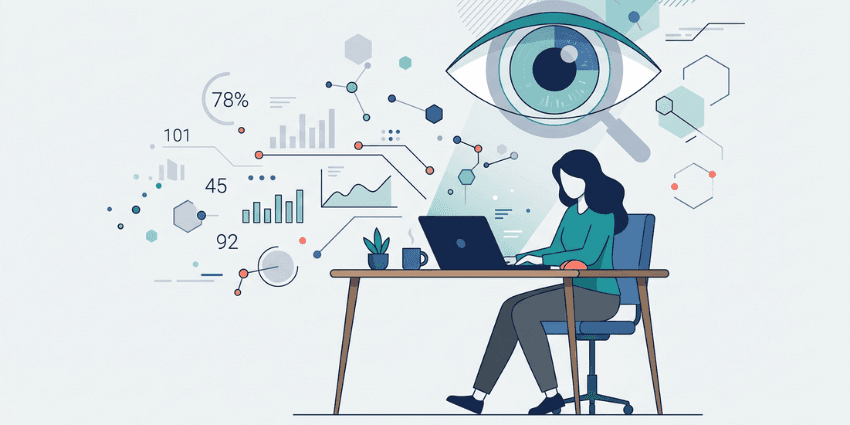
The global employee monitoring software market is projected to grow from $648.8 million in 2025 to $1.78 billion by 2034: a 12.1% compound annual growth rate. More than 550 products now offer monitoring capabilities, from time tracking and app usage logs to AI-powered analysis of internal communications.
When Microsoft coined "productivity paranoia" in its 2022 Work Trend Index, finding that over 85% of employers doubted worker productivity despite rising output, it gave a name to something organisations were already acting on.
But as the market matures, so does the evidence that the instinct driving adoption is often working against itself.
The Productivity Gap Is Real — But So Is the Cost of Getting This Wrong
There is a legitimate problem underpinning the monitoring boom. ActivTrak's July 2025 Workforce Utilisation Benchmarks report, drawing on data from 304,083 employees across 5,619 organisations, found that 58% of workers fall below their productivity targets. The average gap is 54 minutes per employee per day: organisations are paying full salary for 87% of expected output. At scale, that amounts to $2.86 billion in annual productivity losses, reaching up to $3.9 million per large enterprise each year.
Those numbers explain why the market is growing. They do not justify how most organisations respond to them.
The American Psychological Association has found that nearly 50% of monitored employees report elevated stress levels, versus 28% of unmonitored colleagues. Insightful's November 2025 analysis found that while 73% of companies monitor staff activity, fewer than half have a formal policy for how that data is used — creating legal exposure and eroding the trust monitoring programmes depend on to function: "If it cannot be clearly explained to the team, it is surveillance, not strategy."
Writing in HR Legal & Compliance Excellence in December 2025, leadership psychologist Dr. Laurie Cure, CEO of Innovative Connections, said: "Surveillance sends a very loud message: 'We don't trust you.' And people respond accordingly: 'I don't trust you either.' This erosion of trust is one of the strongest predictors of a toxic culture."
AI Is Shifting What Monitoring Actually Measures
The fastest-growing segment of the employee monitoring software market is not productivity tracking, it is insider threat detection and prevention. The commercial case for monitoring is increasingly about protecting the organisation from harm, not catching people slacking.
AI is accelerating this shift. The more sophisticated platforms are moving from dashboards toward predictive analytics: flagging burnout risk, disengagement patterns, and capacity gaps before they escalate into attrition or performance failures.