Download the Collaboration Market Guide
Huge, cluttered meeting rooms filled with people taking notes and staff members falling asleep are a thing of the past. Businesses are quickly transforming into a new, more agile way of work, where conferencing sessions are fast and focused, enabled by one-click video conferences, team collaboration tools, and artificial intelligence.
In an age where only a percentage of your workforce is likely to be in the office at any given time, it’s no wonder that our past meetings are being replaced. According to Gartner, the flexible huddle room is the meeting room design of the future, perfect for plug-and-play accessibility in an ever-changing world.
However, there’s more to the modern meeting room than the desire for smaller and more flexible spaces. The rise of new technology is everywhere, appearing in forms like cognitive collaboration, artificial intelligence, and even the potential of VR.
Here’s your introduction to the new age of the meeting room.
The Future of Meeting Rooms: New Delivery Models
When properly planned, improvements to your meeting room strategy can lead to huge returns on investment in everything from management costs to workplace productivity. Improving your meeting experiences leads to faster and more efficient problem solving while reducing the demands placed on technical support whenever team members need to get together.
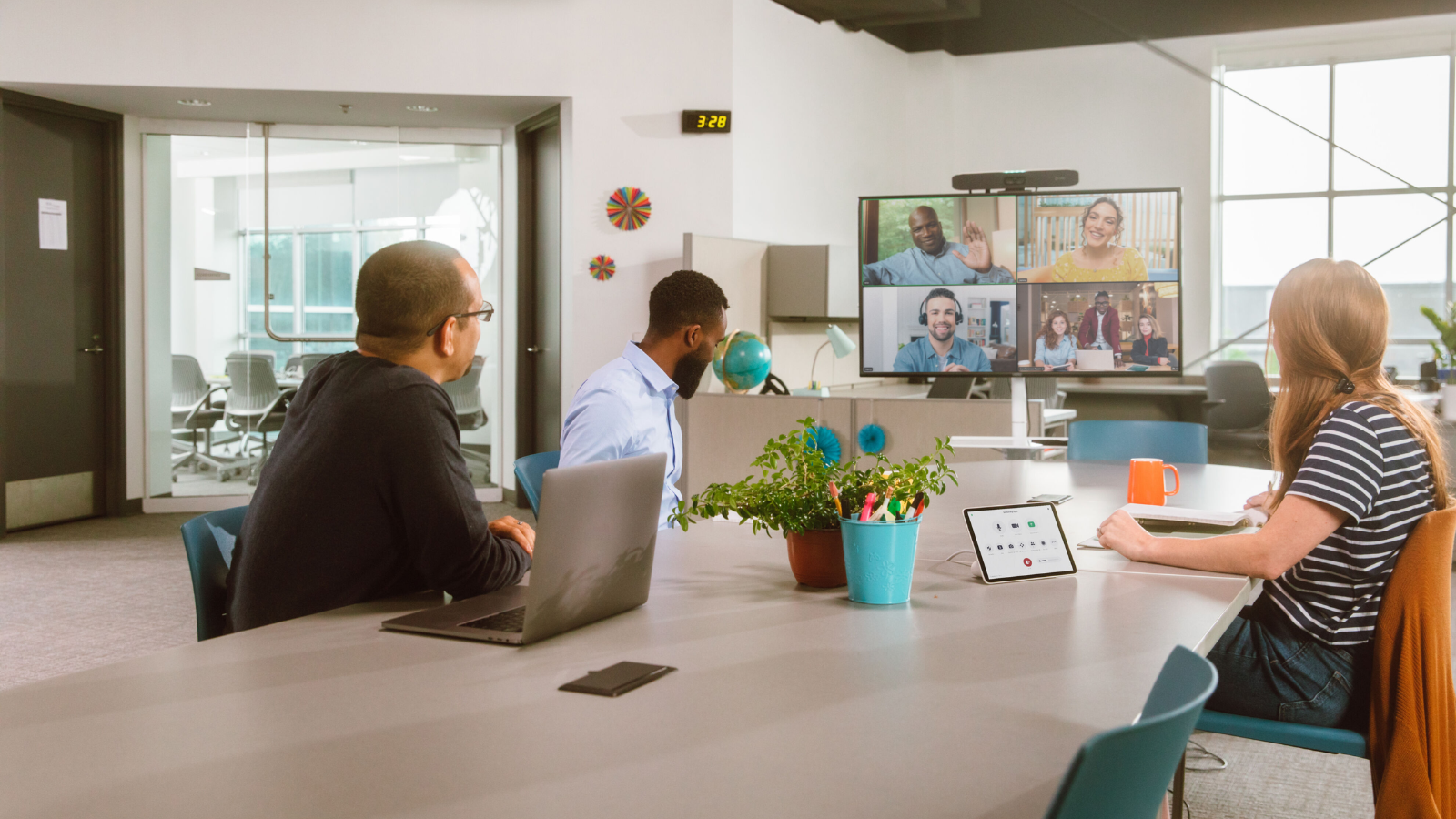
As the way that teams work together continue to change, we see an increase in the number of flexible meeting rooms. Custom-built boardrooms that are expensive and digital to manage are being replaced with quick and convenient room kits that come with everything you need to launch a session in seconds. Kits from leaders like Cisco, Microsoft, and Zoom come packaged with conferencing phones, video, and team collaboration tool access, all available at the touch of a button.
To minimize costs for smaller businesses, some vendors are even beginning to explore the benefits of rooms as a service. This new go-to-market strategy allows resellers to hire meeting room equipment out to businesses. These rooms can include everything from virtual assistants, to digital whiteboards, all available at a fraction of the cost of a full purchase.
What’s more, vendors are working hard on reducing the complexity of the modern collaboration environment. Rather than complicated systems, businesses can now tap into tools that give them everything they need from file sharing to video conferencing with just a couple of clicks. Plug-and-play devices have USB connections so employees can launch video calls with any computer or laptop in minutes. The impromptu meeting room supports this always-on culture that we’re living in, where user experience is critical.
AI in Meetings, Mixed Reality and Cognitive Collaboration
It’s not just agility and simplicity that’s changing the modern meeting room, either. Along with trends like rooms-as-a-service and wireless connectivity, we also see evolutions in the hardware and software that businesses can use for their meetings.
Through cloud-based video conferencing, businesses can connect their collaboration software to state-of-the-art integrated displays with 360-degree cameras from their favourite vendors. These cameras are even being increasingly updated with new tools to make collaboration easier, like background blur technology to reduce distraction. There are even document cameras that capture written information clearly, and wide-lens cameras ideal for capturing all meeting attendees in smaller rooms.
As we head into the new decade, the evolutions in meeting room hardware could eventually begin to venture into even more futuristic environments. For instance, we’re seeing many leading companies in the technology landscape experimenting with VR/AR headsets. These headsets, combined with 5G technology, could create a future where team members can work together in a virtual environment.