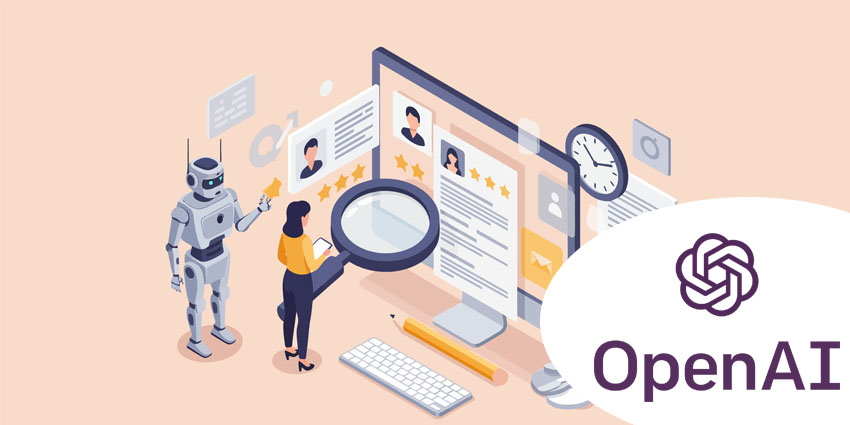
The recruitment and HR technology landscape faces potential disruption. OpenAI has announced plans to launch an AI-powered jobs platform in mid-2026, positioning itself as a challenger in the $200 billion global recruitment industry currently dominated by LinkedIn and legacy applicant tracking systems.
For HR leaders and talent acquisition professionals, particularly those struggling to hire AI-capable talent, this development suggests strategic questions about workforce capability building, recruitment economics, and the emerging market for verified AI skills. However, beneath the announcement's ambitious scope are critical considerations about implementation feasibility and organizational readiness that necessitate careful examination.
The Core Proposition of OpenAI's Jobs Platform: Matching Meets Certification
The OpenAI Jobs Platform promises to move beyond keyword-based matching toward what OpenAI describes as using AI to "help find the perfect matches between what companies need and what workers can offer." What OpenAI says distinguishes this from previous recruitment innovations is integration with OpenAI Academy, the company's learning platform launched last year.
OpenAI plans to offer certifications ranging from foundational AI literacy to advanced capabilities, such as prompt engineering, with pilot certifications expected to be available before the end of the year. The company says it's "committing to certifying 10 million Americans by 2030." This creates a closed-loop ecosystem of candidates who develop skills through OpenAI's training, earn certifications, and then match with employers through the platform.
For talent acquisition teams, this standardization addresses a common bugbear of differentiating between candidates who list "AI experience" on their resumes and those with demonstrable capabilities. OpenAI claims that studies show AI-savvy workers are more valuable, more productive, and command higher salaries than workers without AI skills.
However, key questions remain unanswered. The announcement provides no details on pricing models, integration capabilities with existing HRIS and ATS systems, or data governance frameworks. For HR tech leaders, the absence of information about API availability, security protocols, and compliance considerations makes preliminary assessment challenging.
Strategic Partnerships and Practical Applications
OpenAI has secured partnerships with major enterprises, including Walmart and John Deere, alongside professional services firms such as Boston Consulting Group and Accenture, job platform Indeed, and organizations like the Texas Association of Business and the Bay Area Council. The platform will include dedicated pathways for small businesses and local government offices, demographics traditionally underserved by premium recruitment platforms.
Walmart CEO John Furner stated: "At Walmart, we know the future of retail won't be defined by technology alone—it will be defined by people who know how to use it. By bringing AI training directly to our associates, we're putting the most powerful technology of our time in their hands—giving them the skills to rewrite the playbook and shape the future of retail."
The Texas Association of Business, for example, aims to utilize the platform to connect thousands of Texas employers with talented individuals who can help them modernize their businesses.
Consider a practical scenario. An organization implementing AI-powered workflow automation requires staff who understand both the operational context and the capabilities of AI. Traditional recruitment may surface candidates with one skill set, but rarely both. An AI matching platform with verified competencies could theoretically significantly reduce search-to-hire timelines.
Yet questions persist. How will the platform address legal and compliance considerations related to AI-driven hiring decisions, particularly in terms of mitigating bias and discrimination? These issues are significant for HR leaders responsible for implementing equitable hiring practices.
The LinkedIn Question and Competitive Dynamics
OpenAI positions this as a direct challenge to LinkedIn, a notable development given that LinkedIn was co-founded by Reid Hoffman, one of OpenAI's earliest investors, and is now owned by Microsoft, OpenAI's most prominent financial backer.
LinkedIn has already been working to infuse its platform with AI features for matching job candidates with businesses. With 930 million members and network effects built over two decades, LinkedIn's competitive response is likely to have a significant impact on the viability of the OpenAI platform.
For HR procurement teams, this competitive uncertainty introduces vendor risk. Committing resources to a platform facing well-funded, established competition requires careful evaluation of lock-in risks and alternative options.
Integration Reality: The Unglamorous Details For HR and Recruitment Leaders
Even if OpenAI delivers superior matching algorithms, enterprise adoption depends on the practical integration of these algorithms with existing systems. Most organizations have invested significantly in applicant tracking systems, such as Workday, SuccessFactors, or Greenhouse, which form the backbone of their recruitment operations.
Critical questions for HR tech leaders include integration architecture. Does the platform offer robust APIs enabling bidirectional data flow with existing systems? Next is data governance. How is candidate data stored and processed? What are the GDPR and CCPA implications?