For years, businesses have collected piles of HR data: engagement scores, turnover rates, learning stats. But here’s the truth — data alone doesn’t create change. Decisions do. People analytics only matters when insight leads to action and measurable results.
As AI and automation reshape human capital management (HCM), leading organisations are using predictive workforce metrics to close the gap between analysis and impact.
Making People Analytics Actually Useful
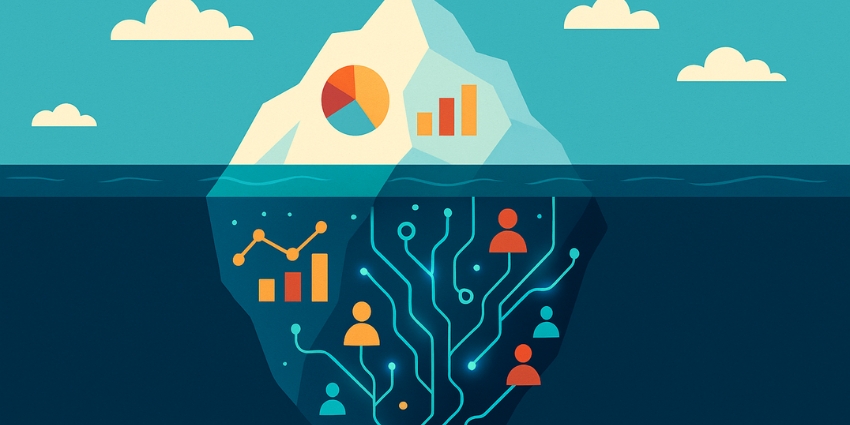
Every company claims to be data-driven. Not every metric helps. Many HR teams track activity instead of outcomes. Vanity metrics — like “training sessions completed” or “applications received” — look good in reports but don’t explain whether performance improved or retention strengthened.
Effective workforce KPI tracking focuses on leading indicators of success:
- Internal mobility rate
- Time-to-productivity
- Engagement linked to performance
- Retention risk trends
When these KPIs sit inside a well-designed HR dashboard, leaders can connect workforce signals to business outcomes — from reduced attrition to stronger team performance.
Platforms such as Workday People Analytics and SAP SuccessFactors People Insights promote this shift by combining visual reporting with machine learning. Instead of static charts, they surface anomalies, forecast attrition, and map emerging talent gaps — helping HR act early rather than react late.
Predictive HR Analytics: Seeing What’s Next
Modern predictive HR analytics doesn’t just explain the past — it anticipates risk and opportunity. AI models scan historical data across hiring, performance, collaboration, and learning to detect patterns that humans might miss.
For example, IBM has publicly discussed using predictive models to identify potential attrition risks. Microsoft has explored workforce analytics to support hybrid productivity and collaboration health. The broader takeaway is this: when insight arrives early, intervention becomes possible.
If dashboards highlight warning signs — such as reduced learning participation, declining engagement, or weaker team interaction — managers can respond immediately. That might mean career conversations, mentoring support, workload adjustments, or leadership coaching.
The value isn’t prediction alone. It’s prevention.
From Metrics to Movement
Analytics only transforms organisations when behaviour changes. The best companies embed workforce insight into daily management decisions.
Imagine a model flags a 20% engagement drop in a specific region. The worst response is to file it away. The right response is to test action: targeted leadership coaching, recognition programs, or team redesign — then track the impact over time.
This closed-loop approach turns predictive metrics into operational change.
Companies such as Unilever and Cisco have spoken publicly about using analytics to better align workforce supply with demand, track collaboration health, and identify performance-driving behaviours — not just skill sets.
The Human Side of Workforce Data
Even the most advanced analytics fail without trust. Employees must believe workforce data is handled responsibly and used to support growth — not surveillance.