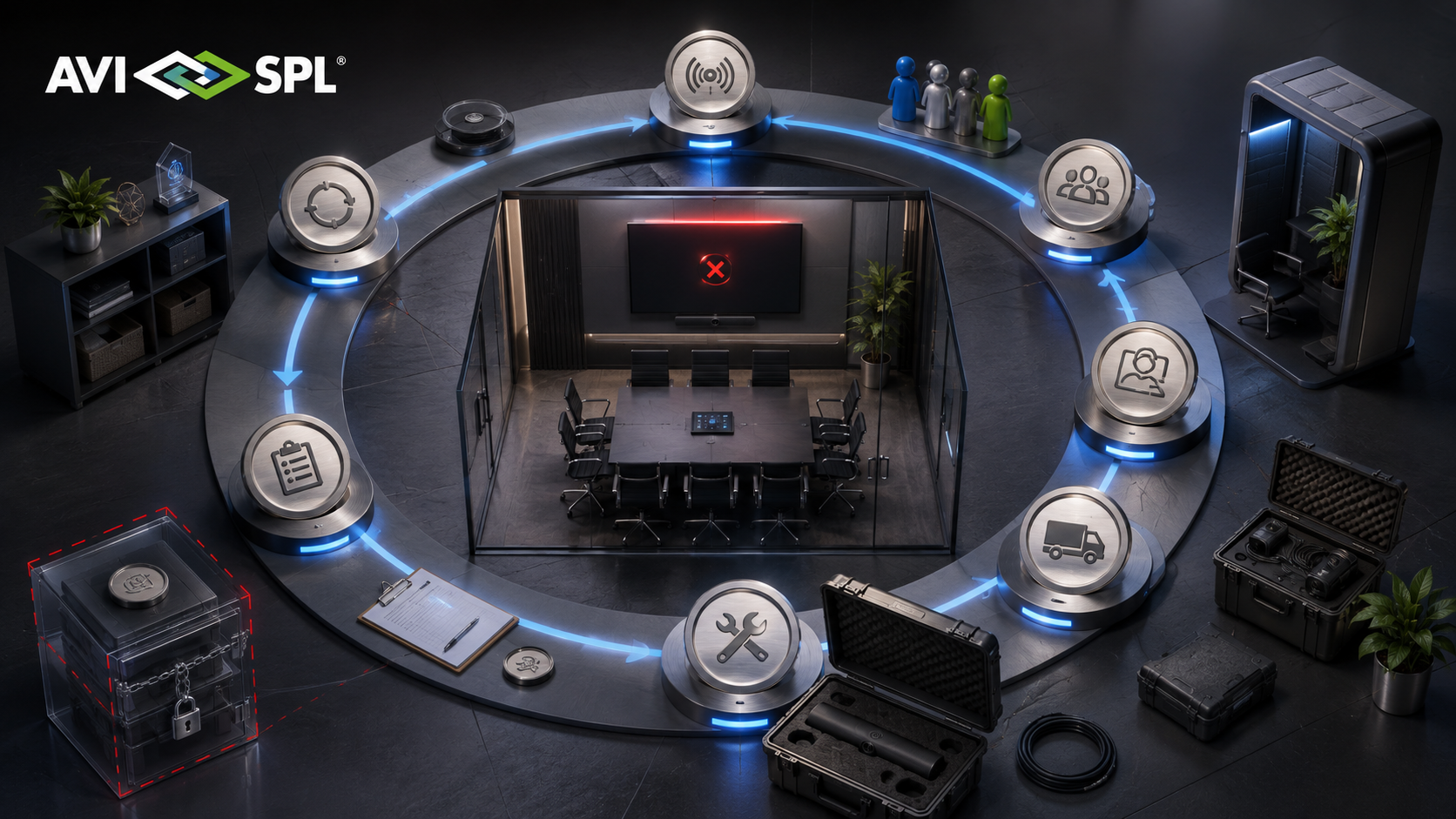
The return-to-office movement is gaining momentum across corporate workplaces. What started as tentative requests for employees to come back a few days a week has evolved into firm mandates, with up to 70 percent of companies now implementing formal RTO policies.
Yet, despite this push back to the office often being framed as an initiative to boost productivity and company culture, a 2025 Gallup poll found that current employee engagement in the US has dropped to a 10-year low.
The reason for this decline isn’t just due to the reintroduction of commutes or their monetary and mental costs for employees. Many are being asked to return to offices that simply can’t accommodate them, which is adding additional stress to their workday. Amazon’s recent experience illustrates the problem perfectly: the tech giant had to pump the brakes on its RTO rollout when it discovered there weren’t enough desks for returning workers. Employees complained that offices and meeting rooms were even lacking basic furniture like chairs.
For John Ringis, Director of Physical Security at New Era Technologies, there is nothing "more frustrating" than that scenario of "going to the office only to find out that you don't have a place to sit.” When employees are already resistant to giving up remote work flexibility, showing up to an office that can’t properly support their workflows becomes the final straw. That’s why companies implementing RTO need to make sure they are prepared. Get it wrong on day one, and employees may never fully commit to returning.
So what can companies do to successfully welcome workers back to the office, and how can they understand their workplace’s readiness for the move?
When Dormant Systems Meet Full Occupancy
Many organizations are discovering that years of remote work have meant their office infrastructure has taken a back seat. Even if the technology is still working, new innovations, particularly in UC-based AI copilots, mean the infrastructure they had is “no longer up to the current standards that it should be,” explains Salik Makda, Director of Network Engineering at New Era Technologies. Those standards now include higher performance throughput, expanded user capacity, and advanced workload handling capabilities.
The problem extends beyond the network infrastructure hosting the virtual meeting to the physical space it is taking place. Meeting room allocation, which was adequate for occasional use when attendance was lower, now faces increased demand, creating booking conflicts. This means that many workers experience a decline in meeting quality as they scramble for places to take calls or, in a worst-case scenario, are left without the tools to properly conduct them, leading to rescheduling and delays.
Network infrastructure that once handled minimal on-site traffic now buckles under the weight of hundreds of simultaneous video calls, file transfers, and cloud application access. Meetings that were rarely missed at home are now subject to delays stemming from space shortages.
When workers come into the office, they’re expecting an equal or better experience than when they’re at home. However, if workers discover that their home office setup outperforms their corporate workplace, the value proposition of returning evaporates.
That’s why companies need to ensure their office is ready for RTO. This should “start with a workplace readiness report,” Ringis explains. Although this readiness report will look slightly different for each company, Ringis recommends starting with the network and evaluating “the condition of the meeting rooms and the meeting space” to avoid these common pitfalls currently plaguing companies.
Test Your Infrastructure, Not Your Employees’ Patience
Once companies recognize the need for a workplace assessment, the question becomes how to actually execute it. Ringis recommends a structured approach: “First of all, have a strategy and a vision of what you want this return-to-office environment to look like, and then send some resources into those individual offices and facilities to truly assess what is there.” This means comparing your current infrastructure against your RTO vision and identifying the gaps.