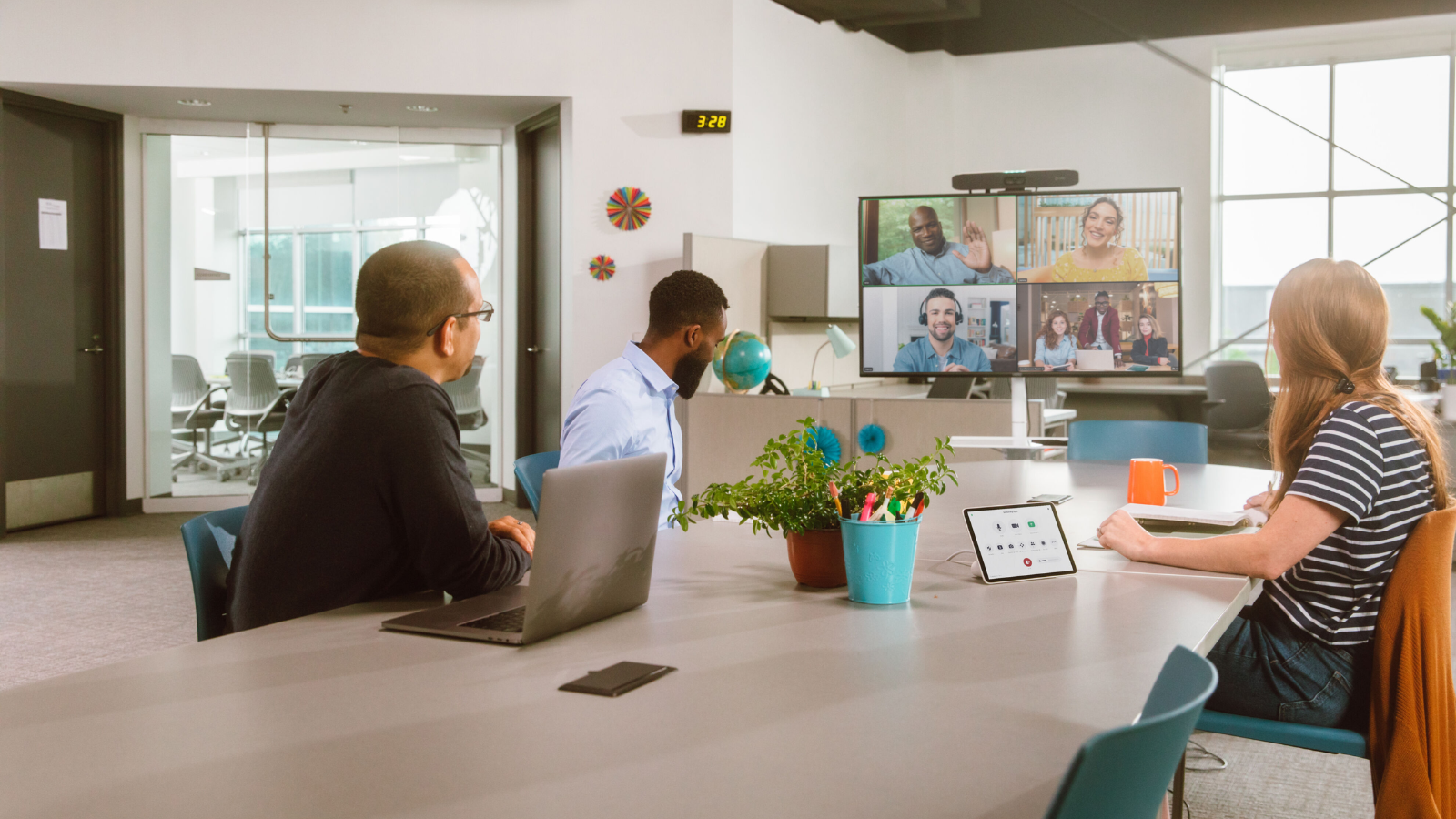
The modern workplace is morphing. Boardrooms, once dedicated to closed-door meetings, are beginning to double as broadcast-quality studios, embodying hosts of town halls, podcasts, livestreamed all-hands and internal talk shows.
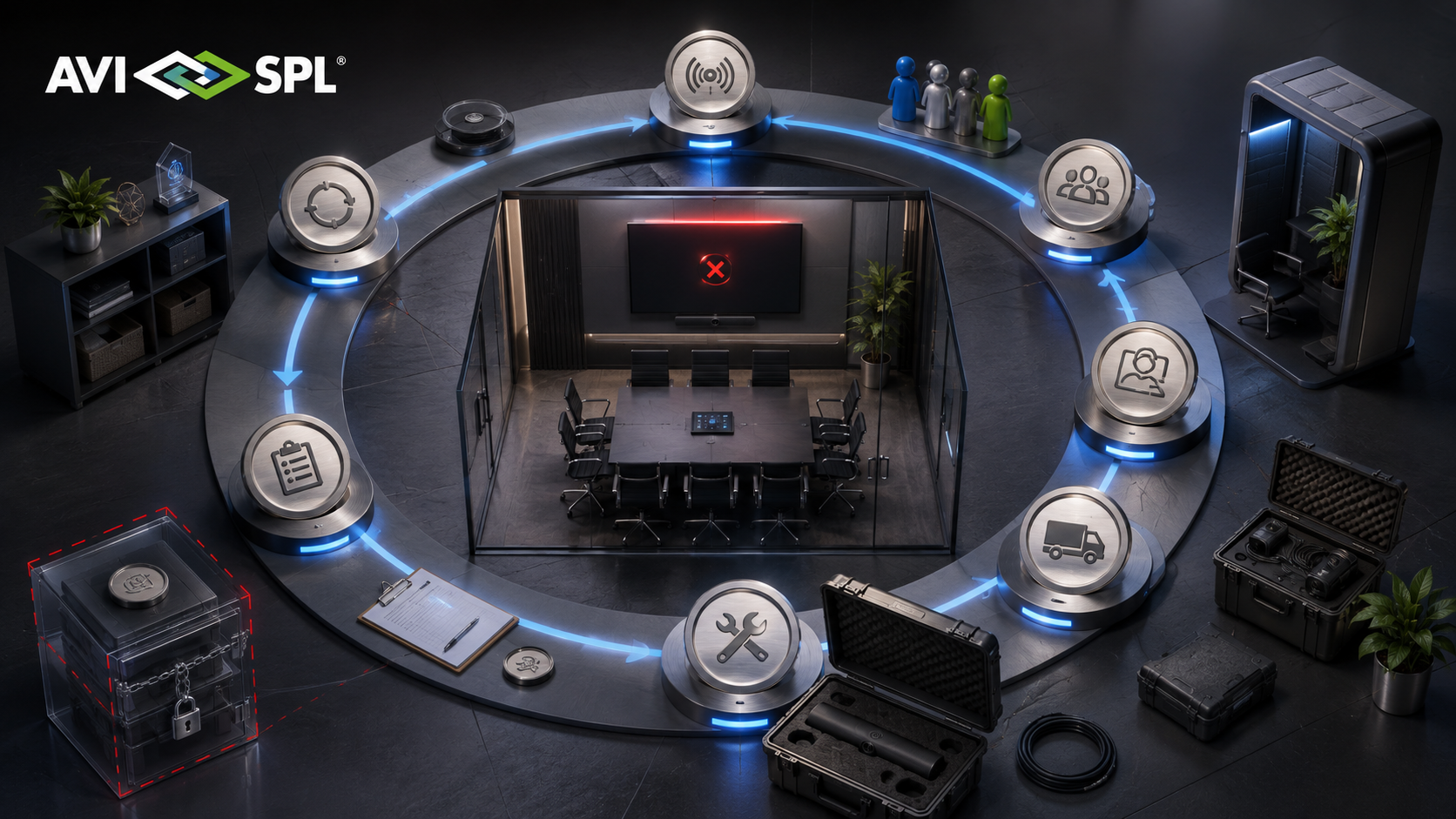
This transformation is underpinned by the rise of broadcast-grade AV and its seamless union with IT, AI, and AV-over-IP. But as the tech advances, business adoption no longer hinges solely on quality. Success now demands serviceability, security, and a considerate support ecosystem that can sustain the glamour in everyday operations.
Why Broadcast AV Has Gone Mainstream
The last five years have seen corporate AV undergo a transformation arguably as profound as the move from telephony to unified communications. The pandemic acted as a forcing function, normalizing high-quality video engagement for employees and customers alike. Overnight, organizations were compelled to master livestreaming town halls, running global webinars, and producing internal content that didn’t just connect but captivated.
That acceleration established new expectations. Audiences accustomed to Netflix, YouTube, and professional live streams began demanding similar polish in workplace settings.
“Boardrooms and meeting rooms are increasingly being repurposed as multifunctional spaces, hosting everything from town halls to internal events,” explained Faye Bennett, AV and collaboration analyst and Founder and Managing Director of Faye Bennett Consultancy Services. “That naturally brings in a need for more event-grade, even broadcast-quality, AV tech.”
Since then, tech curves have converged. AV-over-IP matured into mainstream deployment, enabling flexible distribution of high-quality signals across business networks. Hardware costs have generally fallen (albeit with the glaring caveat of the Trump administration's tariffs). Likewise, software-driven production tools have made what was once the preserve of broadcasters viable for internal comms teams.
Yet adoption has been about more than price. It’s also tied to workplace strategy. As Bennett noted, flexible and attractive office spaces have become central to return-to-office initiatives, spaces designed to engage staff, not just house them. Broadcast-grade AV delivers that edge.
Polished Content, Plain-Spoken Support
Corporate comms has matured. Technologies like NDI (Network Device Interface) now enable broadcast-quality streaming across IP networks with pro-grade performance, metadata support, and extensive hardware integrations, a shift adopted by organizations and sectors as varied as Siemens and esports platforms.
Institutions that once struggled to move from SDI to IP-based workflows are now doing it fluently, unlocking real-time, scalable video production capabilities.
In tandem, enterprise-grade production tools, such as Magewell’s Director Mini and Director One, which integrate multi-camera switching, graphics, replay, streaming, and recording into a single device, are democratizing studio-grade production for businesses. What once required entire broadcast crews can now be run by in-house staff, provided the support structure is in place.
But as Bennett emphasized:
You can install the best kit in the world, but if the end user can’t operate it, or if there’s no infrastructure to support and maintain it, the value just isn’t there.”
Bennett's words underscore the essential truth that high production value needs high-value supporting services.
Supportability Is the Secret Amplifier
We’re experiencing a seismic shift in AV support paradigms. Where AV-over-IP once arrived with complexity, today we’re seeing support services catch up, spurred in part by pandemic-era demand for remote monitoring, management, and diagnostics.
“It’s not just about making things work anymore. It’s about securing them, scaling them, and aligning with cybersecurity standards like the Common Vulnerability Scoring System,” said Bennett. In other words, operating broadcast-level systems in a corporate setting requires professional, resilient maintenance frameworks.