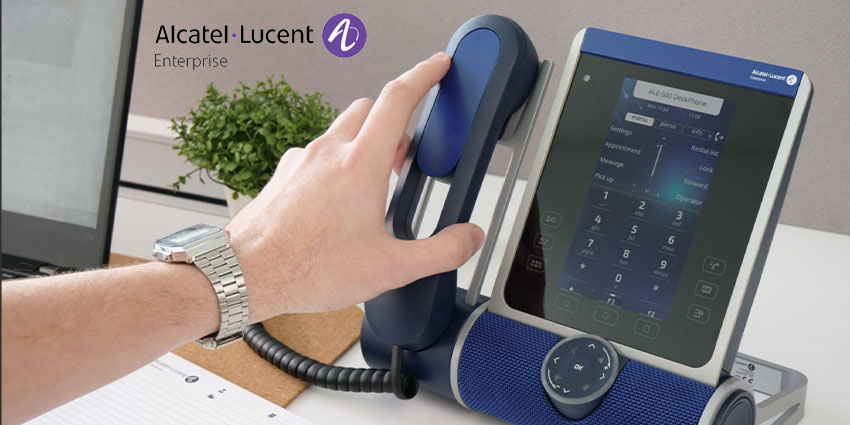
The last couple of years have sparked a multitude of crucial changes in the communication and collaboration landscape. However, Alcatel-Lucent Enterprise believes one thing remains consistent in this evolving environment – the demand for desk phones.
In a world where “digital” is everywhere, it’s easy to assume something as “traditional” as the desk phone might become less mission-critical. However, Alcatel-Lucent Enterprise says the reality is quite different. According to Product Marketing Manager Ayoub Kamli, the desk phone is evolving into a high-value, customisable solution for critical and certain businesses’ communications.
I caught up with Ayoub to learn more about the importance of the desk phone according to Alcatel-Lucent Enterprise, and why it continues to thrive in a digital world.
Why are Business Phones Still Crucial?
Desk phones are still popular among companies and people across the globe, according to Alcatel-Lucent Enterprise. The phone office system represents an easy-to-use and efficient tool, dedicated to a specific task. Depending on the phone you purchase, these tools can streamline communications between vendors and end customers and help to keep teams connected.
“The desk phone is a highly focused, dedicated device which serves as a professional voice communication tool for business users. Business phones are always on and ready to use, with a consistently reliable availability rate, and a sensational quality of audio.”
As Ayoub noted, there are moments in everyone’s life where we naturally still turn to the desk phone, regardless of what other communication methods might be available. In emergency situations when we need to connect with someone immediately, business phones provide fast, reliable, and secure communications.
In the business landscape, desk phones can still have a vital role to play in various environments. In hospitals, professionals need always-on devices which allow them to reach people and be reached at any time. Enterprises need welcome desks to help organize conversations, and customer service enterprises rely on phones for booking and managing appointments. Even government institutions rely on the desk phone for- secured, wired connections.
When do People Need a Desk Phone?
There are two forms of communication in the modern world: asynchronous (emails and messages) and synchronous (when we talk to people in real-time). When we pick up a phone, it’s because we want to connect to someone straight away. According to Ayoub, the desk phone remains an essential part of enabling emergency communications.
These tools can also be valuable when companies need to connect with customers who might be in an emotional state. If someone wants to know why they haven’t received an item, or they need support with a service, they want a high-quality, reliable line for the conversation.
“Alcatel-Lucent Enterprise has consistently continued to invest in the desk phone, because our customers continue to rely on this form of essential communication. Notably, we recognise that different users rely on the desk phone for different purposes. Some people turn to the desk phone for expert internal communications, and others just want a simple solution for focused conversations. There’s no risk of being overwhelmed by options when you have a desk phone in front of you, compared to a full UC app.”
As the workplace continues to evolve, we’re recognising the future isn’t just made up of digital natives and remote workers on apps, but a wide range of “employee personas”. Some of these people will rely exclusively on apps and UC tools, while others will rely exclusively on the desk phone, and some will work with both.
Alcatel-Lucent Enterprise’s continued investment in the desk phone means it can continue to serve people from all backgrounds, turning to desk phone technology for a range of verticals.