Look at almost any business journal, and you'll quickly be confronted by a host of articles on how important it is to collaborate to achieve anything in today's market space. Innovation and collaboration naturally go hand in hand, which is why it's so important for companies to think about how they're bringing teams together.
Regardless of your industry, if you want to be competitive in today's space, then you need to consider carefully how you can create places for your employees to communicate and collaborate easily. For some, this means thinking about the modern conference room, and developing spaces like the "huddle room".
What is a Huddle Room Anyway?
Over the last decade, several companies have begun to turn towards open-plan offices in an attempt to foster more collaboration and innovation in the workplace. However, Fortune studies found that open plan offices might actually be responsible for diminishing employee wellbeing and productivity, while increasing the number of sick days taken by the average worker. So, how can businesses make sure that people can collaborate more effectively, with as little distraction as possible? The answer could be in huddle rooms.
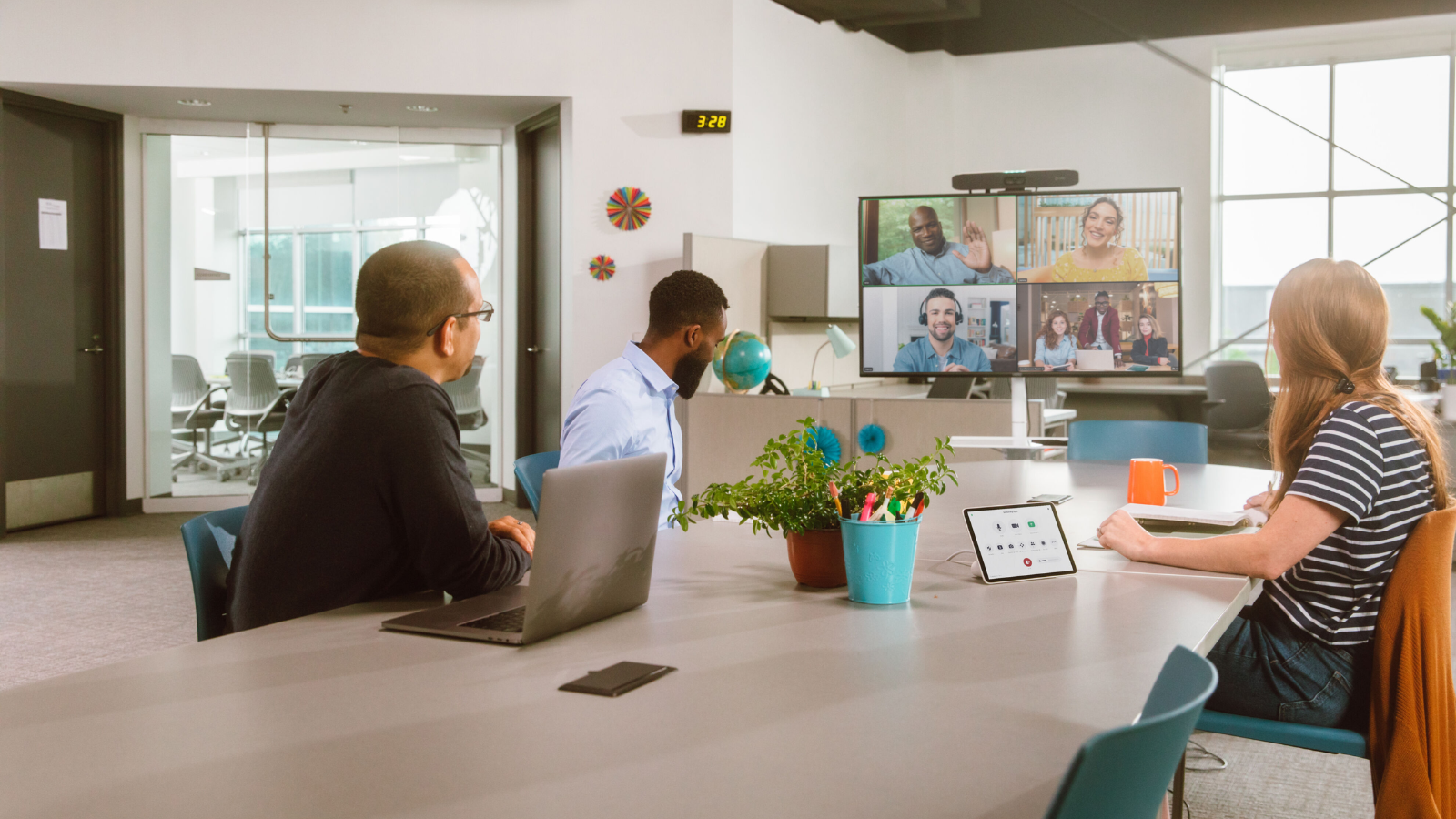
To get a good idea of what a huddle room looks like, imagine the way a family might huddle around a fire, or a football team might huddle together to plan their moves. Huddle rooms are small meeting spaces designed to join a team together through mutual collaboration. Usually, they feature:
- Chairs/Tables
- An Interactive or Traditional Whiteboard
- LCD or LED monitors
- Video or Audio Conferencing Services
So, what are the benefits of huddle rooms? Though different companies might discover different advantages, here are five of our favourites.
Benefit 1: Intimacy
There are a lot of problems with the standard open workplace concept. Perhaps two of the issues most harmful to productivity, are the on-going noise, and distractions. Huddle rooms eliminate this problem by offering a quiet space for small groups of people to collaborate through intimate conversations without interruption. Just make sure you get an all-in-one video conferencing service to support yours.
Benefit 2: Reaching out to Remote Workers
Huddle rooms are also useful when it comes to making remote workers feel more included. Many remote workers prefer huddle rooms for video conferencing because they allow them to feel like they're truly a part of the conversation. To ensure that remote workers are enjoying real face-to-face interactions, consider using video units with a wide-angle camera (120-degree field of view).