The way people communicate has evolved - not just in the consumer landscape, but in the business environment too.
About 43 million Americans own a virtual assistant or smart speaker, and the popularity of intelligence-infused systems is growing in other locations around the world too. Your Amazon Echo or Google Home device helps you to keep your appointments at home, or order food when you're in a hurry - but they're not just there for the domestic market.
In the business environment, voice-based digital assistants are also helping today's employees to be more productive, by giving them more control over their schedules, helping them to record crucial meeting information and more.
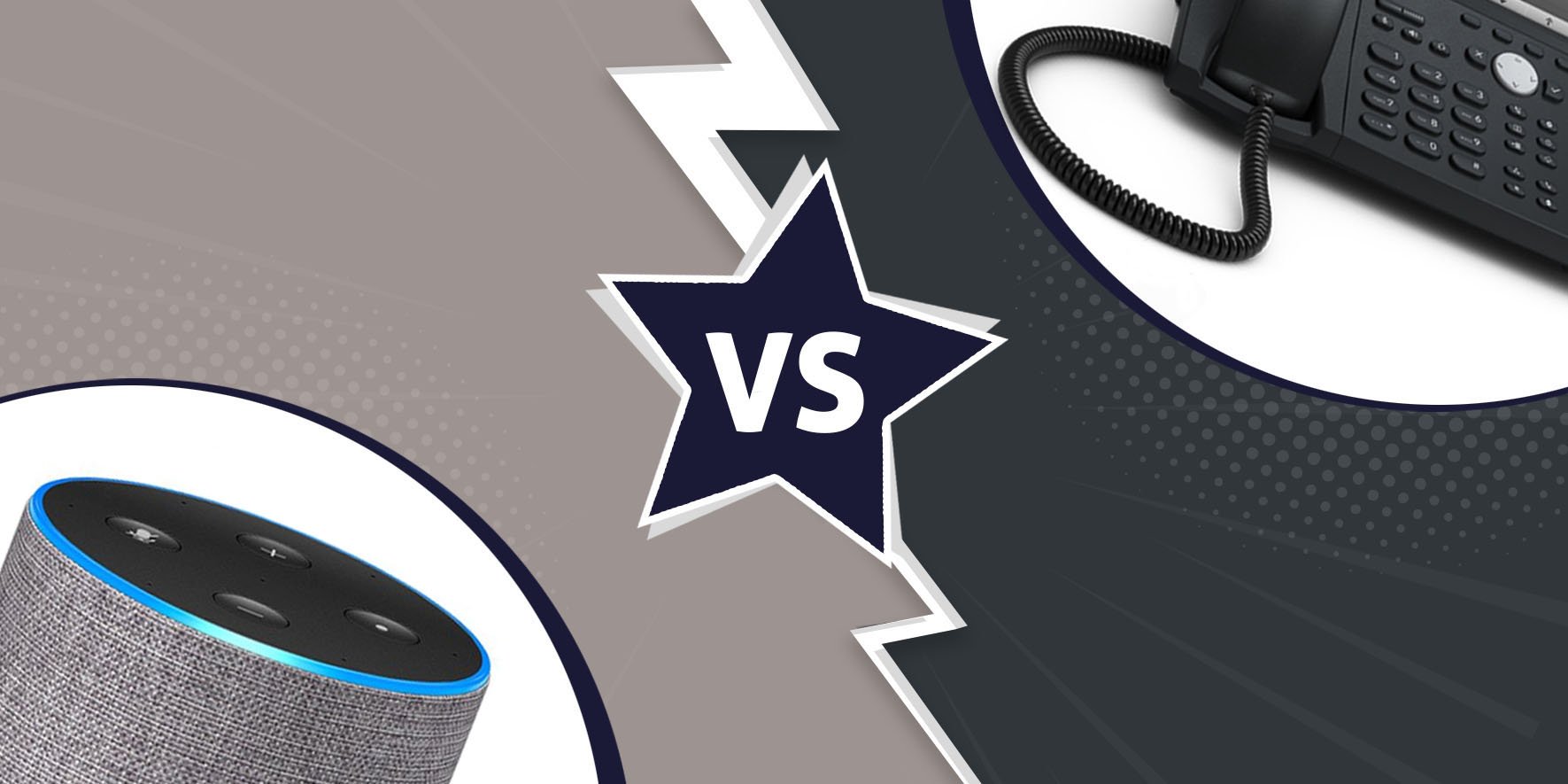
It's getting to a point where we need to ask ourselves whether high-end IP phones are enough for the genuinely agile offices of tomorrow, or whether all future endpoints will need to get smart if they want to survive.
Voice Based Assistants Become the Office Norm
While a high-end IP phone can do many of the same things that a smart assistant can do for today's office workers, there's nothing more streamlined than simply asking your device to book a meeting or cancel an appointment for you. Realistically, pressing a few buttons on your phone wouldn't take you that much time, but in today's fast-paced world, we all appreciate the smooth experience that comes with voice-enabled tools.
Already, we're seeing the rise of various personal assistant solutions in the office environment. Through Google Assistants, businesses can design "Actions" that allow them to interact with customers directly. Disney, Starbucks, and Spotify are already taking advantage of these options.
Alexa's voice dashboard can also monitor the health of the computing services that it integrates within a business environment. Users can ask Alexa which resources are available, find out how specific systems are performing, and even set up security alarms. We recently saw Facebook set up a collaboration with Amazon to make their Portal device as intelligent as possible.
More than anything else, Personal Assistants are outshining IP devices because they simplify schedules and strengthen the communication experience. Just like you'd use Siri to check when you have your restaurant booked, you can use Amazon or Google to find out when your next meeting is scheduled. You can even link your smart speaker to things like Azure Active Directory, or Google Calendar.
Creating Smarter Endpoints
So, how do IP endpoints compete in this growing smart assistant environment?
Simple. They need to integrate with the latest tools and solutions. For an IP endpoint to beat the smart speaker, it needs to offer smart speaker solutions itself. That means that companies need to embed personal assistants into their phones so that they can be just as intuitive and useful as Amazon Alexa, or Google Home.
We've already seen some vendors taking this route, implementing voice-based assistants into their tools that allow people to search for contacts in a directory quickly, or set up meetings within seconds. These virtual assistant infused devices will be crucial to employees in the future who want the traditional comforts of a desk phone, combined with the modern assistance of artificial intelligence.
As the workplace becomes more fast-paced and dynamic, the smart assistant solution will give today's workers the freedom and flexibility they need to deal with simple tasks quickly. Whether it's arranging for an order of some extra printer ink, or setting up a conference with your team, today's endpoints need to be smart to thrive.