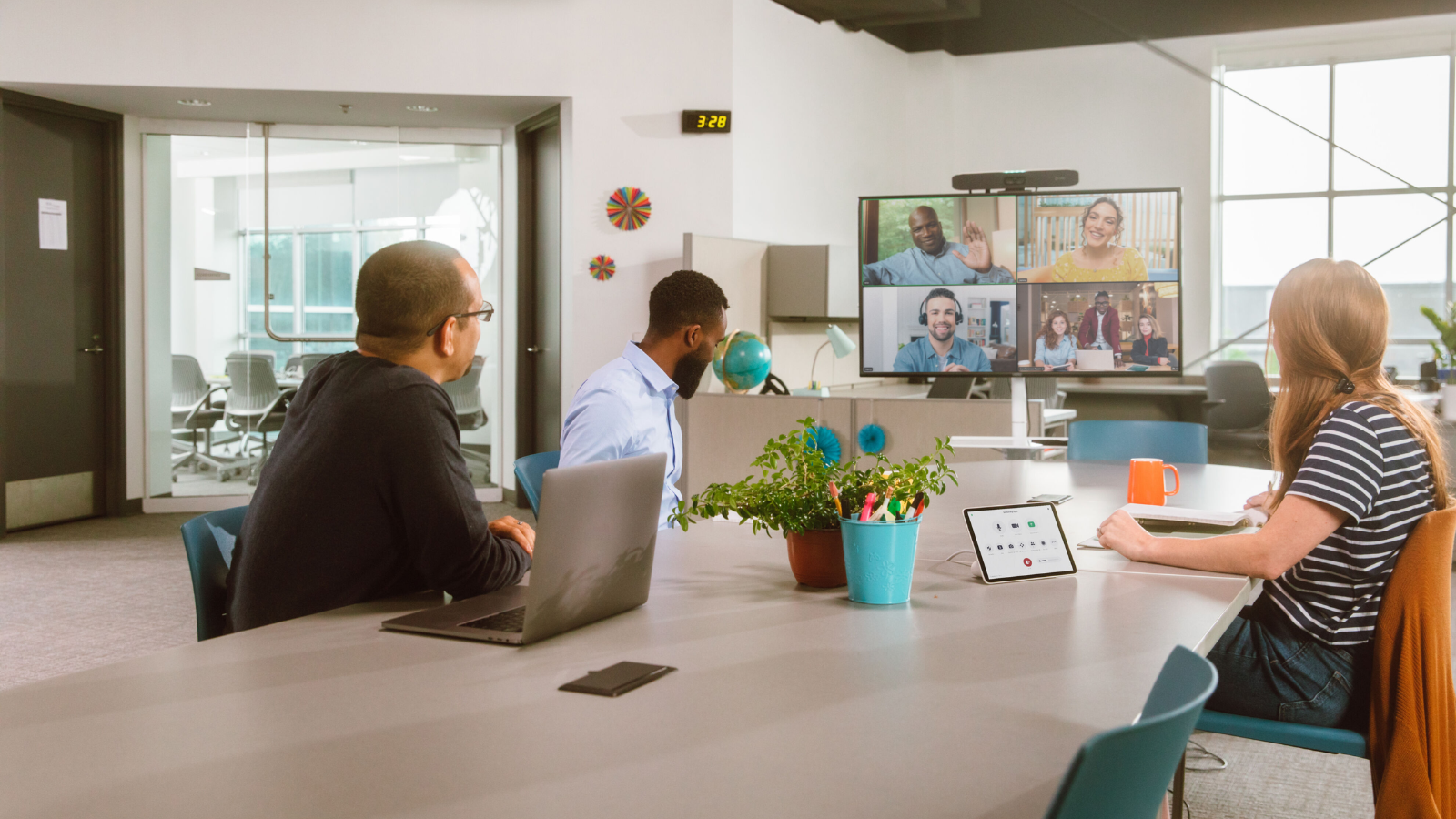
By 2026, most enterprises have already standardised on collaboration platforms, meeting room hardware, and workplace tools. The challenge has shifted to how those systems are deployed, adopted, supported, and measured at scale.
This guide explains how organisations successfully roll out workspace tech across multiple offices - covering deployment models, user adoption tactics, IT support structures, and success metrics - so hybrid work actually works in practice.
Suggested Articles:
Top Workspace Tech Events to Watch in 2026
The Smart Workspace Vendors to Know About in 2026
Office Technology Trends Defining 2026
What is Workspace Tech Deployment at Scale?
Workspace tech deployment at scale refers to the coordinated rollout of meeting room systems, desk booking platforms, and workplace intelligence tools across multiple locations. These programmes typically involve IT, AV, real estate, and change management teams working together under shared standards.
In 2026, most enterprise deployments include a combination of room systems such as Microsoft Teams Rooms (or equivalent), desk and room booking tools, office utilisation analytics, and centralised monitoring and lifecycle management. Together, these systems form the operational backbone of the modern hybrid workplace.
Need more guidance on deciding which workplace tech is worth investing in? Read our article.
Why Do Meeting Room Technology Implementations Fail?
Large-scale deployments often fail not because of technology choices, but because of execution gaps.
Common failure points include:
- Inconsistent room standards between sites
- Overly complex room types that confuse users
- Lack of ownership between IT, AV, and workplace teams
- No plan for training, adoption, or long-term support
When these gaps exist, employees lose confidence in meeting rooms - and revert to laptops, ad hoc setups, or remote work.
This year, progressive organizations will take an employee-centric lens that puts people at the center and technology features second.
Adoption and experience matter as much as the technology itself.
Deployment Models That Work for Hybrid Work in 2026
How Do You Roll Out Workspace Technology at Scale?
Successful organisations follow a phased, standardised deployment model, rather than attempting a “big bang” rollout.
1. Start With a Small Set of Standard Room Types
Most enterprises limit deployments to:
- Small focus / huddle rooms
- Medium collaboration rooms
- Large meeting or boardrooms
[caption id="attachment_176334" align="aligncenter" width="1024"]
 Types of meeting rooms[/caption]
Each room type has a fixed hardware and software profile, reducing variability and support complexity. Knowing which tech bundle is right for your space is key.
This approach is central to effective meeting room technology implementation.
Before deploying the technology suitable for your meeting room, it is key to get the preparation process right. Read more on this in our hardware checklist article.
2. Pilot first, Then Scale With Confidence
Leading teams deploy a pilot site or floor, validate reliability, capture feedback, and refine standards before rolling out widely. This prevents mistakes from being multiplied across the estate.
3. Align Deployment With Business Priorities
Rather than rolling out everywhere at once, many organisations prioritise:
- High-utilisation offices
- Executive and customer-facing spaces
- Locations with poor collaboration experiences
This ensures early wins and visible value.
Teams Rooms Rollout Strategy: What Works in Practice
What’s The Best Way to Deploy Teams Rooms across offices?
For organisations standardised on Microsoft, a clearly defined Teams Rooms rollout strategy is a critical success factor - particularly when deployments scale across multiple offices.
Effective rollouts typically focus on a small number of repeatable best practices:
- Using certified Teams Rooms hardware only, to ensure reliability and platform compatibility
- Standardising controllers, cameras, and audio by room size, reducing variation and user confusion
- Enforcing a consistent join experience across all locations, so meetings start the same way everywhere
- Centralising device management and monitoring, enabling proactive support at scale
This balance between platform and device strategy is essential. As IDC notes: