Workspace technology is no longer about adding tools to the office.
In hybrid organisations, it has become core infrastructure for reducing waste, improving collaboration, and delivering a consistent employee experience across locations.
As office attendance becomes more intentional, IT, workplace, and operations leaders are asking practical questions:
- Which workspace technologies actually deliver ROI?
- Where does meeting room investment improve employee experience most?
- Which workspace tech use cases work across industries - not just tech companies?
This article answers those questions through five proven workspace technology use cases, each grounded in a real customer example, showing how organisations are turning investment into measurable outcomes.
Suggested articles:
Tier-1 Workspace Tech Comparison: Cisco vs Logitech for Hybrid Offices in 2026
The 2026 Hybrid Hardware Checklist for Modern Collaboration
Top Workspace Tech Events to Watch in 2026
Use Case 1: Reducing Office Space Waste With Workplace Experience Technology
Industry: Commercial real estate / enterprise workplaces
What Workplace Technology Reduces Office Space Waste In Hybrid Environments?
Short answer: Workplace experience platforms that provide real-time and historical space utilisation data.
The Problem
Hybrid work has made traditional space planning unreliable.
Many organisations still operate offices sized for peak attendance that rarely occurs, resulting in:
- Underused desks
- Overcrowded collaboration areas
- Unnecessary real estate and energy costs
Without visibility into how space is actually used, workplace strategy becomes guesswork.
The Workspace Tech Solution
At PENN 1, a major commercial office building in New York, workplace teams used Cisco workplace experience technology to analyse occupancy, movement, and space usage across the building.
This data-driven approach allowed teams to optimise layouts and services based on real behaviour rather than assumptions.
The Employee Experience Outcome
Employees benefit from spaces that better support how they actually work, while organisations reduce waste and improve planning confidence.
Many organisations are now turning to workplace analytics and experience platforms to understand how space is really being used in hybrid environments.
Use Case 2: Improving Employee Experience Through Meeting Room Upgrades
Industry: Higher education / hybrid collaboration environments
How Do Meeting Room Upgrades Improve Employee Experience?
Short answer: By removing friction and creating predictable, inclusive collaboration experiences.
The Problem
Inconsistent meeting rooms are one of the biggest frustrations in hybrid work.
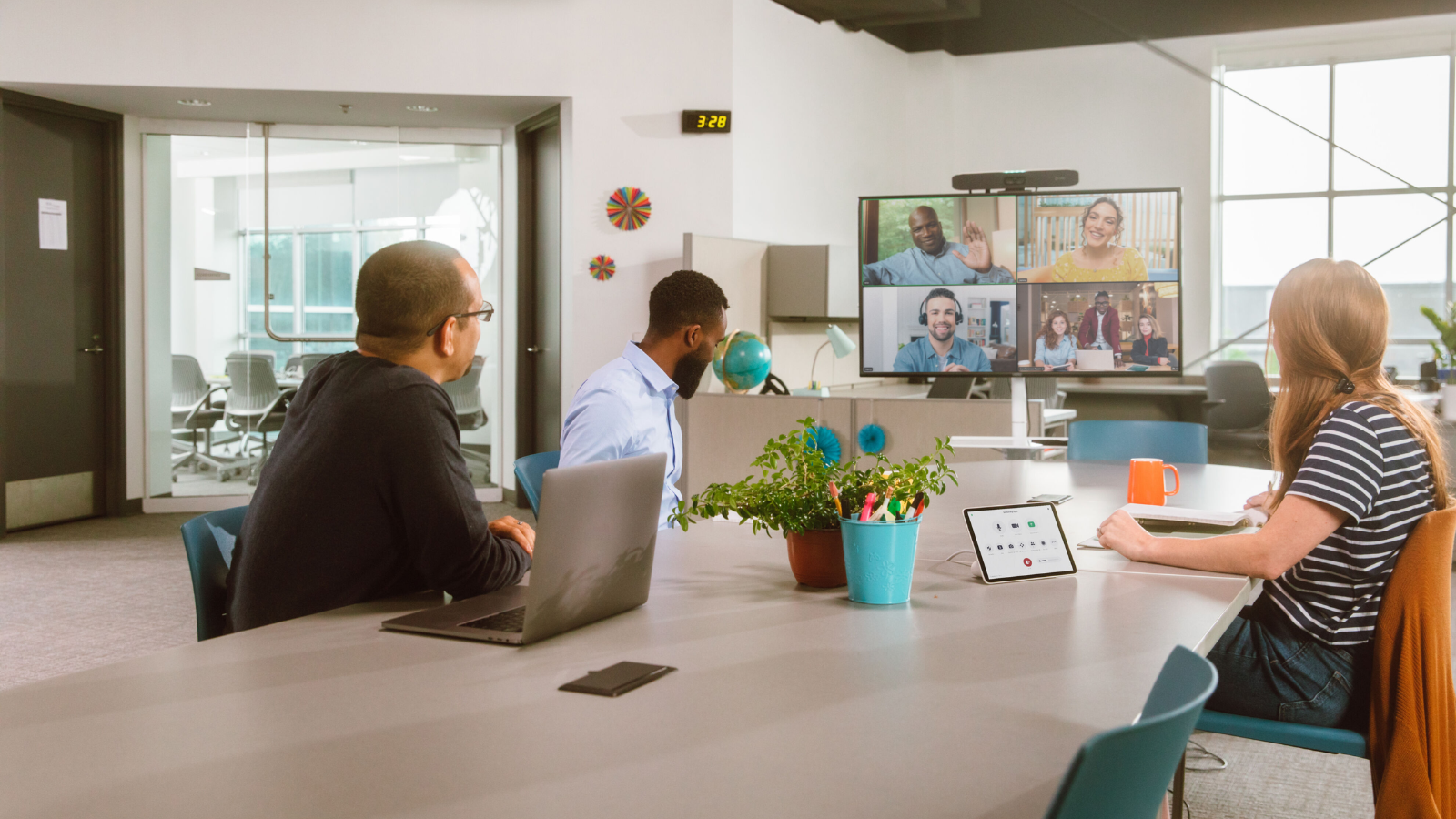
Poor audio, unreliable video, and complex join processes often make working from home feel easier than coming into the office, undermining collaboration and attendance. Read more on creating smooth, collaborative workspaces here.
The Workspace Tech Solution
Ulster University upgraded its hybrid teaching and meeting spaces using HP | Poly Microsoft Teams Rooms, following a structured approach:
- Room testing and mock-ups
- Technology standardisation
- Certified collaboration experiences
This reduced variability across spaces and simplified support.
The Employee Experience Outcome
Staff and students gained confidence that hybrid meetings would work every time, in turn improving on-campus collaboration and participation.
Use Case 3: Fast ROI From Hybrid Collaboration Devices
Industry: Retail / Essential Services
What Workspace Technology Delivers The Fastest ROI?
Short answer: Simple, high-quality hybrid collaboration devices deployed without major room rebuilds.
The Problem
Many organisations need quick wins but lack time or budget for full meeting room transformations.
Ad hoc spaces and temporary setups often limit collaboration quality and reduce meeting equity for remote participants.
The Workspace Tech Solution
EG Group deployed Neat Bar to support hybrid workshops and meetings across flexible spaces, without complex installations or structural changes.