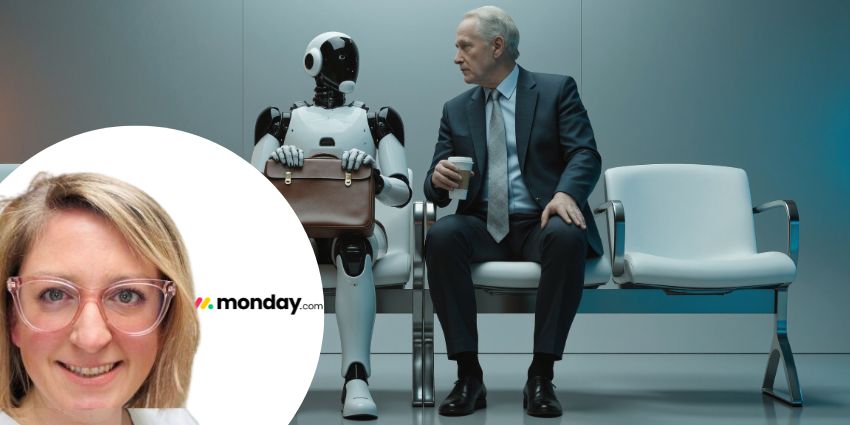
The workplace anxiety around artificial intelligence has reached fever pitch. Employees across the world are watching nervously as AI tools proliferate through their organizations, wondering whether their roles will survive the transformation. Yet new research suggests this fear may be misplaced, at least for now.
monday.com's latest World of Work report reveals a striking disconnect between employee anxiety and leadership intent. While 95% of UK directors now use AI at work and 80% use it daily, the vast majority (78%) do not expect AI to reduce headcount within their teams next year. Even more surprisingly, almost a third (32%) actually expect to hire more people because of it. Despite these statistics, employees aren’t as optimistic about their position.
To explore why this disconnect exists and what can be done to ease employee concerns about AI, we spoke with Cat Paterson, Regional People Director at monday.com, about how HR leaders can bridge the gap between AI ambition and employee confidence.
The Perception Gap: When Intent Doesn't Equal Experience
The research exposes a fundamental tension in UK workplaces. Leaders insist they are deploying AI to boost productivity, not cut jobs. But that assurance has not translated into employee confidence, particularly in the UK market, where a unique dynamic has emerged.
"What the research shows is a gap between intent and experience,"
Paterson explains. "UK leaders are clear that AI is being used to drive productivity, not reduce headcount. But that doesn't automatically translate into confidence at an individual level, especially when the pace of change is so rapid."
What makes the UK situation particularly complex is an unexpected cultural dimension. The study found that a growing concern among British workers isn’t actually job loss; it’s the fear of being judged for using AI at work. Despite using these tools effectively every day, many employees remain hesitant to be open about it.
Paterson describes this as a paradox: "There's huge ambition around AI use and broader innovation, but a lingering discomfort about how that innovation is perceived." These sentiments feed into employees feeling that if they show how much of their work is done by AI, they may appear more replaceable.
This shadow relationship with AI threatens to limit companies in their adoption of the technology and restrict the efficiencies it can truly deliver. For HR teams, fixing this is imperative, but it goes beyond simple reassurance. It requires making AI feel understood, expected, and openly discussed at all levels of the organization.
Building Confidence Through Clarity and Normalization
For HR leaders navigating this perception gap, the path forward demands both structural clarity and cultural change. The solution begins with being explicit about AI's role in the company.
Organizations should clarify which tasks AI supports, which decisions will always remain human-led, and how success is measured when the two work together. Without this clarity, employees are left guessing where they stand, and that uncertainty breeds anxiety regardless of leadership intent.
But clarity alone isn't enough. Companies must also normalize AI use across their workforce. Rather than issuing top-down directives, Paterson suggests creating peer learning communities where employees share real examples of how they use AI in their roles. When teams see colleagues openly using these tools, the stigma begins to fade.
"The data shows teams are already receptive and capable of using the tools, so the task now is to create an environment where using AI isn't something to hide,"
Paterson notes.