
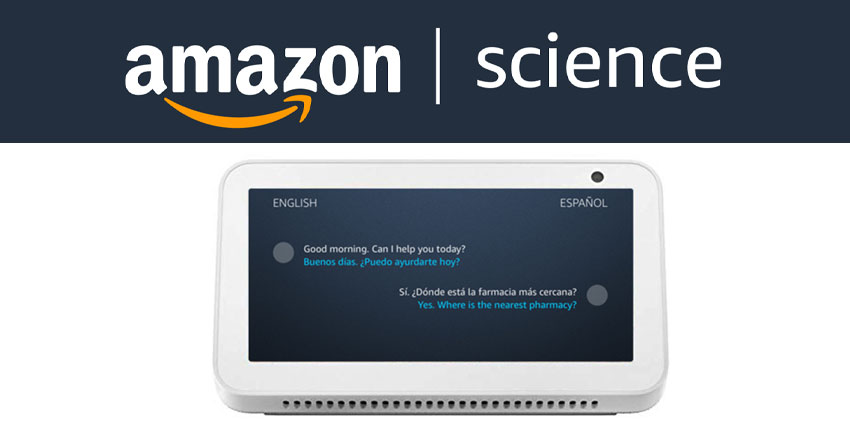
Amazon recently announced the arrival of a new Live Translation feature for Alex, permitting people to speak in different languages to converse through Alexa. The internal AI becomes your interpreter, translating each side of the conversation.
With the arrival of the new feature, a customer will be able to ask Alexa to initiate sessions with translation using a pair of languages. During the conversation, Alexa can automatically identify the language being spoken, and translate in real-time. The launch starts with 6 pairs of languages, including Hindi, Brazilian Portuguese, Italian, German, French, Spanish, and English.
Live Translation takes advantage of various existing tools in Amazon, including the ASR system for Alexa, Alexa Text-to-Speech, and Amazon Translate.
Discovering Alexa Live Translation
During a session of Live Translation, Alexa uses two ASR modes along with another model for language identification. The technology can automatically deal with two ASR models at once, and based on the ID model of the language, only one output reaches the translation engine, reducing the risk of latency for the translation request.
During production, Amazon discovered that the model for language IDs works best when based on both acoustic speech information and the output of two ASR models. The ASR can help speakers of a non-native language who have consistent acoustic properties to their speech.
Once the language ID system has selected an output, it’s processed through Amazon Translate and passed to Alexa for playback via text-to-speech. Like most ASR systems, the ones used for live translation by Amazon include both a language and acoustic model. The language model encodes probabilities for specific strings of words, while the acoustic model converts audio into phonemes.


