
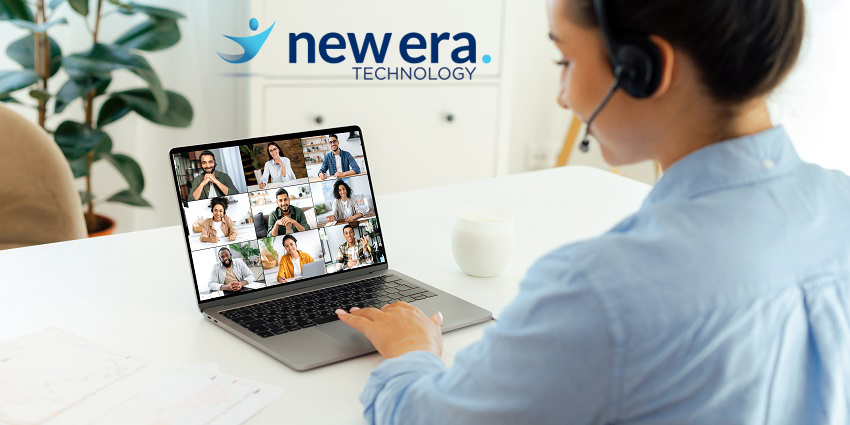
If you’ve been looking at video collaboration tools, you’ve probably noticed that there are many different solutions and offerings on the market, and no two are exactly alike. With all the options available, it can be confusing and overwhelming to search for the best choice for your organization.
Rest assured: the perfect platform for your business is out there. The trick is to see past the hype and figure out what you need, and which vendors offer it — which you can do with a partner like New Era Technology.
With that in mind, let’s look at what you should consider when comparing video collaboration systems.
Breaking Through the Noise
Vendors are constantly releasing new video conferencing solutions and equipment, and the rapid advancements in technology like artificial intelligence (AI) are constantly driving the field forward.
This leaves many organizations with plenty of questions and very few answers. What kinds of features do they need to thrive? What spaces and rooms do they need to provide for modern workers? What benefits can they gain from certain tools?
It can be tricky for decision-makers to see through the buzz and past the hype, especially with all the information to absorb and pressure to justify their purchases.
As such, the first thing you’ll want to do is look at your company’s specific needs. Understand what communication tools you currently use, what you’ll use video collaboration for, and what your specific goals are. This way, you can look at each vendor’s offerings from a position of how they can meet your needs, rather than getting overwhelmed with all the features you may or may not need.
Fortunately, there are organizations that specialize in working with customers to figure out their specific video collaboration needs, understand their objectives, and guide them through the entire customer journey. New Era Technology stands as a great example, as they have a detailed understanding of the various vendors on the market, and can serve as a one-stop shop to guide customers to the solution that works best for their company and their specific needs.
Additionally, New Era can help its customers integrate all their video collaboration tools to ensure they can use all their existing tools and technology, and provide analytics and reporting to ensure everything is working smoothly. They take a vendor-agnostic approach to video collaboration, working with customers along every step, from consulting to design to implementation.
Key challenges in multi-vendor video collaboration estates
Using video collaboration solutions from multiple vendors presents several challenges that organizations will have to watch out for. New Era Technology is adept at addressing these challenges, working with their partners to reach their goals. Such challenges include:
Integrating Legacy Technology
Video conferencing technology is a necessity for modern communications, but the variety of conferencing platforms creates its own set of challenges, especially for organizations with legacy equipment. Not only do organizations have to choose between options like Microsoft Teams, Zoom, Google Meet, and so on, but many large enterprises also have existing technology and equipment that they’ll need to integrate with the newer platforms.
More often than not, integrating new technology with existing investments in legacy equipment is a lengthy process, often requiring a 3–5-year roadmap. Not only do they need to figure out what fits best with their current equipment, they also need to figure out what tech can bring them to the next level and provide the features they need.
This is another instance where having an experienced partner comes in handy. Looking at New Era Technology again, we can see that they’re experienced at connecting newer systems with legacy technology and creating standards for interoperability. New Era works with partners through every challenge, from creating cohesive and efficient roadmaps to finding the right video collaboration platform, ensuring it connects with their existing infrastructure, and every other step along the way.
Compatibility and interoperability issues
Legacy equipment often has proprietary technology, as well as distinct protocols and standards, which makes it difficult (or sometimes impossible) for it to work with other equipment or solutions. Any new applications need to be able to work within existing protocols and standards.
This also leads to hardware and software integration challenges. Technology is constantly changing and advancing – think of how many times you update your devices in a single year – so how do you get these tools to communicate and work with legacy devices? Add in security requirements, and it can be a major challenge to get these disparate systems to work together.
Fortunately, there are manufacturers that have adapted to changing customer needs and focus on interoperability. Logitech, as an example, has expanded far beyond webcam solutions for personal laptops and has been investing in hybrid work solutions and equipment for video collaboration rooms. For instance, its Rally Bar is an all-in-one video system that can be used in rooms built for “bring your own device” environments, Microsoft Teams, Google Hangouts, and Zoom.
However, as employees return to the office, organizations have struggled to find ways to properly import the laptop and mobile device collaboration experience into meeting rooms.
As such, developers have to find ways to meet user needs without requiring organizations to rework their entire infrastructure. We’ve seen this in action with technology like Microsoft’s Intelliframe, which splits camera feeds into quadrants that focus on certain people in the room, and is used as part of equipment solutions from companies such as Yealink and Logitech.
You need to understand what the requirements for each piece of technology are, then find a way to make them work together in their existing environments. This is doable, but requires the help of an experienced partner like New Era.


