
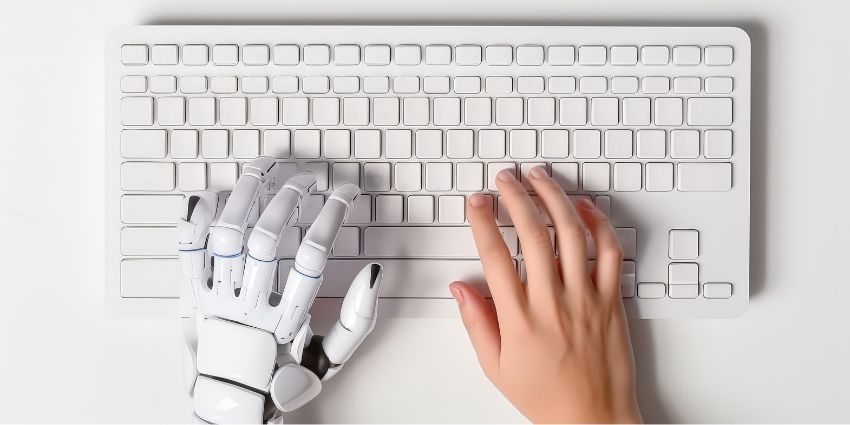
Can AI be part of cross-team collaboration? Cross-team collaboration, or cross-functional collaboration, has proven to be an integral part of business innovation, growth, and success. Studies show that highly aligned companies are 72% more profitable than their competitors.
But what happens when you add AI to the mix? Can artificial intelligence help teams work more effectively together, or will it just get in the way?
On a broad scale, we’ve already seen plenty of examples of artificial intelligence making individual employees and teams more productive, efficient, and creative. In fact, more than 75% of employees are using AI at work, and 81% say that they perform better with access to AI tools.
However, evolutions in the AI world, including the introduction of new “AI team members” created by companies like Google and Microsoft, have left many companies wondering just how effective AI can be at aligning and empowering cross-functional teams.
The Role of AI in Cross-Team Collaboration
Cross-team collaboration is nothing new in the business world. For decades, companies have relied on bringing individuals together with different skills and backgrounds, to optimize performance, enhance innovation, and streamline problem solving.
Cross-team collaboration doesn’t just make businesses more profitable; it ensures they can leverage a diverse set of skills effectively. It also has a positive impact on employee engagement. Studies show team members in collaborative workplaces are up to 30% happier in their roles.
Bringing AI into cross-team collaboration means providing teams with unified solutions they can leverage to improve everything from meeting quality, to productivity.
Today, there are numerous ways companies can embed AI into cross-team collaboration, such as:
- Leveraging AI-powered platforms: Many of the tools companies already use to align and empower cross-functional teams already feature AI capabilities. Microsoft Teams, Slack, Zoom, and Google Workspace all have their own AI features.
- Creating AI bots: With solutions like Copilot Studio, companies can now create specific bots designed to support different teams. They can infuse AI assistants with the knowledge required to support multiple projects, and cross-functional workflows.
- AI team members: Though they’re still in the development phase, AI team members, like Microsoft Team Copilot, will give users an AI-powered colleague they can work with just like another coworker. These bots will be able to keep teams organized, suggest meeting agendas, and even assign tasks to specific employees.
Can AI Be Part of Cross-Team Collaboration? The Benefits
So, can AI be part of cross-team collaboration? The simple answer is yes. Not only are there numerous ways to embed AI into cross-functional teamwork, but companies that embrace AI as “part of the team” can unlock numerous benefits.
Here are some of the biggest ways AI improves cross-team collaboration.
1. Enhancing Communication
One of the biggest challenges of effective cross-team collaboration, is ensuring teams can communicate effectively. In today’s world, multi-functional teams come from different regions, speak different languages, and even use different day-to-day jargon.
AI can address these issues in various ways. An AI assistant built into a collaboration, productivity, or project management app can enhance clarity, by summarizing lengthy documents and emails, highlighting important points and action items.
It can translate content in real-time for global teams, ensuring employees speaking different languages can communicate efficiently. These tools can even automatically convert technical jargon into more accessible language, reducing the risk of misunderstandings between teams. Plus, they can be used to create captions during meetings, improving accessibility for those with disabilities.
2. Improving Project and Workflow Management
Artificial intelligence can significantly improve how cross-functional teams manage complex projects and workflows. As mentioned above, tools like Google’s AI teammate will be able to assign tasks to team members, and track their progress over time. They can also identify action items that need to be assigned to specific workers after meetings and discussions.
Many project management tools also include their own AI features to support cross-team collaboration. Tools like Asana, Monday.com, and Trello can use AI to automate tasks and approval workflows, identify bottlenecks, and detect project risks.
Asana can even use AI to assess the availability of team members, and assign them tasks appropriately, to avoid burnout and overwhelm. AI can even alert team members when deadlines are approaching, or remind them to follow up on a task.
3. Automating Routine Tasks to Boost Efficiency
One of the biggest benefits of making AI part of cross-team collaboration, is it empowers teams to automate time-consuming, low-value tasks. AI is excellent at completing repetitive tasks that would otherwise distract staff from valuable work.
It can automate the process of scheduling meetings and finding the right times for different team members from various departments and locations to work together on a project. It can summarize meetings and take notes for teams during meetings. Plus, it can automate data entry and preliminary analysis tasks, supplying teams with valuable insights.
AI-driven project management tools can automate the process of assigning tasks to team members, tracking progress, and keeping approval processes running smoothly too.
4. Using AI in Cross-Team Collaboration for Insights
The more data and insights a cross-functional team has to work with, the more productive and efficient they become. AI is fantastic at analyzing vast amounts of data in record time, providing teams with actionable insights that benefit every department.
With AI tools, customer service and sales teams can collaborate on mapping the customer journey, gaining insights from conversations, and analyzing feedback. This paves the way for a unified approach to improving customer experiences.
AI solutions can track and analyze performance metrics across departments, highlighting areas for improvement, potential bottlenecks, and strategies for success. AI can even help business leaders to forecast market trends, potential risks, and opportunities. This can help innovators to determine how to combine teams to facilitate business growth.
5. Optimizing Resource Allocation
Effective cross-team collaboration relies heavily on strong workplace management. That’s particularly true in today’s world of hybrid work. AI solutions are excellent at helping businesses identify the best ways to connect their teams for collaborative sessions.
Solutions like Microsoft Places, for instance, can offer AI-driven insights into the best times for employees to attend an office space based on which employees will be present at any time.
AI-driven workplace management tools can also help businesses determine how to allocate resources (like meeting rooms and devices), to team members in a hybrid setting. They can even support businesses with better scheduling strategies and intraday workplace management.
6. Upgrading Employee Experiences
Various studies have shown that AI can improve employee experiences by automating repetitive tasks, improving access to information, and streamlining workflows. However, when AI is part of cross-team collaboration, it can also improve user experiences in other ways.
AI tools not only help employees get their work done faster, but they also help to foster stronger connections between team members, by improving meetings and communication processes. They can inspire employees to perform more creatively, generating ideas that staff members might miss alone.


