
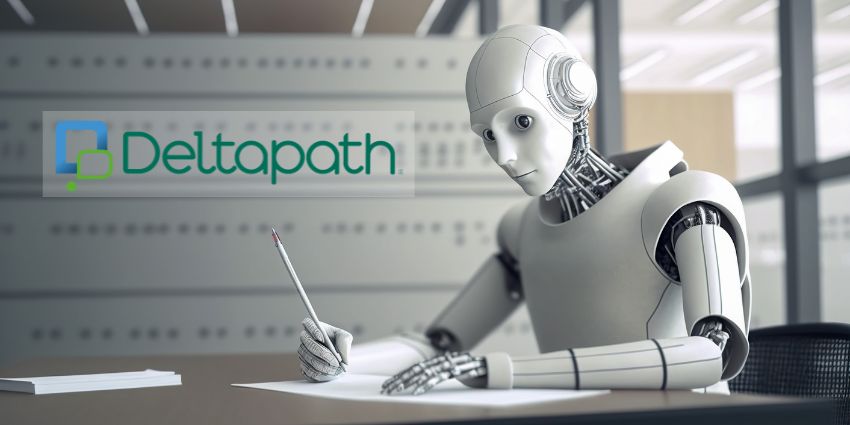
The human desire to harness the power of magic – or to create something in his image through science - is deeply rooted in myth, fantasy, and imagination. Consider Mary Shelley's 1818 literary masterpiece Frankenstein where a young scientist, Dr. Frankenstein, fashions a semi-man out of exhumed body parts into a frightening creature that he immediately realizes is an uncontrollable mistake. As Ross Douthat wrote in a recent New York Times article, "This impulse is an ancient one: The idea that one might bind a djinn, create a golem or manipulate a god or fairy to do your bidding is inscribed deep in the human imagination." Or, consider Scott Aaronson's comments, a computer scientist at the University of Texas, Austin: "An alien (ChatGPT) has awoken — admittedly, an alien of our own fashioning, a golem, more the embodied spirit of all the words on the internet than a coherent self with independent goals. How could our eyes not pop with eagerness to learn everything this alien has to teach? If the alien sometimes struggles with arithmetic or logic puzzles, if its eerie flashes of brilliance are intermixed with stupidity, hallucinations, and misplaced confidence … well then, all the more interesting! ChatGPT has emerged like an unforeseen presence that is with us, at our beck and call, living side-by-side as our knowledge companion who converses in a simulated personal way.
What Does ChatGPT Herald for Business?
With all the buzz about ChatGPT, businesses are already considering its potential to improve operations and customer experience. Given enough time, the sky is the limit - within reason. We spoke with David Liu, Founder and CEO of Deltapath, about ChatGPT's potential.
"A traditional NLP chatbot cannot have a lengthy conversation," Liu said. "It needs continual training and learning with human intervention to uncover intent. ChatGPT is conversational AI that will take the chatbot to the next level of communication between the human and machine," he explained.
For companies, ChatGPT is a starting point for discovering, gathering and sharing data. But it's only as good as the data it learns, hence its tendency to be inaccurate and wildly off base in its replies. For ChatGPT to be effective, companies must ensure that valid, accurate information is rigorously enforced in the training period and that safeguards are in place to ensure the data it presents is accurate. That's going to take time.


