
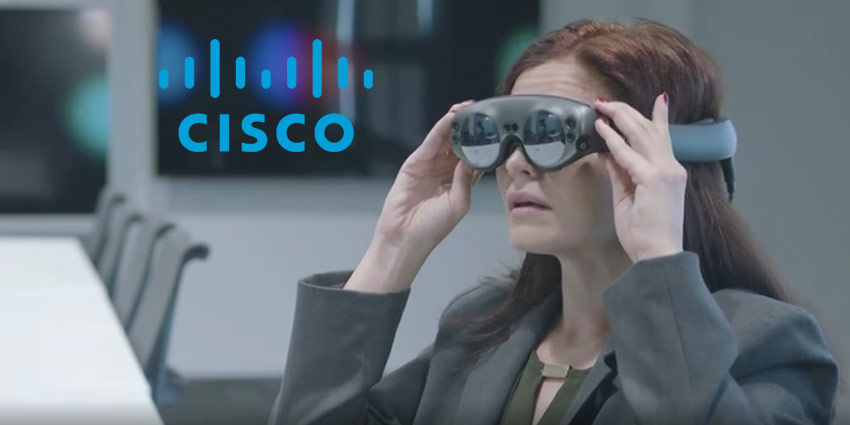
The idea of different realities merging in the collaboration environment isn’t a new one.
Ever since things like the Oculus Rift appeared, showing us what might be possible with augmented and virtual reality, communication leaders have been eager to get involved.
For a while, it seemed like everyone was dipping their toes into the mixed reality landscape.
We’ve seen everyone from Google to Microsoft exploring how they can adjust reality to allow for more immersive meeting experiences – particularly in the age of the remote and distributed worker.
After all, with the right headset and software, VR and AR technology could make it possible for anyone to simply “step into” a meeting room environment wherever they are. You could see virtualised representations of your coworkers all around you or holographic images of your boss. That kind of technology goes far beyond anything we can get from HD video conferencing.
However, after an initial influx of excitement in 2017 and 2017, VR and AR lost some of its buzz.
Now, it seems like Cisco, one of the early adopters of the mixed reality landscape, might be bringing us back to the “future of meetings.”
Discussing Meetings of the Future and Collaboration 2030
A blog post by Elizabeth Bieniek, the Director of Collaboration Innovation at Cisco, was published at the end of January this year – discussing the concept of changing collaboration technology. Elizabeth drew focus to the idea of “closing the gap between digital data and the physical world.” She explained that she and her team at Cisco were looking into a new style of work – a way of replicating the face-to-face collaboration experience in a virtual environment.
[caption id="attachment_26548" align="alignright" width="200"] Elizabeth Bieniek[/caption]
This isn’t the first time that Cisco has considered the benefits of VR and AR for the communication and collaboration landscape. In 2017, the company was already experimenting with the Oculus as part of the Cisco Spark Project. The team even released a few videos designed to give an example of what meeting in a “virtual reality” landscape might look like.
Unfortunately, the project was shut down as quickly as it started – dwindling to nothing by 2018. It seemed that the time just wasn’t right for AR and VR to come to life. The technology wasn’t there yet. There was too much latency, lag, and other connectivity problems to deal with for mixed reality to become a realistic part of the collaborative world.
Cisco’s initial forays into the mixed reality world were quickly brushed off as a novel idea – but not something the world of work could handle – yet.


