

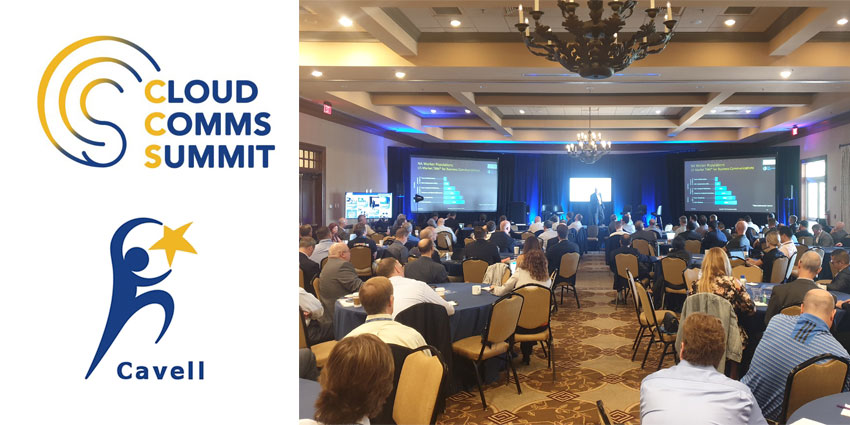
I recently returned from the Cloud Comms Summit hosted by the Cavell Group this year. I was attending the North American leg of the summit series, in Washington, USA, and during my time at the event, I had an opportunity to pick up on some interesting trends and insights into the changing nature of the cloud communications space.
Notably, the Cloud Comms Summit is becoming a very significant event in the industry, but it's grown at a far more significant rate than usual over the last year - almost doubling in size. With a focus on the evolving service provider community, the Cloud Comms Summit attracted not just attendees from the North American area, but also people from all across the globe. It seems like cloud leaders are turning to the Cloud Comms Summit for advice and opportunities.
Here are my thoughts on the major trends from this year's event.
Build-Your-Own Platform Grows More Popular
The first thing I noticed at this year's Cloud Comms Summit is the growing demand for a build-your-own approach to platforms. For years, service providers have had the option to take platforms from leading providers like BroadSoft (now Cisco) Asterisk, 2600Hz, NetSapiens. However, this year, the Cloud Communications Alliance (CCA) pointed out that the most popular platform build of all was the self-build option. This was a big surprise to me, as I assumed the leading choice would have been BroadSoft, given the brand's reach and sizeable network.
I found myself wondering whether this build-your-own approach was the best route forward for today's agile service providers. After all, in terms of speed-to-market, there are some challenges involved in developing your own platform. If you're going to compete against bigger players like Cisco/BroadSoft, and Microsoft, you may not have the time required to develop the right solution from scratch. Additionally, building a platform also requires a lot of resources in terms of software developers, professional services, and so on.
In an age where the communications space is moving at such a rapid pace, I'm not sure whether the marketplace has enough time to invest in building new platforms from the ground up. The marketplace is moving fast, and if you don't have a full suite of UC solutions straight away, you could miss out on business opportunities to the full-portfolio players.
The Rise of the Multi-Vendor Approach
Another point I noted was that a lot of today's service providers were building out from their core call control platform with new solutions from multiple vendors. There were a lot of SaaS and application vendors at the event that were able to deliver things like CPaaS, SIP trunking, APIs, CRM integrations, headsets, call analytics, and endpoints to SPs. It's a really interesting market to be in right now. Service providers will need to think carefully about the approach that they want to take in their go-to-market strategy.
Is the right route forward to commit to a full-stack offering from a vendor that can provide everything, or is it better to take that multi-vendor pick-and-mix approach? There are a lot of other decisions to make too, such as whether you want to take your solution straight to customers or build out a channel to help you manage your sales. One of the critical pieces of advice given by the speakers this year was for service providers to focus on building a specialist sales channel, with a specific focus on unique things like vertical market opportunities.
 Another takeaway that I brought home with me from this year's Cloud Comms Summit, was the fact that there are more adjacent markets coming into the communication space than ever before. We're seeing that cloud communications aren't just for traditional cloud vendors anymore. CRM vendors, collaboration brands, and others are all selling UC and call control solutions too. There are a lot of corresponding markets looking at the contact centre, collaboration, and UC markets to add further value to their existing portfolio.

