
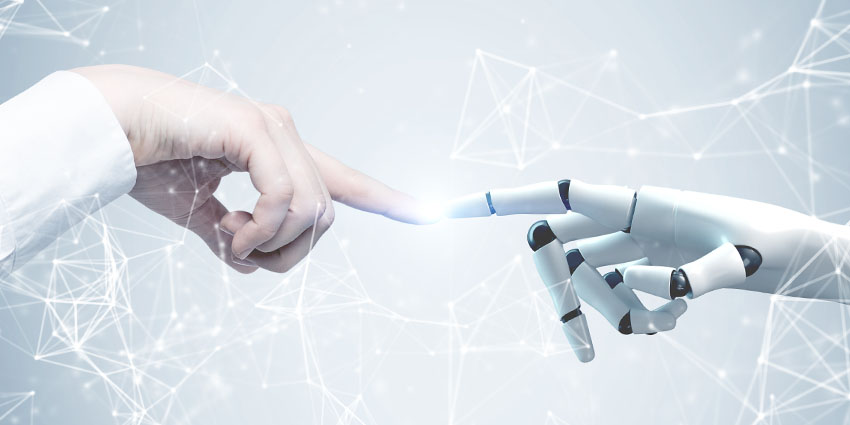
The way we define collaboration is constantly evolving. A few years ago, “collaborating” on a project with team members meant booking time to sit around a table in a conference space. As the digital world evolved, collaboration became more versatile, and entirely new platforms emerged.
Team collaboration software began supporting end-to-end connections between employees across a distributed, virtual landscape. Employees learned how to connect and share data through multiple channels, from voice and video to SMS and messaging. However, the innovation in the landscape didn’t stop with the introduction of video conferencing.
Now, companies are beginning to explore even more advanced concepts, like collaboration in the “metaverse”, extended reality, and more. One of the most interesting and comprehensive solutions to make its way into the collaboration space is “artificial intelligence”.
Now a commonplace part of many communication strategies, AI isn’t just changing the way we work; it’s also improving efficiency, helping to build relationships, and boosting team compliance.
The Role of AI in Collaboration
Artificial Intelligence has proven to be a multi-faceted tool for the communication and collaboration space. Initially, vendors and brands began introducing AI as a way to help companies manage the data generated throughout collaborative sessions. Comprehensive AI tools can easily take large amounts of information and translate it into digestible, valuable insights.
From an analytics perspective, AI has given businesses a deeper insight into the productivity of their teams, the bottlenecks responsible for the damaging performance, and more. AI can even help businesses to understand the different employee personas in the workforce and determine how new technologies and innovations are used and adopted.
However, AI is capable of so much more than analysis. According to McKinsey, since 2020, companies have been rapidly increasing their investment in artificial intelligence on a massive scale. We’re beginning to use tools to enhance the quality of the meeting experience, improve workflows, and even automate certain tasks on the behalf of growing teams.
How AI is Enhancing Workplace Collaboration
AI tools can allow companies to leverage new work strategies, transform workflows, and generate more value from everyday meetings. As innovative UC and collaboration companies continue to generate new algorithms for machine learning and AI, business leaders are increasingly gaining access to a range of powerful capabilities and features.
Some of the key ways AI can enhance collaboration today include:
Empowering Remote and Hybrid Work
Approximately 58% of Americans now have the ability to work remotely at least once per week. Additionally, when people do have the option to work remotely, 87% are happy to take it. Flexible working strategies have paved the way to better productivity and engagement from team members around the globe while allowing companies to access a wider range of talent.
However, remote and hybrid work isn’t without its downsides. Employees outside of the office can often feel disconnected from their peers, and they don’t have the same support they might get working in a traditional space. In fact, endless employees struggle to troubleshoot problems, complete tasks, and find information when they’re working remotely.
AI can help. Virtual assistants can immediately collect information from multiple environments and deliver it to employees at the click of a button. The right tools can answer questions about common issues and even automatically solve problems on the behalf of teams. At the same time, these tools can also be used to collect insights about employee engagement and satisfaction, making it easier for business leaders to monitor their remote and hybrid workers.
Improving Employee Relationships
Strong employee relationships are crucial to preserving engagement and satisfaction in the workplace. Today’s team members want to feel connected to their colleagues, regardless of whether they’re working in a traditional office or operating from home.
AI in collaborative workspaces can also be used to improve the connections between different groups by facilitating more meaningful communications. Not only can AI tools automatically translate spoken and written text into different languages, but it can also transform the way we connect with each other face-to-face through video.


