
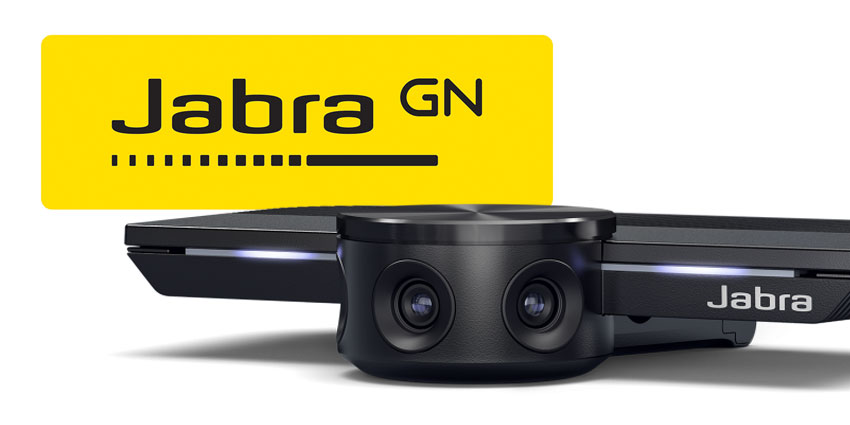
Leading communications provider Jabra is changing the way companies think about video conferencing. As video continues to transform the way that we connect, offering more immersive ways to stay in touch in the age of remote working.
Aurangzeb Khan, Senior Vice President of Jabra, says that the latest advancements in technology are beginning to introduce a new generation of video conferencing solutions, providing next-gen video conferencing opportunities like real-time data analytics, facial recognition, occupancy sensing, and more. As state-of-the-art cameras, artificial intelligence, and high-quality audio become increasingly more accessible, it's also becoming easier for businesses to access state-of-the-art room usage metrics, automation for peripherals, and so much more.
Khan notes that intelligent investments in smart technology today can lead to huge returns on investment tomorrow, whether it's 180-degree video capabilities, the automatic shut-down of power-consuming equipment when rooms aren't in use, or something else entirely, video conferencing is more powerful today than ever before.
Video is Changing the Way That We Work
The introduction of automation technology, big data, and other tools for next-generation video conferencing delivers a host of benefits that can significantly improve employee productivity and real-estate utilisation in the workplace. Now that companies can access and aggregate information, it's easier to unlock useful data lakes that allow business leaders to analyse the patterns and seasonality of room usage, optimising floorplans, and schedules alike.
Since real estate costs can be significantly high for companies, these new innovations are a valuable way to save businesses a lot of money. If companies can automate room release for users, they can achieve substantial time savings and improvements in efficiency for better productivity. Additionally, new technologies also allow businesses to use much smaller huddle rooms for collaboration. Typical video conferencing cameras now require much less open space between the closest participant and the camera to offer a full 180-degree field of view.
Khan believes that the latest video tech is a massive boon for today's office environment. Video sensor AIs can even determine whether users are within a specific range of coordinators to identify load factors for a certain time. What's more, the data collected by modern camera systems doesn't harm a user's privacy. AI can detect how many people are sitting at a table without being intrusive. There are also options for mood and sentiment detection too.
 Aurangzeb Khan[/caption]

