
The last few years have taught us all a thing or two.
We’ve learned how adaptable we all are. We’ve learned to embrace new ways of working. And we’ve learned (as if we hadn’t known it all along) how technology helps us respond to life’s big challenges.
Connecting remote workforces, powering virtual collaboration, unifying clever communication tools: this most modern of industrial revolutions has reimagined how the world works.
One of the bigger stars to emerge? Videoconferencing.
Smart, connected and feature-rich hardware brings people together like they are in the same room; transforming the way we interact with each other, shifting organizations’ culture, slashing travel costs, and minimizing distance.
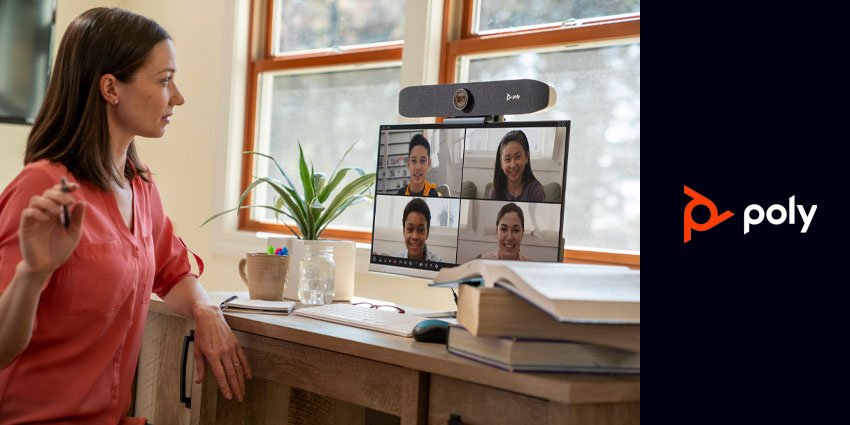
All vertical sectors have benefitted big but, for education in particular, the ‘hybrid’ model – that brilliant mix of physical and virtual participation – is fuelling positive and permanent change certain to help shape a bright future for us all.
From classrooms in remote schools to entire campuses spread over several countries; teachers, pupils, lecturers and students are leveraging clever videoconferencing solutions to learn smarter.
It is a way of learning that is no longer a temporary work-around response to a global pandemic.
Indeed, the sector represents the latest huge opportunity on which educational establishments’ technology provider partners can now capitalise.
“When we think about hybrid working, we perhaps think first about the corporate world, with project teams dialling in to virtual meetings and sales presentations being delivered remotely – but hybrid education is growing in popularity and will continue to do so,” says Sof Socratous, VP Sales Northern Europe, at global communication and collaboration solutions provider Poly, which is already helping schools, colleges and universities all over the world to transform.
“Our solutions and our provider partners are empowering educators to embrace the rapid evolution of collaboration technology in ways which benefit all parties. Growth in the sector is assured.”
The pandemic was the reason why the digitalization already in the works was expedited by one Poly customer; the Kleine Strolche Selm e.V. - a non-profit, parent-owned, pre-school daycare center in Germany.
Technology was already considered essential to learning and digital transformation was a priority.
When the pandemic struck, parents, teachers and management naturally turned to technology to facilitate contact and avoid disrupting the children’s learning journey.
However, Government restrictions changed frequently, causing constant work disruption, and new regulations were often only communicated a few days in advance, meaning everyone had to coordinate school life as flexibly and efficiently as possible by seeking out new ways of communicating.
The establishment purchased intuitive, plug-and-play Microsoft-certified Poly audiovisual devices to make secure phone calls and video calls via their preferred collaboration platform, Microsoft Teams.
It invested in a Poly Studio USB video bar, a Poly Studio P5 professional grade webcam, a Poly Sync 40 speakerphone, and Poly Voyager Focus 2 Bluetooth® headsets; all of which made it easier for the management, board and teachers to communicate not only during COVID-19-imposed restrictions but also after they had been lifted.


