Are You Waiting Too Long to Address Employee Burnout?

Workplace Burnout Prevention: Why Real-Time Wellbeing Beats Reactive Support

3
Digital wellbeing tools for workplace burnout prevention and resilience
Employee Engagement & RecognitionExplainer

Published: April 29, 2026

Sophie Wilson

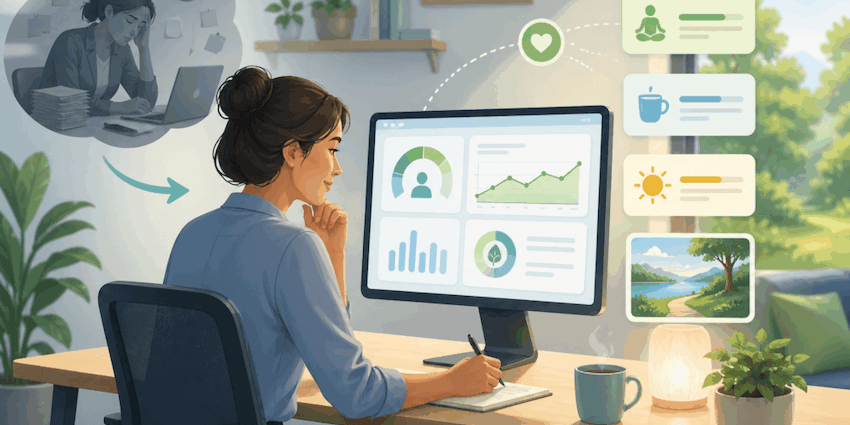
Micro-wellbeing interventions are small, frequent supports that reduce strain in the flow of work. Think short resets, guided breaks, workload nudges, and friction removal. They are designed to work like safety rails, not emergency exits.

The reason this matters is simple. If burnout builds through chronic stress, prevention must be continuous.

In UC Today’s coverage of AI, collaboration, and employee engagement, a recurring theme is that β€œengagement” is not soft. It is operational. Tools that support trust and purpose need to sit inside how people work every day.

How Can Digital Tools Prevent Employee Burnout?

Digital tools prevent burnout by surfacing early signals and reducing daily friction.

That includes:

  • sentiment pulses that detect strain trends,
  • nudges that encourage breaks or focus time,
  • and workflow changes that remove pointless work.

Gallup’s recent burnout coverage also links burnout to engagement and shifting work patterns, which is why early detection is becoming a management capability, not just an HR initiative.

Prevention is not about watching people. It is about seeing system strain.

What Metrics Measure Workplace Wellbeing?

Most organizations measure wellbeing too slowly. Annual surveys are useful, but they are not early warning systems.

Better measurement combines:

  • short sentiment pulses,
  • workload signals,
  • meeting load and after-hours work,
  • absence patterns,
  • and turnover risk indicators.

UC Today’s reporting on employee experience measurement emphasizes the shift toward actionability. Data has to become a business KPI, not a dashboard ornament.

How Do Wellbeing Platforms Integrate With Productivity Tools?

Integration is where wellbeing becomes real.

When wellbeing tools integrate with collaboration and productivity platforms, support becomes part of the routine. That can mean nudges inside chat tools, manager prompts inside team dashboards, and well-timed check-ins that do not feel like HR paperwork.

UC Today’s guide on AI and collaboration frames digital workplace tools as a way to reshape trust and productivity. That is also the foundation for proactive wellbeing.

If your recognition program feels β€œbusy” but burnout still climbs, don’t miss why recognition inflation can quietly weaken your employee engagement strategy.

What Role Does Workload Data Play In Burnout Prevention?

Workload data turns burnout from a mystery into a pattern.

If the same team has:

  • constant context switching,
  • high meeting density,
  • frequent β€œurgent” requests,
  • and rising ticket queues,

then burnout risk is predictable. It is also preventable.

Workload data also reduces stigma. It shifts the story from β€œyou are not coping” to β€œthe system is overloaded.”

Recent UC Today coverage has highlighted how speed and AI can make work faster without making it feel lighter, which is exactly the trap that workload data helps expose.

How Can HR Build Preventative Wellbeing Strategies?

A preventative strategy is built like a safety program.

Start with three moves:

Define what β€œtoo much” looks like. Set workload and meeting thresholds that trigger action.

Design manager routines. Managers need simple prompts and playbooks, not vague wellness goals.

Treat wellbeing as an operating model. Tie it to engagement, retention, and performance, then review it monthly.

UC Today’s engagement trend reporting also points to the rise of platform-led ecosystems, where recognition, engagement, and analytics connect. That connection is what makes prevention scalable.

Conclusion

If your wellbeing strategy only activates when someone is already struggling, you are late. Burnout is defined around chronic stress that is not successfully managed, which means prevention is the job.

Micro-wellbeing tools, real-time sentiment, and workload signals help organizations intervene earlier. The goal is not surveillance. The goal is resilience, retention, and healthier performance over time.

Go deeper with AI and Collaboration: The New Power Duo Transforming Employee Engagement.

FAQs

What Are Digital Wellbeing Tools?

Digital wellbeing tools are platforms that support mental health and resilience through check-ins, nudges, insights, and workflow support.

What Is Workplace Burnout Prevention?

Workplace burnout prevention is a proactive approach that reduces chronic stress through early signals, workload management, and supportive routines.

What Should An Employee Wellbeing Strategy Include?

An employee wellbeing strategy should include measurement, manager routines, workload controls, and integrated support across daily tools.

How Does Workplace Mental Health Technology Work In Practice?

Workplace mental health technology works by combining sentiment signals with operational data, then prompting timely interventions.

What Are Enterprise Wellbeing Platforms Best Used For?

Enterprise wellbeing platforms are best used for continuous wellbeing management, trend detection, and scalable support across regions and teams.

Employee ExperienceEmployee Wellbeing Tech​
Featured

Share This Post