It’s so easy to assume your teams are fine on the surface these days. They’re busy, active, and probably constantly experimenting with new tech. The truth is they’re running on fumes. Burnout levels are at 66% (an all-time high), and engagement levels are painfully low.
The numbers from industry reports read like an autopsy. Work days are infinite, and the UK logged 148.9 million sick days last year. Stress and anxiety were responsible for more than 17 million of them. Global disengagement continues to drain roughly $8.8 trillion from the economy.
The “always available” rhythm of modern work is wearing thin. What makes it even more complicated is that the same technology creating the pressure is often the only thing capable of easing it. On one hand, we have teams overwhelmed by too many scattered systems and AI fatigue.
On the other hand, we’re starting to discover innovative HCM systems that can actually bring wellbeing and engagement back into the spotlight. If you want to know how these systems help, explore our complete guide to HCM technology. If you’re looking for the details on why it all matters, read on.
Further reading:
- Why Employee Wellbeing Tools Need Trust to Succeed
- How to Prevent Burnout in the AI Era
- The Top Employee Experience Trends for 2026
What Is Employee Wellbeing Technology?
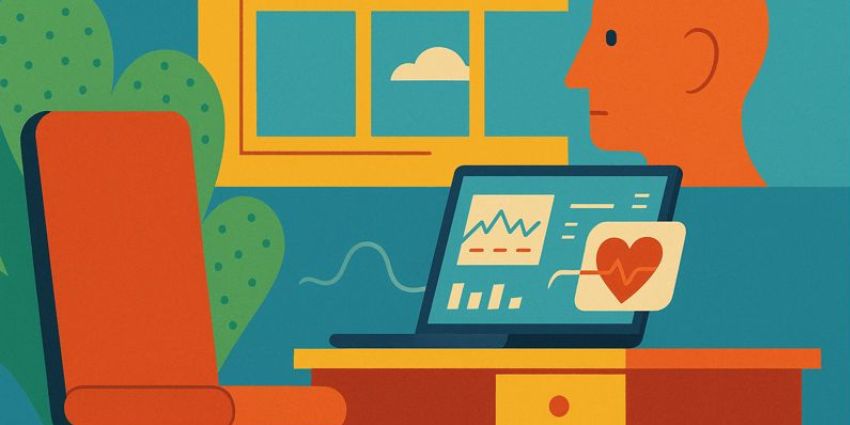
Employee wellbeing technology is the set of tools companies use to figure out how work is really affecting their people. It’s how you stop judging employee experience based just on occasional surveys or performance metrics.
Most of these tools now live inside HCM or employee experience platforms. They pull together signals that used to sit in totally different places. Engagement feedback, absence patterns, workload distribution, and even how crowded people’s calendars have become.
When certain teams start drowning in meetings, or one manager is quietly carrying the workload of three people, the system makes that visible. That means companies can act on it fast, sometimes introducing new initiatives, changing scheduling strategies, or just reaching out proactively to offer help to the employees who need it most.
Which Challenges Influence the ROI of Employee Wellbeing Technology?
There’s a particular kind of tired that’s settling into workplaces lately. Not the “didn’t sleep well” kind, the deeper version where people start questioning whether their brains are supposed to feel this fried. The infinite workday is draining teams in a way that can’t be fixed with tech alone.
A few years ago, burnout mostly looked like long hours or a demanding boss. Now it’s layered. Hybrid setups that were supposed to make life easier have, in many places, turned into a constant game of calendar Jenga.
Remote teams get pulled into video meetings that seem to stack endlessly. People in the office ricochet between screens and workstations without a moment to reset. Surveys keep showing the same story: roughly 73% of UK employees feel buried under constant digital interruptions, and about one in five spend over four hours a day just answering messages. Not doing meaningful work, just keeping up.
We all assumed AI would help, attending meetings for us and handling the busywork, but it’s adding stress too, forcing staff to revamp their workflows constantly, trust systems they barely understand, and work hand-in-hand with machine colleagues that could steal their share of voice.
For employee well-being technology and programs to make an impact, they need to address:
Notification, Meeting, and Platform Overload
There’s a point where workplace communication starts feeling like vandalism on someone’s attention span. Most companies blew past that point.
Workers are being hit from every direction: messages, tags, meeting invites, status updates, and project boards that seem to multiply out of thin air.
Then you add meetings. A chunk of employees sit in 7+ hours of video calls every week, which eats up any chance at meaningful focus. It’s impossible to protect mental bandwidth in an environment where the calendar feels like wet cement, constantly pouring, never setting.
Poorly-Framed Automation
Automation is supposed to free people, and it can, when it’s used properly. In reality, it often just speeds everything up until it breaks.
AI tools get shipped into workflows with little explanation, and suddenly teams feel like they’re sprinting on a treadmill someone else controls. Instead of reducing load, the tech accelerates output expectations. More capacity magically turns into more tasks. More speed becomes more pressure.
Automation can support employee wellbeing, but only if it’s intentionally designed to reduce work, not mask overwork.
Shadow AI
Shadow IT used to be a big threat to businesses. Now, shadow AI is taking the throne.
When time runs tight, and the tool stack gets chaotic, people start grabbing whatever shortcuts they can find, little AI helpers, browser plug-ins, homemade automations nobody approved or even knows about. It’s survival mode. But it also creates a hidden layer of stress that builds up fast.
The moment something breaks, panic hits, and leadership suddenly clamps down on unapproved tech, so trust takes a hit too. What was meant to save a few minutes ends up creating guilt, pressure, and inconsistency across workflows.
Data Anxiety & Perceived Surveillance
No employee wants to feel like a tiny light on a dashboard somewhere. But as companies roll out digital analytics tools, often the same ones meant to support employee wellbeing technology, fear creeps in.
The fear isn’t about “data.” It’s about misinterpretation. Will a late-night login be judged? Does declining a meeting get flagged? Are productivity metrics being tracked behind the scenes?
Business leaders need aligned insights, but if employees don’t know how the data’s being used, they’ll start hiding.
Why Are Organizations Investing in Workplace Wellbeing Tools?
One of the strangest things about modern business is how long it took people to admit that burnout has a big price tag. The total employer cost of poor mental health is about $56 billion a year. Globally, disengagement bleeds over $8.8 trillion from the economy.
This is the moment organizations stop framing employee wellbeing as an afterthought and start looking at it as an operational risk. Because the math around employee wellbeing ROI is surprisingly straightforward:
- Broad employee wellbeing programs return 4.7× to 6.3× their cost
- EAPs average £10.85 back per £1 spent
- US employers see $1.47 ROI per dollar, moving toward $1.52
- Healthier teams often deliver 10–20% higher productivity
Then there’s turnover. Losing a single employee can cost £3k to £30k, depending on the role. Burnout is one of the top reasons people walk.
If you need more specific numbers, look at On, the sportswear brand that uncovered an 11.6x ROI annually after investing in mental health support and work-life balance. Or, how about Port of Brisbane, which has delivered a decade-long wellbeing push, returning $1.58 per $1.
McKinsey even puts a global number on the potential upside: $3.7 to $11.7 trillion in economic value if companies take wellbeing seriously.
How Does Wellbeing Technology Improve Employee Experience?
It’s easy to blame technology for every crack in modern work, and honestly, a lot of the criticism is deserved. But the other side of the story is finally getting some sunlight. The right systems, used with a shred of intention, can become the spine of healthier, calmer workplaces.