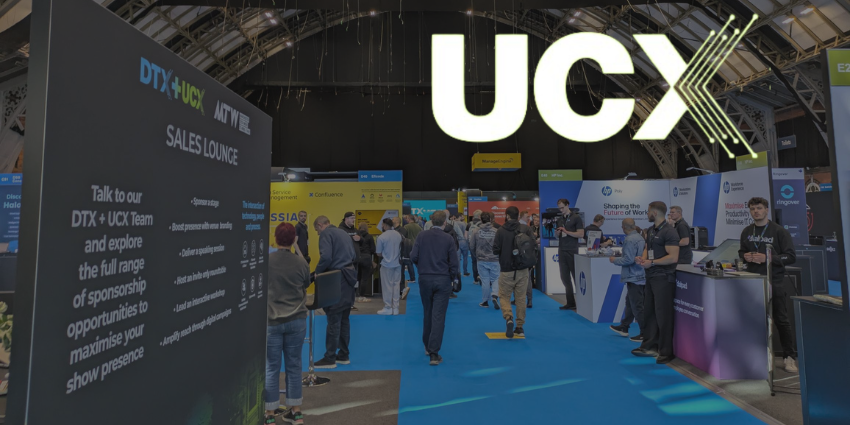
UC Today was on the ground at UCX Manchester last week, where three themes dominated the conversation: ITSM tool implementation, the rise of the AI-powered service desk, and the growing importance of multi-supplier IT governance.
Industry experts and real-life ITSM adopters provided insight on the long-term promise of AI, the uncomfortable truth about failed implementations, and the foundational argument for managing complexity rather than avoiding it. Here are the key takeaways.
Read More:
- Atlassian Cuts 10 Percent Of Workforce As AI Reshapes Software
- Ivanti’s Latest Release Puts Agentic AI ITSM Into Commercial Deployment
- Serval CEO: ITSM Automation Should Resolve Tickets, Not Just Track Them
AI Is Coming for Your ITSM, and Your Data Isn't Ready
Chevonne Hobbs, Senior Business Consultant at CGI and Group Chair at itSMF, opened with a frank diagnosis. Across both public and private sector clients, she is seeing the same foundational problems holding organizations back from building a truly effective AI-powered service desk: inconsistent incident data, fragmented knowledge management, inaccurate asset records, and poorly mapped service dependencies.
Building an AI-powered service desk requires clean, well-structured data above all else. Hobbs made this point clearly when she said:
"In order for AI to be able to predict when an incident may occur, for it to be able to do any self-healing...it needs to understand what assets you have and how they all link together."
And without that foundation in place, even the most sophisticated AI-powered service desk capabilities will fail to deliver meaningful value.
Her framework for AI maturity in ITSM:
- Generative AI, already embedded in tools like ServiceNow, Freshservice, and BMC Helix, delivers immediate productivity gains: summarizing incidents, suggesting knowledge articles, and generating reports.
- CGI's own internal survey found that 84% of users reported an improved ability to manage their workload through generative AI, and 90% reported improved well-being.
- The next tier, agentic AI, orchestrates workflows, triages tickets, and enforces governance across platforms.
- Above that sits AIOps: correlating events across the entire estate, self-healing before incidents are raised, and pushing the AI-powered service desk towards a genuine zero-touch operating model.
The path forward, she argued, runs through community. Building a cross-business AI strategy group, running weekly lunch-and-learns, and creating shared channels for teams to surface use cases are all part of how CGI has embedded AI across its organization.
The broader advice for IT leaders: envision the strategy, engage stakeholders early, test with real users, govern responsibly, and stay agile — because the technology is evolving faster than most organizations can follow.
Stop Blaming the Tool: The Hard Truth About ITSM Tool Implementation
The event's most candid session tackled a question many IT leaders quietly already know the answer to: when an ITSM tool implementation fails, is it really the software's fault?
Martina Holubcova, Assistant Director of Service Management at Manchester Metropolitan University, brought the perspective of someone fresh from a major implementation. The university recently deployed Freshservice as its new service management platform, spanning 85 teams and 900 agents across the organization.
She credited the project's success to collaborating with different stakeholders, for example with the academic registrar as project sponsor, and user-grouips scoring vendor demos. She captured the guiding principle when she said:
"Sometimes the decision itself isn't as important as the fact that you made it together."
And that buy-in, she noted, is what separates an ITSM tool implementation that sticks from one that gets replaced again in three years.
Barclay Rae, an ITSM consultant, was unequivocal about the root cause of most implementation failures in his experience. He said:
"The biggest issue that I've seen, and it happens all the time... is underestimation. It's underestimating the work that's required. It's underestimating the scope of the work that's required. And underestimating particularly the people and culture side of things."
And that underestimation, he argued, stems from a fundamental misclassification: ITSM tools are business applications, not technical IT systems, and any ITSM tool implementation should be governed accordingly, not treated as a purely technical project.
Want more takeaways like these from the operational side of IT? Follow UC Today on LinkedIn.
The Relay Team Problem: Multi-Supplier IT Governance as a Strategic Priority
The third core takeaway from the event regarded how multi-supplier IT management is the quiet risk most organizations are not yet taking seriously enough.
Claire Agutter (Director) and Tony Williams (Associate SIAM Partner) of Scopism specialize in Service Integration and Management (SIAM). This refers to extending ITSM processes across organizational boundaries to manage multiple suppliers as a coherent whole. Their global survey found that 82% of organizations want better performance from existing providers, yet most are still not actively managing the interfaces between them. This is the core problem that multi-supplier IT governance is designed to solve.
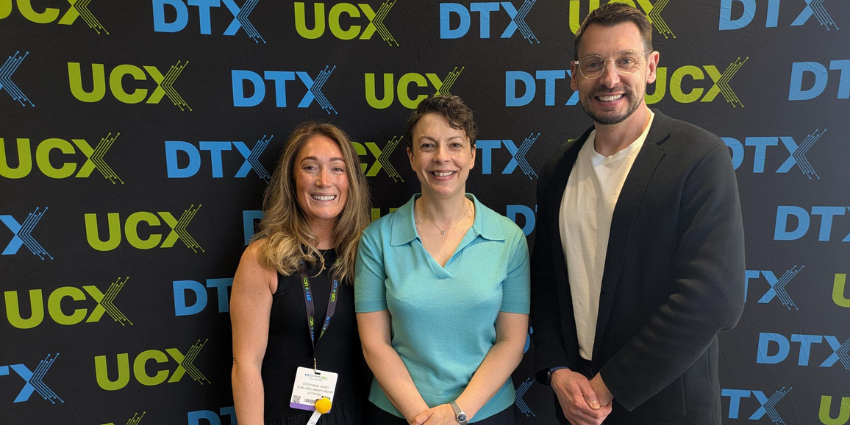 Stephanie Ward, Claire Agutter, and Tony Williams from SIAM experts Scopism.[/caption]