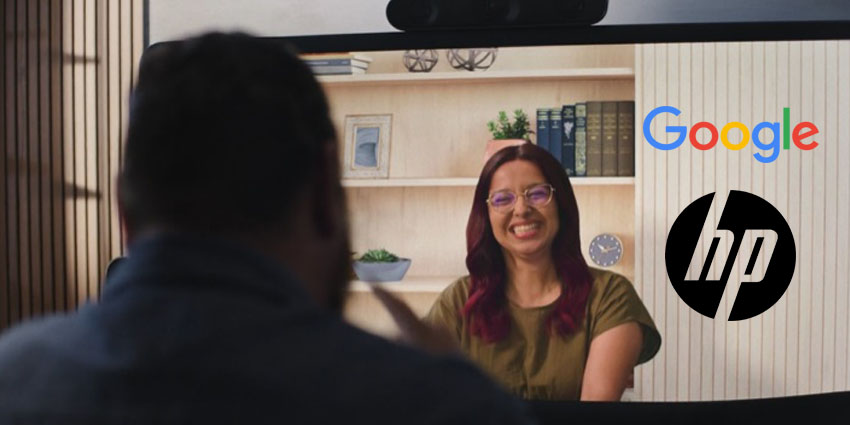
Google and HP have partnered to commercialise the former's Project Starline immersive collaboration solution and bring it to workplaces.
Project Starline, a Google project initially announced at Google's 2021 I/O event, intends to revolutionise video conferencing through increased immersion by leveraging advanced technology such as AI, 3D animation, immersive displays, and spatial audio to create hyper-realistic 3D representations.
A device reminiscent of a next-gen webcam and screen combination in physical design, Project Starline has spent several years in development. With HP's assistance, Google is set to fully commercialise the product for a 2025 market debut, focusing on distributed teams and hybrid workforces.
Starline will work directly with major video platforms, such as Google namechecking Google Meet and Zoom.
Andrew Nartker, General Manager at Project Starline, wrote in a blog:
Today, we’re excited to share that we’re bringing the technology out of the lab with a focus on connecting distributed teams and individuals in the workplace. We’re partnering with HP to start commercialization of this unique experience in 2025 and are working to enable it directly from the video conferencing services you use today — such as Google Meet and Zoom."
Google reports it has spent "thousands of hours" testing Project Starline across its offices and with enterprise partners. The company asserts that Starline meetings feel more like being in the same room compared to traditional video calls, resulting in better attentiveness, memory recall, and an overall sense of presence.
Nartker added that HP's "expertise in computing", complemented by its investment in Poly’s collaboration solutions, makes the business "uniquely positioned to deliver new and innovative experiences worldwide".
More Details On The Project Starline News
Project Starline enhances remote conversations by displaying a 3D image of a co-worker on a screen. It realistically portrays depth and movement in what Google describes as being like a "magic window". It tracks the caller’s head and eye positions to create corresponding animations, making interactions more natural and lifelike.
Previously, Google conducted an early access program to test Starline with various enterprise end-users, including Salesforce, T-Mobile, and WeWork.