
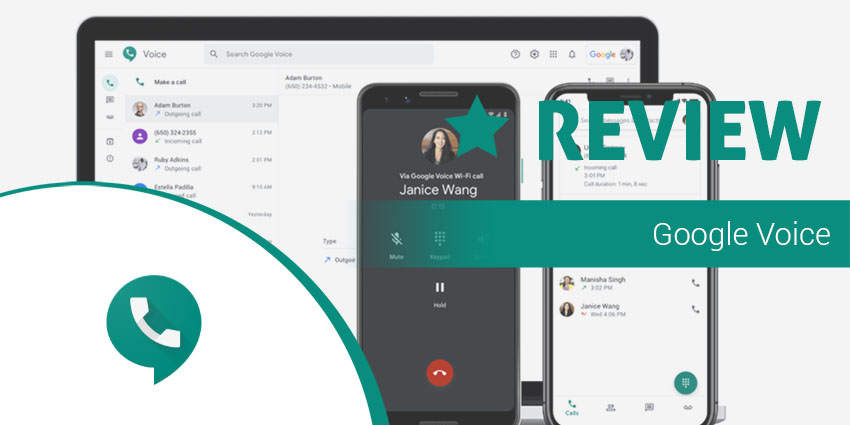
Google Voice is among the lesser-known offerings from the house of Google. The search engine giant has rapidly carved a significant market for itself in cloud computing, powered by the Google Cloud Platform. One of its most popular offerings is G Suite – a range of productivity and collaboration tools for businesses. Google Voice is envisioned as an add-on to G Suite adding another element to Google’s already highly layered offering.
Interestingly, Google Voice predates the formation of Google’s parent entity, Alphabet. It was originally founded by a company called GrandCentral (with funding from minor ventures) in 2005 before it was acquired by Google two years later for USD 95 million. Until 2009, the service was limited to existing users while Google continued to work behind-the-scenes to make GrandCentral’s offering even better.
Google Voice as we know it was launched on March 11th, 2009, based on Grand Central’s original technology and augmented by several new features. Since then, the solution has gained from technology injections resulting from fresh acquisitions, like Gizmo5.
Let’s now review the capabilities of Google Voice.
Inside Google Voice
Google Voice is based on a simple premise: it turns any device into a work phone using a single pan-organisational number. Like most Google products, it's easy to set up, and seamlessly fits into your daily workflows. The standard G Suite Admin console can be used to manage the different configurations, number assignment, usage, and billing. It’s biggest USP is probably the ubiquity of Google’s ecosystem – if you are on an Android smartphone, Google Voice is a pleasure to use.
Here’s a quick review of its features:
- You can add up to 10 users in the Starter pack, and unlimited users in Standard and Premier additions
- 10/unlimited domestic locations can be onboarded, with international locations available only in the Premier version
- Voicemail transcription lets you quickly glance through information for missed calls, prioritising and following up as necessary
- Google calendar can be integrated to schedule calls as per individual user availability
- Reports on usage and real-time activity are available on every version, regardless of cost
- Apart from the Starter pack, all versions come with a multi-level auto-attendant, helping customers to self-serve or reach the relevant agent/department
- You can conduct an advanced search for calls, voicemail, and SMS records, thanks to Google Voice’s built-in eDiscovery capabilities
- If you opt for the Premier version, sophisticated and customised reporting using BigQuery is also supported
- All versions barring Starter, are compatible with desk phones; Google has partnered with Polycom to provide certified hardware infrastructure
Why Google Voice makes a difference
While it may appear simple on the surface, Google Voice has several factors going for it. First, it has been around for over a decade and has received consistent support from Google. Number selection and porting are particularly easy, guided by Google’s intuitive user interface, and robust reference documentation repository. Scalability is another advantage, allowing rapid deployment from multiple locations across the world. And, the G Suite Admin console makes the management of the Google Voice service particularly easy.


