Perhaps the fastest-growing component of extended reality (XR) right now, augmented reality (AR) is taking the world by storm. The AR industry is always evolving, particularly now that new companies are investing in various kinds of smart glasses and devices. By 2028, experts predict that the industry will reach $340.16 billion.
Of course, before a person can justify investing in new solutions like AR for their business, they need to understand how the technology works. While many have heard of AR today, there are still those who don’t understand how devices can bring digital content into the real world.
AR 'augments' physical environments by superimposing digital content in a user's smart glasses or device. AR solutions can do everything from transforming a face into a potato on Snap, to giving directions whilst walking through a store with Nextech AR's mini-metaverses.
Let's look at the basics of AR technology and how it works to influence what people see around them.
The Components of AR
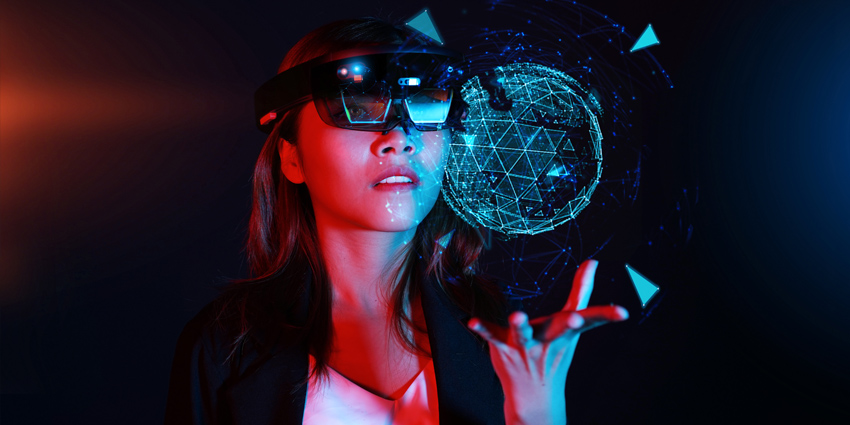
There are various kinds of AR in the world to date. Smart glasses and goggles from firms such as Magic Leap allow people to see information displayed in front of their eyes on a miniature screen. AR apps help consumers and professionals interact with digital content, without the need for additional hardware.
No matter the kind of AR, each technology will include the following components:
Hardware
AR has gained popularity through numerous devices such as smartphones, tablets, and smart glasses. For AR to work on a smartphone, for instance, it needs access to processors and sensors that can accommodate computer vision and processing. This is why phones with limited speed struggle with it.
The hardware also needs access to a Graphical Processing Unit (GPU) to render AR-enhanced displays and various sensors. For instance, a gyroscope measures the position of your phone, and proximity sensors determine how far away something is. Light sensors measure brightness, accelerometers detect changes in movement, and depth sensors examine distance.
Smartphones can also utilise hardware such as cameras to collect information. Alternatively, companies can create smart glasses and visors with built-in camera functionality. Devicemakers such as Nreal, Snap, RealWear, Vuzix, Iristick, Meta Platforms, Google, and Lenovo facilitate this with their solutions.
Software
The second component of an AR device, the software is where the magic really starts. Developer toolkits like Google's ARCore and Apple's ARKit support the creation of software to deliver computer vision for apps. This means the software can understand a user's physical environment through a camera feed.
Environmental understanding is one of the most important components of AR software, allowing devices to see specific features and flat surfaces to perceive surroundings.
Companies such TriggerXR leverage Niantic's cutting-edge Lightship AR development kit (ARDK) to place virtual objects on surfaces accurately.