When your name is affiliated with the longest-serving UK monarch in history, there's a lot of pressure to deliver a royal experience.
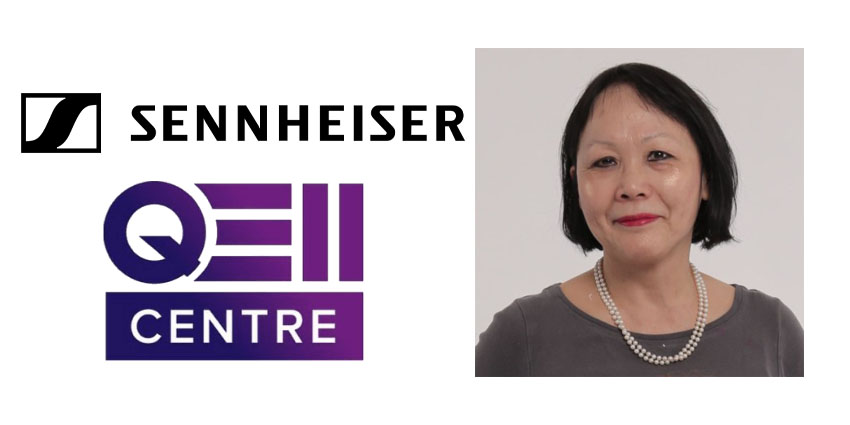
That's one of the underlying challenges for every employee at The Queen Elizabeth II Exhibition Centre, especially for Deborah Jones, AV/IT Sales Manager at the organisation. Jones and her team have to ensure a premium level of AV support for some of the biggest events, conferences and meetings in the country, including AGMs for prominent international businesses and the leadership hustings for the UK's political parties.
Dealing with very important people often means both the setup and the staff supporting it need to be adaptable and expert. When the Centre redesigned its foyer space, for example, plenty of care went into making it look grand—not only in its aesthetics but also its AV infrastructure—because, as Jones put it, "that's our waiting room for the nation".
"Everybody else was centred on how it was going to look and the resolutions of screens and da-da-da," Jones told UC Today. "I said, 'I know you're going to want to make a speech; what kind of PA system and what are we going to put in? We've got a video wall. What soundbars are we going to use? What audio are you going to put in, and how is it going to conflict with all that marble you're putting down on the floor?'"
"Everybody said, 'Oh, it'll be fine. It's not a meeting room; it's a foyer. People are going to come in and hang their cloaks up.' Lo and behold, the first thing we did was hold a party in the foyer."
Surprise! An impromptu speech took place.
"Of course, the first thing everybody said was, 'You've got to make a speech because this looks fantastic'," Jones said. "We didn't even know that they would work in that space. But obviously, we tested them. It's really sound equipment. It hit the glass doors at the front. It went back so far. It looked and sounded fantastic. We were able to record from it. We made a highlights video of the whole thing, and the sound was perfect."
That initiative to add leading audio equipment proved even more prescient once COVID-19 arrived—and with it, the advent of hybrid and remote working as the new normal.
"During COVID and hybrid, audio became really important because a lot of people weren't keen on video," Jones explained. "They were used to picking up the phone quite often, an analogue phone."
"But as for going on to Teams and managing the audio and doing hybrid meetings, so you'd have all the directors giving their 'share' information from a studio, studio sound, using proper microphones, proper audio, people were absolutely no good at responding to that. Or their expectation was that it would be like a one-to-one, but of course, it was proper studio sound."
"If you were Cora, you could run your annual general meeting from our place(...) you'll find that most annual meetings and annual general meetings nowadays are a lot smaller. You still need sound, though, because guess what? You've got a thousand people online. At the end of the day, people don't meet in the same way, and that's how audio has evolved. It's now got to be for the people in the room and for the wider audience outside."
Jones's Journey
Jones joined the community 30 years ago, starting off as a project manager but is now dealing with forward sales. "I still do shows," she clarified, "but most of the time, I'm looking at introducing our team, introducing concepts, organising 3D visuals and animations, and discussing briefs."
Jones has been a director at The AV User Group for 10 years, has an MBA, and holds the AVIXA Certified Technology Specialist (CTS) certification—she is the first woman in the UK to be awarded the certification.
That impressive CV underpins the extensive experience and expertise required to excel in her role, especially as being a tech leader for an institution as hallowed as the Queen Elizabeth II Centre often means donning a lot of hats. "As a government venue, I'm never quite sure whether I should say I'm in the live events industry, hospitality industry, or the government sector," Jones said.
A Tech Stack Worthy Of Royalty
The tech stack Jones and her team deploy and manage is understandably comprehensive and varied, but Jones especially has a close relationship with collaboration tech business Sennheiser. "We've always used Sennheiser," Jones explained. "We're a Sennheiser house, and the people before me were using Sennheiser.
"We have 52 live event spaces," Jones continued. "We have to have that reliability because you can't turn around to your client in the middle of a press conference and say, 'I'm very sorry, our kit's gone down.' It just isn't plausible as a live events venue. Every live event venue will tell you that. That's what Sennheiser offers us."
"I would say we've grown with Sennheiser. We've got other equipment to complement it. We build our audio systems around the kit we bought from Sennheiser. We have large, medium, and small rooms. In the largest spaces, we use D&B, the Y-Series loudspeaker systems, and Yamaha QL5 desks."
The tech ecosystem is extensive. For projection, the Centre uses Panasonic. For monitors, NEC. For switching, Analog Way. Lighting systems? Avalite Desks. "For the digital signage, we're using OneLan, although we're thinking we're getting another server," Jones explained. "For our IPTV, we use Xterity."
On the microphone side, Jones and her team use hardwired, short-neck ME36s and then long-neck ME34s. They also use hardwired microphones on lecterns as backup on top tables, which Jones stresses is important for events like AGMs. There are racks in the main rooms which use the D6000 series for radios, mics and individual kits, both dual and single, to move them from room to room.
"We're very, very interested in anything dedicated to live events because I think it is a particular sector," Jones said. "But we've also got to have a workhorse that all our freelance community and full-time technicians can use. So we need to be able to bring in people, and the desk needs to be familiar, as do the microphones, as do every other part of the audio and data and lighting systems."
In the smaller rooms, the Centre uses D&B, but it has a variety of other loudspeaker systems, including Bose. Jones outlines that they're using Allen Heath desks in some of those rooms and recently purchased the CQ18, which has 18 inputs and 8 outputs and is "a really neat-looking desk". It has six mixes plus LR stereo mixes, dual headset outputs for monitoring, auto-gain, auto-mix, and feedback reduction—"all the things that techs love".
For small exhibition seminars, the Centre leverages silent headset systems for Voice of God. "One thing we're starting to use it for is a caption mixer because, with accessibility, there's much more of a need for captions," Jones added. "We do captions in lots of different ways on the data side, but on the audio side, you've got to have both, really. You've got to have the audio and the captions."
"That's one of the attractions of this little bit of kit, the CQ18. Another thing we really like about it is that it has a built-in wireless access point for tablet control, like an iPad, and Bluetooth input as well."
Lastly, is the Sennheiser LSP500. "I have to say that initially, they were really expensive, but they are wonderful," Jones enthused. "We can use them in our foyer, where there are loads and loads of challenging surfaces, like the floor, marble, and walls. It isn't built for audio equipment like that, for a portable audio kit, and it works perfectly in there, and it's got the range. We've even used it outside. It's really, really adaptable."