
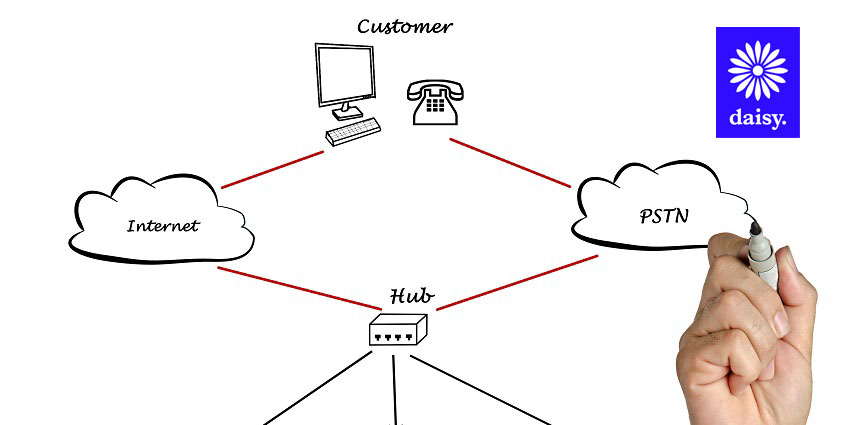
Do you know exactly how much the PSTN switch-off will affect the technology within your organisation? With the deadline for the PSTN switch-off, 2025, just around the corner, businesses are now under increasing pressure to act.
The good news is that this is an opportunity for you to turbocharge your technology stack, by shifting to new, more efficient solutions. Currently, 70% of businesses are still relying on landline phones and traditional services. However, transitioning to the new age of telephony could give these organizations a chance to reduce costs, and improve productivity.
The question is, how do you navigate such a significant change? Here’s your step-by-step guide to preparing for the PSTN switch-off.
Step 1: Examine the Impact of the Switch-Off
With less than a year to transition away from traditional analog systems, more than 2.4 million businesses throughout the UK are still using ISDN and PSTN lines. A major reason for this is that countless companies don’t understand just how impactful the switch-off is.
It’s not just business telephony lines that will be affected by the change. If your company uses any ISDN, PTSN, ADSL2 broadband, or Single Analogue Exchange lines, you’re going to see a change to your functionality. This means everything from your private networking facilities to door access controls, fire alarms, and lifts could be impacted.
Before you assume you don’t need to worry about the switch-off, because you already have a VoIP system lined up, make sure you assess your entire ecosystem carefully. Daisy Corporate Services has produced a fantastic infographic here, showing all the components of your business that may be affected.
Step 2: Explore your Business Telephony Options
Once you have a clearer idea of what the PSTN switch-off means to your business, the next step is to consider your telephony options. There are a few options you can consider:
SIP Trunking Connected to your PBX
Telephony leaders can use SIP trunking technology to deliver VoIP (Voice over Internet Protocol) to your private branch exchange (PBX). This can future-proof your telephony and upgrade your current UC solution, allowing you to retain your provider and current numbers.
However, your PBX may need to be upgraded to enable SIP functionality. This could mean installing a Session Border Controller (SBC) that meets the requirements of your UC supplier.
SIP Trunking Via ISDN to SIP
An alternative way companies can deliver VoIP technology to your business is through an ISDN to SIP converter. A vendor can install the hardware into your ecosystem in the case that your PBX doesn’t allow an upgrade to SIP.
Custom UC Solutions
Alternatively, you may choose to work with a leading communications partner on the development of a comprehensive new unified communications solution. This will give you a comprehensive platform for video conferencing, voice calls, instant messaging and more.
The great thing about this strategy is that it can bring all of the elements of your communications needs together in one convenient environment. You can even combine tools like Microsoft Teams with external voice calling using Direct Routing.
Step 3: Consider Your Broadband Options
The end of the PSTN and ISDN lines in business environments doesn’t just affect your telephony, it can have an impact on your internet strategy too. Connectivity won’t be supported by traditional phone lines in 2025, meaning you’ll need to transition to a new single-order broadband solution.


