Educators and creators have been optimizing video for years – yet enterprise IT is only now beginning to catch up, and the widening gap between the hardware companies provide and the quality employees actually expect is becoming impossible to ignore.
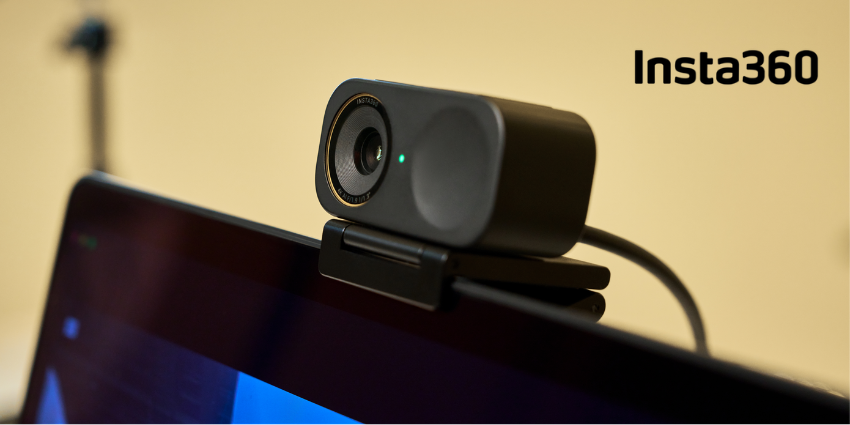
When David Zhang, Conferencing Product Marketing Team Lead at Insta360, speaks with IT leaders about webcams, he frequently encounters the same assumption: that most cameras are “good enough” – and that differences between devices are marginal.
In practice, however, that mindset keeps webcams firmly in commodity territory – purchased primarily for availability and cost rather than for the real-world conditions employees navigate on a daily basis.
“We see people bring their own better webcams, keyboards and mouses into the office,” Zhang said.
“How people look online is part of their professional image.”
Employees are increasingly standardizing around their actual experience in meetings – whether they appear clear on video, sound intelligible, and feel confident when they press “Join” – while organizations continue to standardize for uniformity.
Hybrid work has only reinforced this trend.
“A webcam means more than just a camera,” Zhang added.
“It means connection, empowerment, and the ability to transfer knowledge more easily and at lower cost.”
In effect, what was once considered a simple peripheral has become a critical productivity tool – one that influences perception, communication clarity, and even employee confidence.
The Creator and Classroom Effect
Creators have long invested heavily in cameras, lighting, and microphones because they understand that quality directly affects outcomes – and educators are now teaching the broader market a similar lesson, often at surprising scale.
Zhang described deployments where hundreds of Insta360 Link 2C cameras are positioned throughout classrooms to support remote participation and create a bridge between students, teachers, and families.
In these environments, webcams are no longer optional accessories – they are infrastructure expected to function reliably in imperfect rooms, without constant manual adjustment or an AV specialist on hand.
The classroom example is particularly instructive because it mirrors the realities of most modern offices, which are rarely acoustically ideal and often feature widely varying lighting depending on room, time of day, and desk placement – in such contexts, webcams and microphones must adapt automatically and perform consistently without requiring ongoing technical intervention.
As hybrid models become a permanent fixture of work, the standard for “good enough” continues to rise – and employees increasingly compare the quality of company-issued devices to the personal setups they encounter in their daily lives – from content creators to their own home offices.
Audio Is the Problem Nobody Wants to Own
While video quality is the first thing users notice, poor audio is the problem that most often undermines meetings.
Open offices, hybrid work schedules, and shared workspaces create unpredictable and often noisy environments where sound pickup patterns matter more than ever.
In Insta360’s own offices, Zhang described a scene where “everyone’s on one big table… typing away, smashing keyboards” – a setting in which uncontrolled audio can easily disrupt even a simple call.
Different pickup modes allow users to tune the device to specific environments, creating a focused audio zone that isolates the speaker and minimizes background bleed.
This level of control, once exclusive to production studios, has become a necessity for daily enterprise communication.