
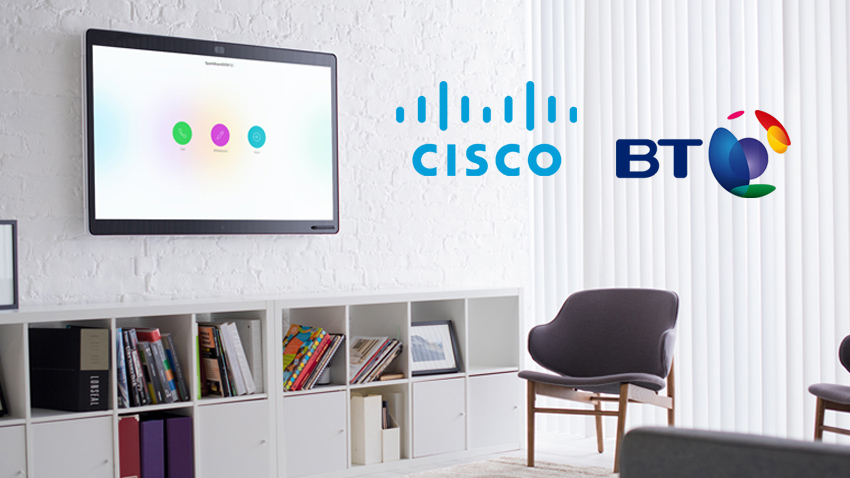
 Recently, BT announced the arrival of their "BT One Collaborate Spark" solution, a new collaboration service for businesses that should help teams to work together with more productivity - regardless of device or location. The new service combines the collaboration tools from Cisco Spark, with the BT One Cloud voice services.
What is BT One Collaborate Spark?
For those who don't know, Cisco Spark is a hosted collaboration application, offering team messaging, voice and video calling, online meetings, and interactive drawing. The service provides end-to-end encryption for security purposes, and is offered on an ongoing basis for subscription designed for per-user-per-month. This means that your services can grow with your business.
The combination of the BT One Cloud Cisco platform's voice services, and Cisco Spark is intended to help customers reduce their costs by automatically routing calls through the One Cloud network, and thereby reducing or avoiding international call charges. It will also give users a more seamless solution for unified communications. BT is giving their customers the option to use Cisco Spark Board too - a device that's been fully integrated into the One Collaborate Spark product. Spark Board is available as a 55-inch presentation device, that also provides video conferencing and whiteboard features.
[caption id="attachment_12528" align="aligncenter" width="600"] Cisco Spark Board[/caption]
The Spark Board by itself performs a range of fantastic functions to improve the collaboration experience for users. For instance, it automatically detects Spark devices, allowing users to seamlessly move between room-based, and mobile collaboration. If 55-inches aren't enough for you, a 70-inch version should be available later in the year.
Improving Collaboration is Key
According to the VP for UC&C at BT, Andrew Small, the latest research suggests that improving collaboration throughout business environments is crucial to digital transformation. The hope is that BT One Collaborate Spark will help customers to design more productive environments for their employees, while limiting the costs of communication. Employees will be able to collaborate more intuitively, regardless of their device, or whereabouts.


