
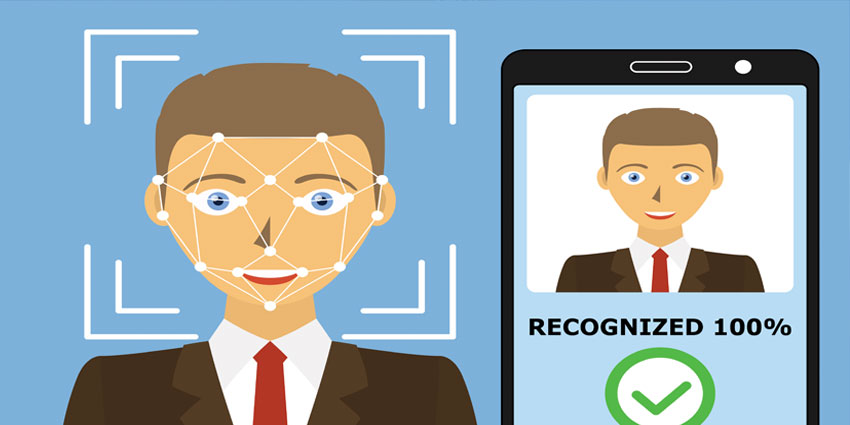
According to a number of exhilarating news reports, the key feature of the upcoming iPhone 8 will be the ability to unlock your device completely hands-free.
Through facial recognition technology, your phone will be able to track your face and unlock instantly - no fingerprint required. There are even some whispers that suggest that the same technology could make its way into "Apple Pay" too so that you can make your daily purchases with a quick smile at your phone screen.
The introduction of a new feature is nothing new for Apple. As a brand that thrives on an identity of innovation, Apple introduces updated technology with every new iPhone. However, it's fair to say that this change is more controversial than most. In a world where companies and individuals alike are becoming more concerned with the safety of their personal devices, could facial recognition technology be the cure to the security crisis? Or, is it more likely that this new update will simply complicate matters further, and inspire new privacy concerns for the modern consumer?
The Benefits of Facial Recognition: Security for The Future
Apple has earned something of a reputation for their devotion to security over the years. The latest update appears to be an effort by Apple to continue offering their customers the highest level of security available, while "phasing out" older fingerprint sensors that had been previously used to unlock iPhones.
The new system should use infrared systems, retinal scanning and forward-facing 3D sensors to track numerous points on a customer's face, and unlock a phone within less than a few hundred milliseconds - regardless of whether that phone is laid on a table, or in the user's hand. The speed of the unlock feature seems to be one of its key benefits - after all, no-one wants to wait forever to get access to their iPhone. At the same time, the security selfie feature also encompasses more "data touch points" for device safety than a fingerprint scanner, which can be hacked with nothing more than a chunk of Play-Doh.
Though in the past, facial recognition seemed to exist in the realm of military and federal agencies, forecasters now think that the technology should reach a revenue of about $9.6 billion in 2022, with a place in the consumer sector too. Despite concerns about user privacy, it's worth noting that there are many benefits to using facial recognition software in today's devices. For instance, facial recognition software offers:
- Accuracy: Cameras are more powerful today than they've ever been. We've already begun to see the benefits of HD video for business conferencing purposes. As recent testing shows, newer cameras that use Infrared and 3D can identify individuals in an instant - even when they've changed their hair, the position of their face, and even the colour of their eyes with contact lenses.
- Speed: As noted above, one of the main selling points of Apple's new feature is its speed. The updated cameras can analyse and recognise a face in milliseconds. There's virtually no wait time when you're using your phone. Unlike with a finger scanner, where you'd have to remove your gloves, buff off any smudges, and hold your finger in just the right position, facial recognition offers instant access.
- Security: As mentioned above, the Apple iPhone 8 facial recognition technology will use a 3D map of a user's face for security purposes. With numerous data security points, facial recognition is far more secure than a standard fingerprint.
Is Facial Recognition a Privacy Nightmare?
While facial recognition technology might be beneficial from a security perspective - it still raises a few concerns when it comes to personal privacy. After all, it's easy to feel uncomfortable about the concept of using your face as a password.
In recent years, several companies have begun to explore the potential of facial scanning for biometric security, and "Pearl ID", the emerging software from Apple is simply another contribution to this trend. However, many consumers and companies are left questioning the value of facial recognition and wondering whether accessing this "new level" of security might also mean giving up basic human rights to privacy.
One of the most worrisome features of the new iPhone for those concerned about privacy standards, is the presence of a "resting unlock" feature. This technology means that your phone can continue to scan faces even when the device isn't in your hand. In other words, unlocking your phone won't necessarily be a deliberate action. It could mean that someone will be able to access your private data, simply by placing your phone in front of your face without your permission.
There's also some reasonable concern about how Apple will be storing the images that its always-on sensors capture. Will the technology be saving countless pictures to a database somewhere, or will your data be available to your eyes only?
At the same time, when your face is your password, it's important to think about just how secure your devices can really be. For instance, would it be possible for a thief to snap a picture of you when you're on the street, then steal your phone and unlock it with the image?


