1. What are the biggest challenges faced by businesses when choosing the right endpoints for hybrid work?
Jeff May, UK Sales Director at Konftel: “Choosing the right video and audio endpoints for room coverage, ease of use, and high performance are all critical factors. Equally, remote workers should have an equal voice and video participation as those in the office.
“Installation of equipment can be overlooked in favour of product specification and operation, but ensuring equipment can be located where it is needed and how is also critical.
“There are also two distinct choices when investing in meeting room conference technology - a Bring Your Own Meeting concept where people use their own laptop via a meeting app of their choice, or they turn up to a dedicated in-room PC-based system where all the hardware is already in place, including one specific meeting service.
“Both options offer great quality meeting experiences, but it’s essential that the differences in operation and any restrictions of each are fully explained and understood before investments are made.”
Ahmed Sousa, Systems Engineering Director – EMEA at Poly: “Hybrid work is here to stay, and because of this, businesses have the challenge of choosing endpoints that fit with the changing habits and preferences of their workforce. If businesses invest in the same technologies for all, they may have challenges around performance and engagement.
“As workers divide their time between office and home, business leaders must recognise the different types of personas. For example, those on calls or virtual meetings may choose lightweight devices or headsets that prioritise their comfort over portability. But those that work from home might prioritise noise cancellation headsets.
“If businesses can recognise those differences, then they can solve any challenges they may face when it comes to employees being equipped with the right tools to perform their best, no matter where they are located.”
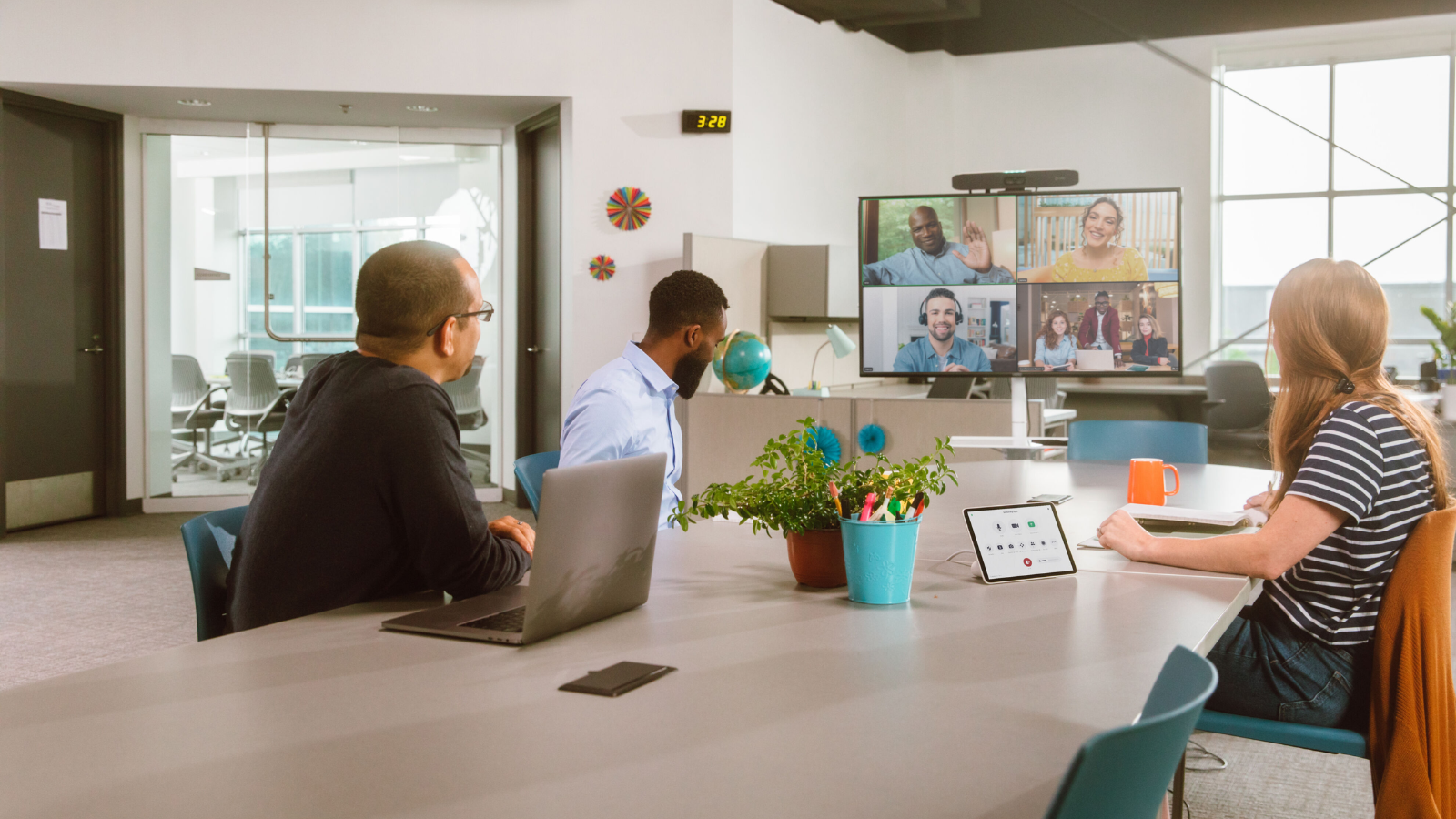
Nigel Dunn, Managing Director for EMEA North at Jabra: “With the rise of hybrid working, the term “meeting equity” has entered the discussion and how businesses can create equitable virtual environments. This means giving every meeting participant a place at the table and an equal opportunity to contribute. Hybrid meetings consist of both physical and virtual meeting participants, so true meeting equity becomes harder to achieve.
“Businesses face the challenge of choosing solutions that provide better meeting inclusivity and equity, such as video conferencing cameras that include everyone in the picture, so all participants can be seen and nobody misses out.
“While remote working has numerous benefits, companies are more vulnerable to cyber-attacks as employees can unknowingly create entry points and compromise data by connecting to unsecured home and public networks or by using personal devices for work.
“Businesses now need to have security top of mind and to invest in solutions that deliver high-quality, secure collaboration from anywhere.”
2. What forms of devices are most in-demand? How has the emergence of hybrid work changed demand?
Jeff May, UK Sales Director at Konftel: “Hybrid work is here to stay for the foreseeable future at the very least.
“At the start of the pandemic, there was a huge demand for plug-and-play USB devices, and this forward momentum is continuing, with scalable options to kit out different room sizes.
“Remote meetings are now part of everyday working life, whether people are back in the office or at home.
“Video cameras and audio devices are at the heart of today’s collaboration trends. Powerful, beamforming audio technology ensures the very best microphone pick-up, even in acoustically challenging rooms.
“Wireless connection is a hot topic for some as they want the freedom to locate wherever they wish and avoid trailing wires. This can come with some reliability compromises, so wired wall or ceiling-mounted devices are really popular as they bring flexibility, no trailing wires and guaranteed performance.
Ahmed Sousa, Systems Engineering Director – EMEA at Poly: “We’re seeing intelligent control and high-quality audio, video, and collaboration devices most in demand. This is because they’re essential to levelling the playing field between those in the office and those working from elsewhere.
“Many businesses looking to implement long-term hybrid working strategies are planning to redesign office spaces, including collaboration spaces, open plan areas, and meeting rooms.