
For decision-makers looking to identify the right contact centre solution or service for their business, there is certainly no shortage of choice. The evolution of the call centre into the contact centre over recent years has been well documented. As new communication channels have emerged, they have been incorporated as core functions of contact centre solutions.
While supporting omnichannel communication is absolutely essential, it is how you enable customers to use those channels and navigate between them that really matters, said Viktor Gajodi, CEO of Buzzeasy, the contact centre for Microsoft Teams solution, when we asked him how he sees contact centre solutions evolving.
Vital transitions
“It’s not just omnichannel, but how you transition conversations between different channels. Businesses (and agents) need to be comfortable transacting over the channels of their choice. Many, if they can’t get though by voice straight away, for example, will be happy to transition to a chatbot or direct messaging to find and instant resolutions to their problem.”
“What we see is contact centres needing to blend channels. The way you transition customers between those channels needs to be seamless. It’s important to know when to push the right channel and how to optimize the flow of the conversation.”
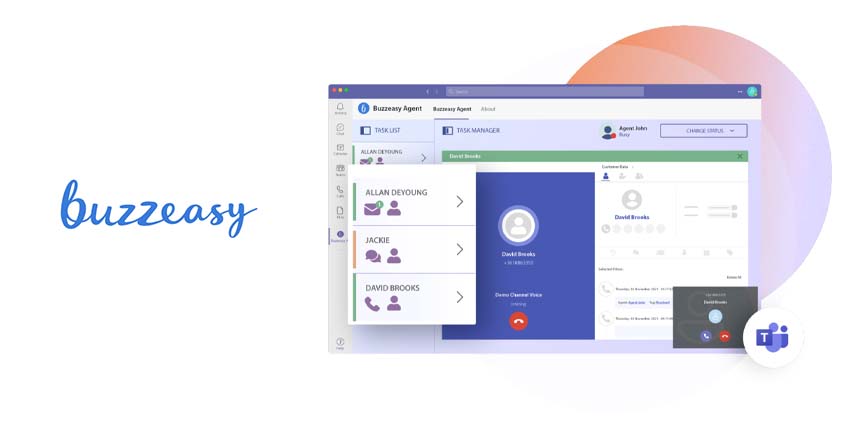
With Buzzeasy, supervisors can monitor what’s happening across all communication channels. They can track agent and resource availability and the level of their utilisation. They can also automate processes within Buzzeasy, designing workflows based on service level goals, and offer alternative channels at various stages within a single customer interaction. This flattens agent utilization peaks by allowing conversations to be diverted to voice bots and to automated or human-assisted, semi-real time channels, such as direct messaging.
By bundling Buzzeasy with Microsoft Teams an even more seamless experience can be achieved. Here agents have access to the back-office workforce with visual information on their current availability. They can also call on subject matter experts when they need to solve customer problems with the enterprise unified communication platform.
Having this kind of agility is important, says Gajodi. “Our solutions provide the opportunity to react and adjust the way resources are deployed, so you can staff your contact centre at the optimum level. Having that information allows you to react, to make changes and make the best use of all available channels. You can deliver a much better and higher level of customer service.”


