

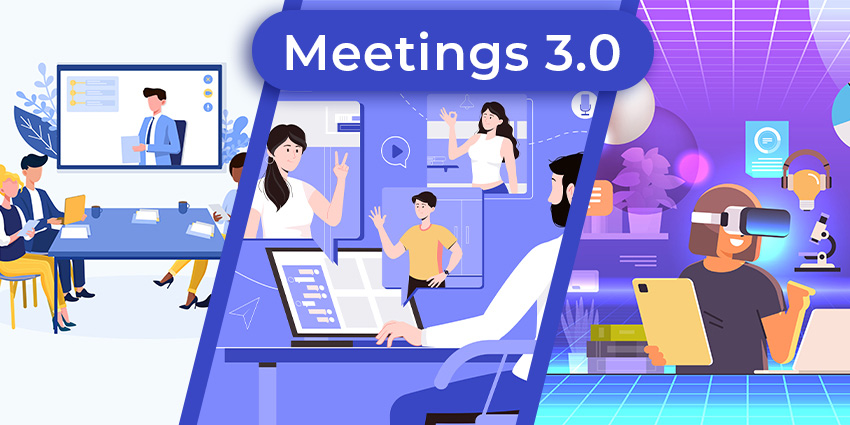
In the sphere of enterprise collaboration, the evolution from Meetings 1.0 to Meetings 3.0 epitomizes the transformative journey of our work culture. The archaic era of cumbersome and costly AV equipment (Meetings 1.0) gave way to 2D online meeting apps with the advent of 2020 (Meetings 2.0), marking a pivotal shift in how we collaborate. As we enter the year ahead, the dawn of Meetings 3.0 heralds a paradigm where inclusivity and equity are the linchpins of modern-day conferencing, transcending geographical confines.
The Genesis of Meetings 3.0: Meetings 3.0, propelled by Generative AI, elevates video conferencing into an immersive, multi-dimensional venture, transcending mere face-to-face exchanges. This new epoch is characterized by AI-curated breakout rooms, intelligent whiteboards translating doodles into tasks, and real-time translation services erasing linguistic hurdles. The onus is on partner organizations to acclimatize to these novel features, ensuring seamless adoption and optimized utilization.
Redefining Physical Meeting Spaces: The metamorphosis extends to the physical realm with Intelligent Room Systems morphing conventional meeting rooms into dynamic spaces. These smart systems, tuning lighting, acoustics, and seating configurations, enrich both virtual and physical participation. The emergence of high-impact spaces signifies the renaissance of the traditional meeting room, catering to a gamut of needs including meditation and brainstorming, melding work with well-being.
Hyper-Productivity: A Symbiosis of Tech and Talent: Meetings 3.0 transcends technology, encapsulating a human-centric ethos. By eschewing redundancies, it pioneers a hyper-productive milieu focusing on decisive action and problem-solving. Generative AI, summarizing key takeaways, scheduling follow-ups, and earmarking action items, significantly augments employee engagement and productivity.


