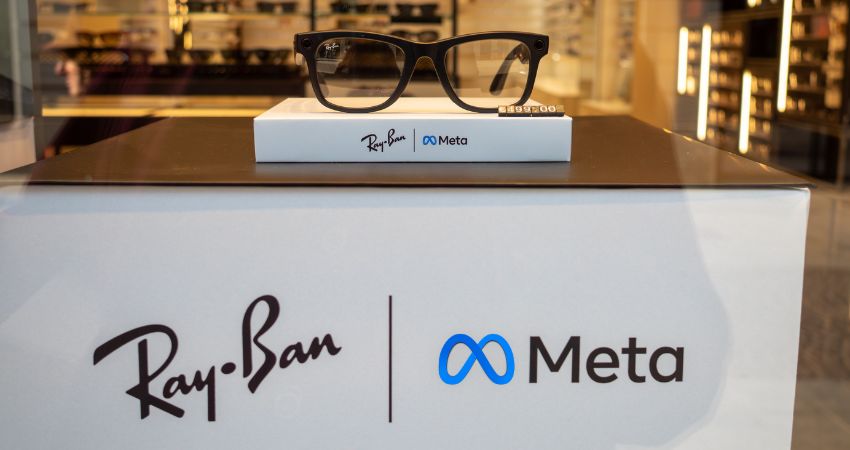
Meta is getting the one thing smart glasses have struggled to achieve for a decade: momentum. The company’s Ray-Ban smart glasses have now reached ‘seven million pairs and counting’ sold, with Meta’s devices estimated to account for ‘more than 80% of all AI or smart glasses sales’. For UC Today readers tracking wearables, automation, and the next wave of ‘AI at the edge’, this is not just a consumer trend. It is a signal that camera-first, AI-enabled eyewear is moving from curiosity to mainstream behaviour in the US and Europe, with workplace implications arriving next.
Mark Zuckerberg, CEO of Meta, summed it up:
“They're some of the fastest-growing consumer electronics in history,”
What makes this surge enterprise-relevant is not the frames. It is the workflow pattern. A socially ‘normal’ device that can record, listen, and answer questions becomes an ambient interface. That changes how work gets done, how evidence is captured, and how policy is enforced. It also introduces a new governance problem: the boundary between a personal wearable and an enterprise endpoint starts to blur in real time, on people’s faces.
In parallel, Meta is trying to solve the second issue that killed most early smart glasses hype: usefulness. The latest push is not just feature tweaks. It is opening the platform to outside builders, allowing developers to create new display experiences using web apps or native mobile extensions. Apps are where devices stop being gadgets and start becoming tools.
Related Articles
- Meta Pushes Ray-Ban Smart Glasses Beyond Notifications With Neural Handwriting Update
- Samsung Galaxy Glasses Leaked: Are They a Real Challenger to Meta Ray-Bans?
- Everything You Need to Know About Apple Glass: Apple’s Ambitious Response to Meta Ray-Ban
Why This Matters for Workplace Productivity and Automation
Smart glasses have two possible futures in enterprise. One is a consumer accessory that occasionally leaks into work. The other is a lightweight, always-on interface for frontline guidance, remote assistance, live translation, and context capture, which is where productivity and automation leaders will start paying attention.
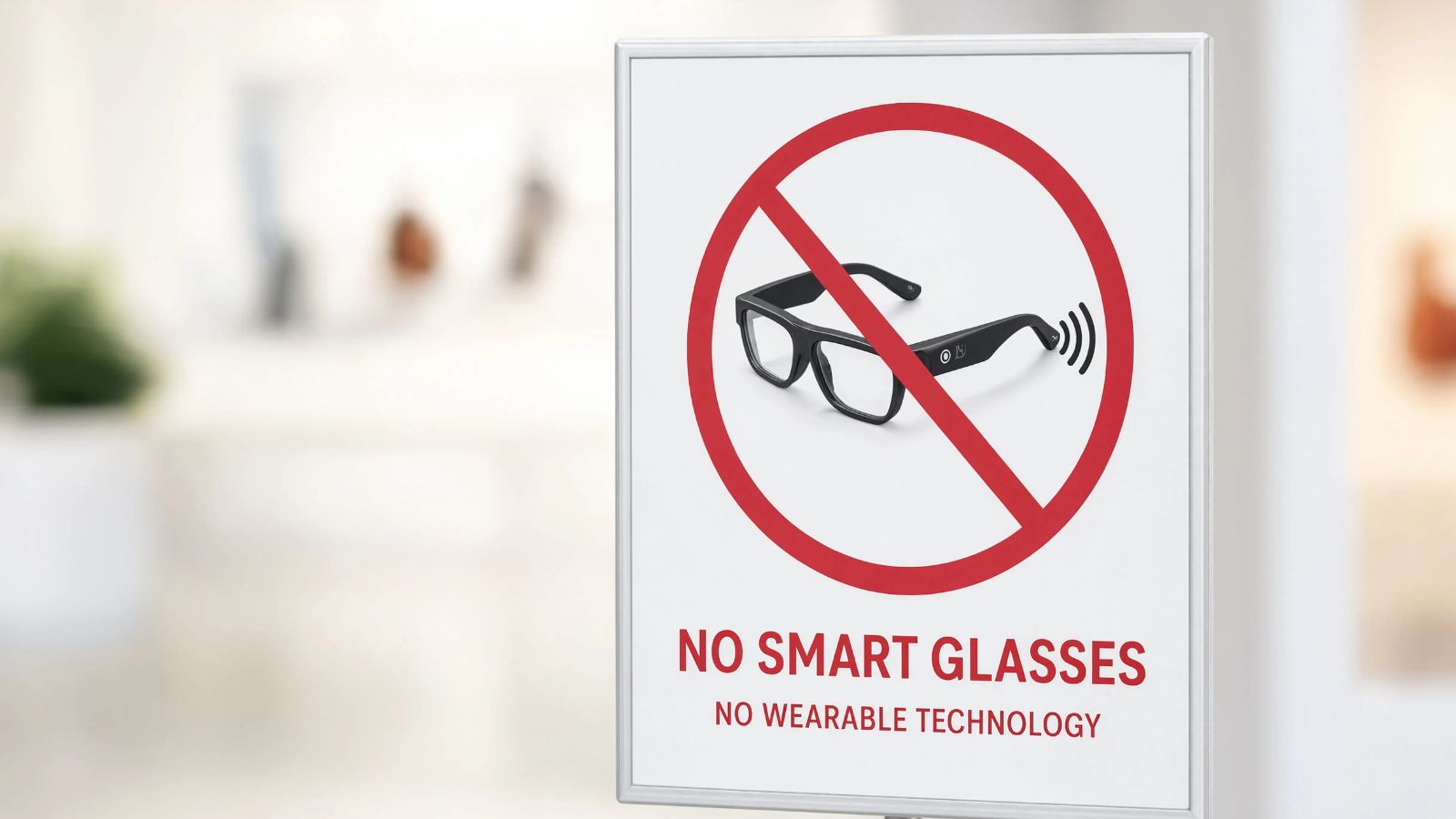
Reporting has also underlines the operational trade-off that will shape adoption: the same camera that enables ‘see-what-I-see’ support also makes workplaces harder to govern. A device that looks like normal eyewear changes recording norms, enforcement, and trust. This lands directly on IT (endpoint governance and data control) and HR (wellbeing, inclusion, and safe-work policy).
According to Tracy Clayton, a Meta spokesman:
“We have teams dedicated to limiting and combating misuse, but as with any technology, the onus is ultimately on individual people to not actively exploit it.”
Identity, Access, and the ‘Face as an Endpoint’ Problem
The enterprise story gets serious when you treat smart glasses as a new endpoint class, not a wearable accessory. If a device can capture audio and video, pull AI context, and potentially interact with business systems through apps, then identity and access stop being abstract concerns. They become operational questions IT must answer:
- Authentication: is the wearer verified to access sensitive prompts, records, or on-device summaries, or are interactions effectively ‘open mic’?
- Device identity: is this a managed enterprise device with an inventory record, or a personal device with unknown configuration?
- Shared-device reality: in frontline environments, devices get shared. If glasses rotate between shifts, how do you prevent cross-user data leakage and accidental recording?
- MDM and policy enforcement: can IT enforce ‘no recording zones’, disable capture in sensitive spaces, and apply conditional access controls, or is enforcement dependent on training and social norms?
- Contextual access: if AI features become more context-aware, can policy be context-aware too, based on location, job role, or environment?
This is where smart glasses converge with unified communications and automation: the more ‘hands-free’ the interface becomes, the more you need guardrails that do not rely on users remembering policy at the exact moment the camera is on.
Third-Party Apps Are the Real Story
Sales momentum is one thing. Platform momentum is another. Meta is now positioning its display-enabled Ray-Ban glasses as something developers can build on, not just something users wear.
Meta is opening the Ray-Ban Display to developers via a preview programme, with two routes: native mobile extensions using the Wearables Device Access Toolkit and web apps built with HTML, CSS, and JavaScript. If Meta can cultivate a genuinely useful ecosystem, workplace use cases get easier to justify because the device becomes a delivery mechanism for workflows, not just content capture.
In a press release, Meta stated:
“You can create display experiences using familiar tools, whether you're extending an existing iOS or Android mobile app or building something entirely new.”
For digital workplace and operations teams, the practical takeaway is that ‘smart glasses + web apps’ is a workflow conversation. URL-accessible experiences can make pilots simpler and reduce distribution friction. But it also increases the need for enterprise-grade controls around identity, logging, and where captured data is stored.