
Most businesses around the world have adopted new forms of collaboration applications over the past two years.
This will likely have benefited end-users significantly in terms of both productivity and wellbeing, helping them more effectively collaborate with their co-workers and feel connected, at a time when many have been working from home on their own.
This is great for employees, but in large enterprises, there’s a good chance that these tools and platforms that are being used are putting more strain on the collaboration or unified communications (UC) teams within the IT department (the people whose job it is to provision all these accounts).
This isn’t just important for when an employee first joins a company; it is an ongoing process for UC admins that will take place behind the scenes throughout a worker’s time at an organisation.
“The average employee will have 1.7 to 2 moves, adds, changes and deletes per year,” according to David Levy, Director of Marketing at Akkadian Labs.
“If you’ve got 10,000 employees on your UC system, you’re going to have a lot of work to do and, generally, the collaboration team is a very small group. These people are engineers; they don’t want to be doing repetitive, manual, mind-numbing tasks such as rolling out phone, voicemail and messaging apps to new hires”
Akkadian’s Mission
Akkadian Labs specialises in automated user provisioning for unified communications platforms. Its heritage is in the world of Cisco, but it has more recently moved to support other platforms such as Microsoft Teams.
Its mission is relatively simple: to take mundane, administrative tasks and automate them – therefore freeing up skilled UC engineers to focus on strategic projects that have broader organizational impact.
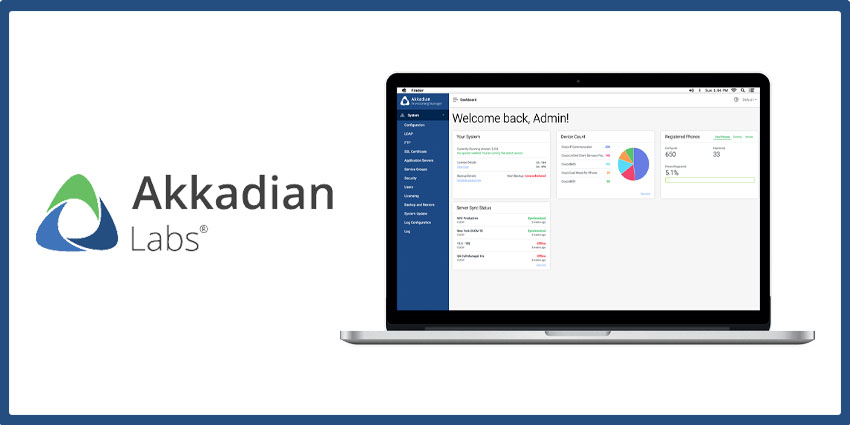
Their flagship product, Akkadian Provisioning Manager, does this by providing UC teams with a single pane of glass that can be used to onboard an employee to all the UC tools used within an organisation. Engineers can input an employee’s information just once, rather than one separate time for each UC application. Levy said that this can turn 30-minutes of work into just 30 seconds.
It also removes the risk of inconsistencies, which is heightened if a business has multiple people all provisioning and managing user accounts in a slightly different way. Akkadian Provisioning Manager standardises these tasks and can restrict user access to just what they need to complete their tasks.
But it’s important to note that Provisioning Manager isn’t just for onboarding new employees, but for day-to-day changes that will inevitably need to be made when people change roles or departments, for example. The tight governance mentioned above means that many tasks can be handed over to a help desk, freeing up UC engineers for more complex work.


