
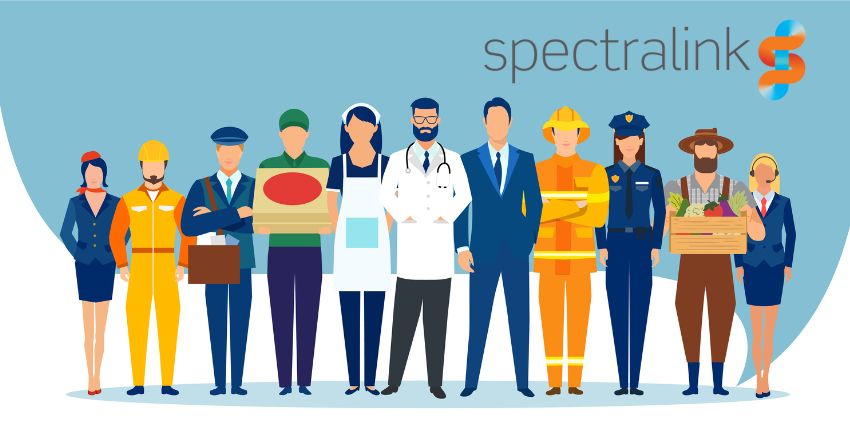
The modern workforce consists of a huge variety of different employees, from desk-based workers to remote and hybrid staff. However, frontline workers – professionals without a dedicated desk environment – still account for around 70% of the US workforce.
These employees make up a core part of the talent landscape for businesses in a variety of industries, from hospitality to manufacturing. Yet, they’re still too often overlooked by employers l trying to protect and empower their teams.
When employees are consistently connected to their organization, they’re aligned with the purpose, vision, and knowledge of the business. However, creating and maintaining this connection can be complicated when frontline workers are distributed throughout so many environments.
To thrive in the modern world, business leaders need to ensure they have the right hardware, software, and strategies in place to support every type of employee.
Here’s why keeping frontline workers safe and connected is so important, and how businesses can implement the right blueprints for success.
Frontline Work: The Importance of Safety and Communication
While traditional office workers benefit from instant access to communication tools and information, frontline workers struggle to obtain the same solutions for collaboration and productivity.
Frontline workers in the manufacturing, warehouse, and various other sectors, can’t stay tethered to a desk all day, they need companies to provide communication tools that enable mobility.
According to Microsoft’s “Firstline Worker” playbook, 85% of frontline workers say they don’t receive enough communication on the job, and 73% they frequently need to stop working to seek out information.
Not only does a lack of the right solutions hamper productivity in the workplace, with more than one in two staff members saying they feel “voiceless”, but it can also lead to additional risks for employees working in dangerous environments.
“Frontline workers often are also lone workers, such as engineers taking readings in dangerous areas of a production site, night nurses. security workers or guards. Offering a full range of built-in safety features is critical to ensuring these workers can come to work with peace of mind. This is the guiding principle that has led us to the inclusion of safety features in our devices over the years, as well as the reason why our latest handsets, the Spectralink S Series, feature a full set of protection tools that range from red alarm buttons to alarm icons, from pull-cords to automatic motion detection,” declares Paul Rowe, Senior Product Manager at Spectralink.
Without resources like duress buttons, location services, and clear voice connections, teams may not be able to access the right assistance when they need it most.
The Benefits of Aligning and Protecting Employees
Neglecting to address the safety and communication requirements of frontline employees can lead to a host of issues, from higher talent turnover, to diminishing customer satisfaction. However, when businesses support their teams with durable, dependable technology, they can achieve:
- Greater productivity: Connected, safe employees are more likely to feel empowered in their roles. They can avoid wasting time searching for information, and address situations quickly and effectively. In fact, mobility solutions can increase productivity by 34%.
- Improved customer satisfaction: When employees can collaborate effectively with their colleagues, they can overcome potential issues for consumers faster, leading to greater satisfaction scores. Microsoft says companies with mobility solutions achieve 83% higher levels of customer satisfaction.
- Greater employee engagement: Safe and connected employees are less likely to abandon your business. In fact, 64% of companies implementing the right communication solutions for frontline workers say they see lower turnover, and 82% achieve higher levels of staff satisfaction. Happier employees are more engaged, productive, and successful.
4 Steps to Empowering Frontline Workers
Empowering frontline workers in today’s landscape requires companies to take a strategic approach to providing their teams with not just the right software, but also the correct hardware and policies. To achieve productive results, businesses need to focus on:
Step 1: Focus on Durable Hardware
Frontline workers operate in a variety of environments where standard smartphones and desk phones may not deliver consistent results. To keep teams safe and connected, businesses need to ensure they’re choosing hardware specifically designed for teams in motion.
Durable devices, such as the S-Series handsets from Spectralink, feature ruggedized components to ensure they thrive in the most challenging conditions. They’re lightweight, feature large, easy-to-navigate displays with icon-based menu structures, and include all the critical safety and productivity features teams need.
They also include over-the-air configuration options, instant updates, and user-selectable audio profiles for normal, quiet, and noisy environments.


