
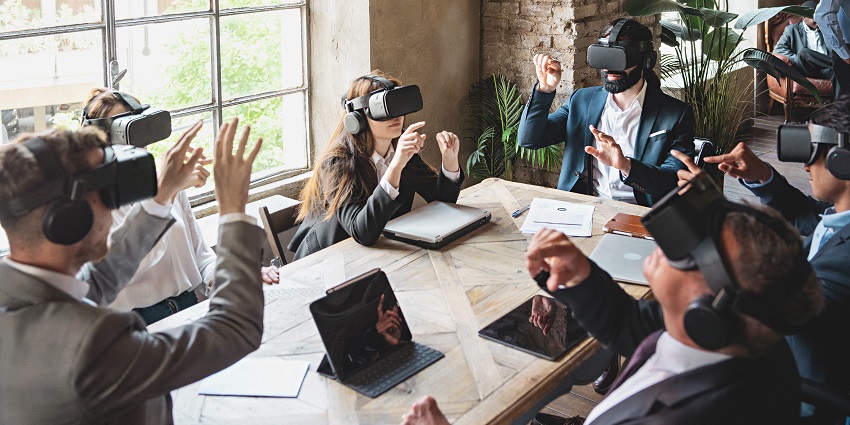
Over the last few years, the workplace has evolved. We’re living in an era where an employee’s productivity isn’t defined by where they are, but instead by the tools they can access. The traditional, office-based team is quickly being replaced by a generation of distributed hybrid and remote workers, capable of completing tasks from wherever they have an internet connection.
However, while the age of remote and hybrid work has delivered a host of benefits to businesses and their teams, it has also presented some new challenges. Specifically, many organisations are struggling to ensure they can effectively synchronize digital teams for collaborative tasks.
While video conferencing and online messaging tools solve a portion of the problem, companies are discovering they can access higher levels of engagement, improve feelings of inclusion and nurture creativity with immersive tech. Immersive collaboration tools bridge the gaps between distributed workers, by allowing team members to step into virtual workplaces like never before.
Here are some of the top trends currently influencing the future of immersive collaboration.
- The Metaverse and Digital Twins
Metaverse environments could hold the key to the future of collaboration. These digital landscapes, custom made to suit the needs of each company or team, can provide employees with instant access to a virtual version of the workplace, wherever they are. Through metaverse spaces, team members can take advantage of voice, video, and messaging tools, share files, and even work together on projects in real-time, interacting with digital content through extended reality.
There are already examples of companies using metaverse environments to boost collaboration and enhance company culture. Accenture’s metaverse solution, the “Nth floor” features replicas of real-world environments, where new hires and employees can train, connect with staff and more.
The metaverse also opens the door to a new way of utilizing digital twins – virtual simulations of real-world processes, products, and environments. For instance, in the construction industry, a company could build a metaverse space where team members can work together on producing the virtual blueprints for a new building or roadway. They can test three-dimensional assets in a safe and secure environment, exploring how they’ll respond to different use cases, without wasting resources.
- Advanced Avatars and Presence Technology
One of the main reasons why companies are exploring immersive collaboration tech as an alternative to standard video conferencing and messaging tools, is the need for a greater sense of presence. While video can replicate face-to-face interactions, it lacks the human presence of an in-person discussion. Metaverse environments, XR, and other immersive collaboration tools solve this problem.
Many companies investing in the immersive collaboration world are helping team members to recreate their presence in digital environments, with avatar creation tools. Microsoft Teams has its own avatar solution for those in the immersive landscape, and Meta also allows staff members to create virtual versions of themselves for professional interactions.
In recent years, these avatars have become increasingly more advanced, giving team members more opportunities to customize their digital identities. Additionally, the rise of tools designed to improve human connections, such as eye and facial tracking sensors, are making it easier for employees to show emotion, and share body language during virtual meetings.
- New Senses in the Immersive Experience
Many early examples of immersive collaboration technology focus heavily on sight. Metaverse environments are built to visually replicate real-world spaces. Virtual reality tools allow us to explore 360-degree visual experiences. However, true immersion relies on a wider range of senses.


