
“Slack it to me” has entered the professional lexicon in many companies; one of the many signs that team collaboration (TC) platforms have effectively reinvented how workers communicate and collaborate with colleagues.
Slack, Microsoft Teams and Cisco Webex Teams are just some of the new TC platforms that have taken the workplace communications market by storm. With flexible collaboration features and a low barrier to entry, these new platforms have captured the loyalty of workers for their ease of use and cutting-edge features, such as integration with business applications like Salesforce.
While almost every large-scale organisation still relies on legacy unified communications solutions to some extent, TC platforms are becoming inescapably popular with workers who demand a better way to collaborate. In fact, Gartner predicts that 70 percent of teams will rely primarily on TC platforms by 2022.
The Team Collaboration Tsunami
While the lion’s share of the still-emerging market belongs to Microsoft and Slack, many others are competing for users’ loyalty and corporate subscriptions. Until one platform gains a monopoly, the market will experience deep fragmentation for years to come.
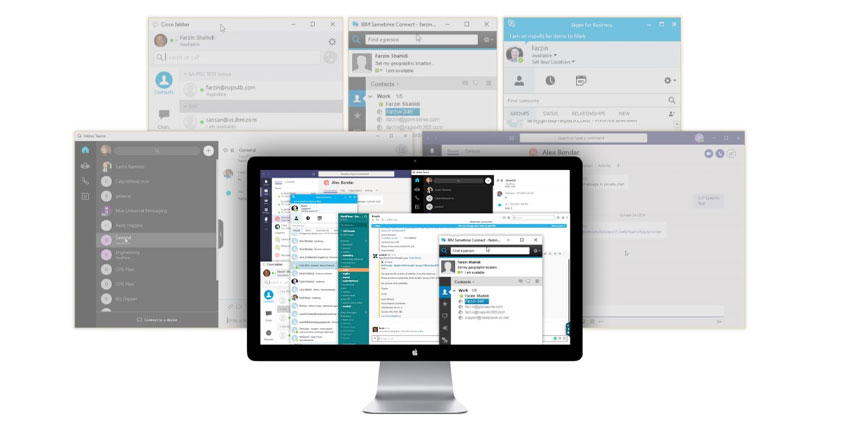
This creates major challenges for enterprise IT since these platforms aren't designed to interoperate or federate. IT leaders are likely to experience challenges when managing these platforms in one or more of the following scenarios.
Single Platform Mandate - One Size Fits All
[caption id="attachment_22145" align="alignright" width="200"] Farzin Shahidi[/caption]
With so many different collaboration options, some companies are choosing and mandating one TC platform for all their employees. While this is a tempting solution, it isn't the most realistic option for workers with diverging collaboration and workstream needs.
Microsoft for example, recently announced it has banned employees from using Slack, citing security concerns that the platform does “not provide required controls to properly protect Microsoft Intellectual Property (IP).”
Although it’s an effective way to simplify workflows, it’s not the best solution for employees who want autonomy in the tools they use. NextPlane’s own recent research discovered that the majority of end users are pushing back on their IT departments or management when their company tries to dictate which collaboration tools they can use in the office; creating real tension between the workforce and management.
The structural problem with this approach is while IT can avoid internal interoperability challenges, they cannot control which platforms their partners, customers, and IT service providers use. This means they still need to find ways to federate with users outside the enterprise.
Coexistence
A growing number of companies are taking a mixed-platform approach. They are allowing their end-users to choose team collaboration platforms based on team or user preference. For example, the engineering department may be using Slack, while the manufacturing group uses Webex Teams.
While every team may get to use their platform of choice, this approach creates walled gardens within the enterprise, isolating critical information within the collaboration tools themselves.
Migration
Given the high demand for better collaboration, companies are increasingly migrating from legacy UC solutions to new TC platforms. For large organisations, this process can be cumbersome and take months to complete. For instance, it took Microsoft four months to fully migrate its workforce from Skype for Business to MS Teams.
As a result, collaboration is greatly hampered as different teams try to communicate with each other while they are on the disparate platforms during the migration period.
 Guest Blog by

