Hybrid work is here to stay – even despite countless companies trying to push their team members back into traditional office environments. It’s not just employees that appreciate the flexibility that hybrid work can offer – business leaders are discovering that a more variable approach to work schedules and environments leads to better productivity, and reduced costs.
But keeping hybrid teams aligned and motivated isn’t easy – even with access to the latest tools for workforce management and collaboration. To really empower a distributed workforce, you also need the right hardware – and that starts with communication displays for hybrid work.
Communication displays, ranging from large interactive monitors in meeting rooms to digital signage systems, can significantly improve alignment between teams, enhance collaboration, and even strengthen company culture. Here’s your guide to the impact communication displays have on hybrid teams – and why you need to invest in the right tech.
Want to know more about enhancing your employee experience with displays? Check out our comprehensive guide here - How Communication Displays Transform the Employee Experience
The Benefits of Communication Displays for Hybrid Work
The shift to hybrid work has been happening for a while now, but many companies are still struggling with the transition. When teams are distributed across various settings, it is difficult to foster cohesion, collaboration, and creativity.
Although overcoming these challenges requires a comprehensive approach, combining software, hardware, and fine-tuned processes, communication displays for hybrid work can deliver a host of benefits, such as:
1. Enhancing Hybrid Meetings: Productive Conferencing
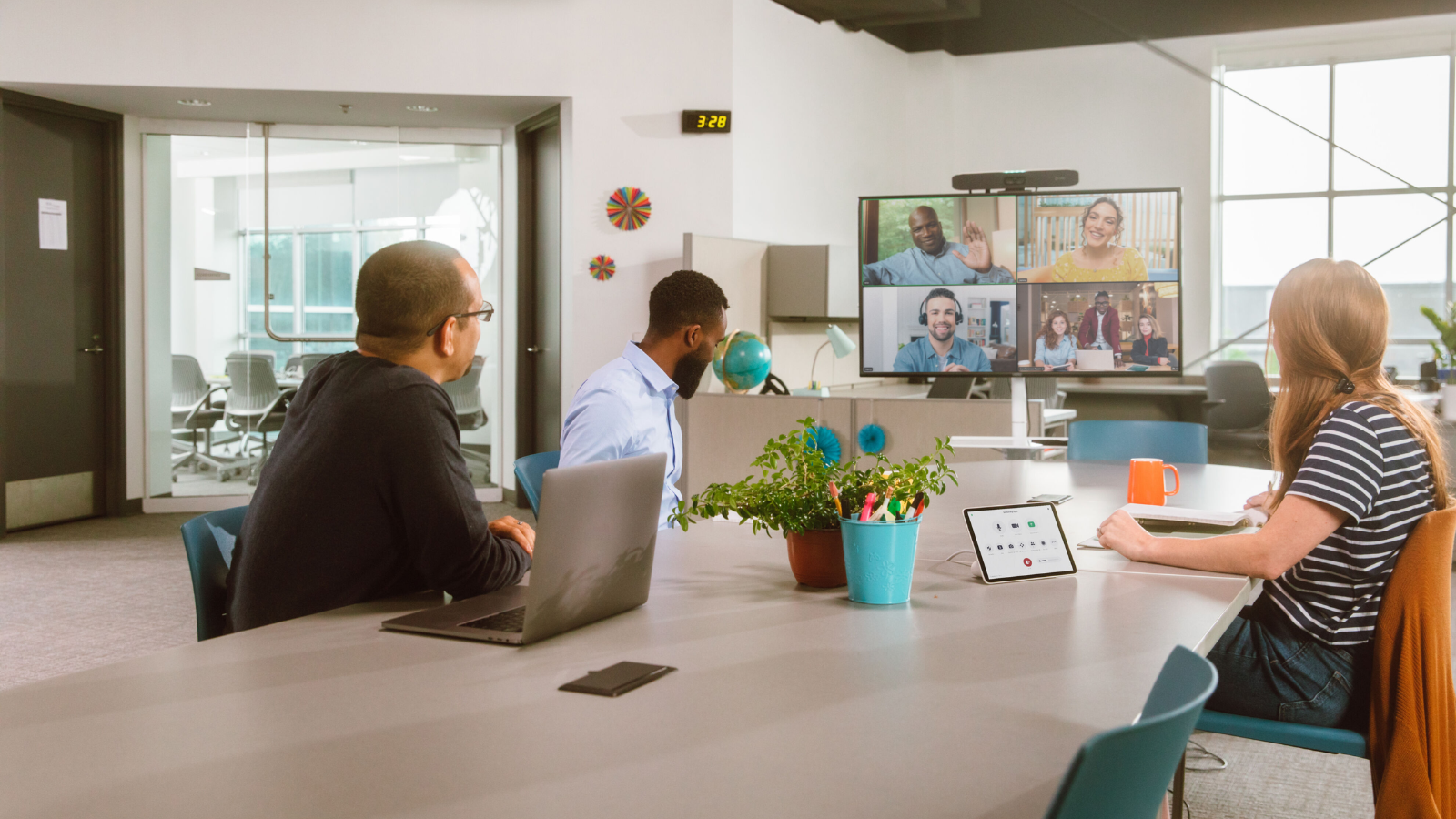
Regular meetings are often critical to the success of hybrid teams, but without the right planning, software, and hardware, they can easily drain, rather than enhance productivity. Communication displays for hybrid work can help to boost the “immersive” nature of meetings between staff members distributed across locations, bridging distance gaps.
Solutions like the Microsoft Surface Hub make it easy for in-office teams to launch a virtual meeting in an office that any remote, or field-based employee can join from their own device. These devices can boost inclusivity, connecting with cameras for face-to-face video meetings. Plus, they give teams a platform where they can work on projects as they talk.
Staff members can share documents and annotate files in real-time, host presentations, or brainstorm on an infinite virtual canvas using touchscreen displays. Many plug-and-play communication displays even make it easier to launch meetings, instantly surfacing user settings as soon as they log into a connected platform, like Microsoft Teams Rooms, reducing wasted meeting time.
2. Instant Information Sharing: Keeping Teams Aligned
Ensuring every employee has access to the right information and knowledge at crucial moments can be difficult in a hybrid workplace. When your team is scattered through different locations and time zones, relying on email often leads to decision-making delays. Plus, notifications on channels like Slack and Microsoft Teams can easily get buried by new updates.
Communication displays for hybrid work solve this problem by creating a centralized, easily accessible environment for crucial information. Digital signage solutions are great for broadcasting important messages, like event reminders or urgent announcements, to everyone in the workplace. You can also share the same updates with users accessing your system remotely.
For instance, field-based or remote workers can receive instant push notifications whenever key metrics change or new announcements go live. This kind of quick information-sharing experience leads to faster decision-making, more aligned teams, and improved employee experiences.
3. Optimizing Engagement: Boosting Morale
Keeping staff members engaged and motivated is difficult – particularly for hybrid teams. It’s easy to recognize staff members or celebrate their achievements when you interact with them every day. However, remote and flexible workers can often be overlooked.
Communication displays for hybrid work offer a versatile solution. Business leaders and supervisors can use software for digital signage to spotlight achievements and celebrate staff members for their accomplishments. You could even use a section of a workplace display for announcements about employee birthdays or work anniversaries.
Communication displays also offer a great opportunity to take advantage of gamification. Companies can create leaderboards tracking performance metrics (like sales goals or customer satisfaction scores) to help keep staff motivated and foster healthy competition.
4. Communication Displays for Hybrid Work Management
Many business leaders supporting hybrid teams struggle to make the most of their available office space and resources. When everyone visits the office at different times, it’s easy for meeting rooms, focus spaces, and even desks to be under-utilized or double-booked.
Communication displays for hybrid work help again. Solutions like room or desk booking tables, combined with workforce management apps or systems like Microsoft Teams Rooms, can help team members track the availability of spaces in real-time and book spaces instantly. Some solutions, like Microsoft Places, can even suggest relevant bookings based on a user’s schedule.