As a publication dedicated to communication and collaboration, we’ve seen countless meeting room trends come and go. We’ve watched the rise, fall, and resurgence of huddle rooms, explored the benefits of focus rooms, and multifunctional conference spaces.
Now, we’re living in a world where AI avatars are attending meetings instead of people, intelligent systems are planning agendas, and entire town hall sessions take place in the metaverse.
The evolution of the modern meeting room is a natural side-effect of the broader, changing workplace. Office usage across industries is still inconsistent. Hybrid work policies continue to flex. Everyone wants to make their physical spaces more meaningful, sustainable, and cost effective. Even software stacks keep changing. So, what’s next?
GET THE LATEST UC MARKET RESEARCH[/button_cta]
The Major Meeting Room Trends Changing Collaboration
Everyone seems to have their own opinions on which meeting room trends will have the biggest impact on the future of work. But there are a lot of overlapping ideas. Our own research shows enterprise leaders still continue to focus on concepts linked to hybrid work, and artificial intelligence, for instance. But they’re also thinking about AV innovations, wellbeing, and sustainability.
Organizations like IACC, McKinsey, and even Gartner identify similar patterns. Here’s what’s really reshaping the enterprise workplace right now.
1. Immersive Meeting Room Trends
Okay, so we’re not working full-time in the metaverse just yet, but immersive tech is becoming more common. Even with some employers encouraging staff members to re-enter the traditional office room environment, remote and hybrid work is still commonplace.
This means companies need ways to effectively bridge the gap between distributed employees, whether they’re connecting in-office staff to remote workers, customers, or field-based employees. Immersive technologies have the power to strengthen the link between distributed staff.
A modern meeting room equipped with immersive tech can empower staff members to share content and work together on digital twin projects in a flexible space. Immersive meeting room trends can even improve employee relationships and feelings of inclusion.
Immersive meeting room tech isn’t limited to VR or MR headsets either. You might not have taken part in a virtual town hall with a VR headset and Microsoft Mesh just yet, but you’ve probably taken advantage of spatial audio in Microsoft Teams, or virtual video conferencing backgrounds.
For enterprise leaders, it’s no longer enough to deliver audio and video. The room must support engagement, reduce friction, and strengthen human connections.
2. The Increasing Presence of AI
Artificial Intelligence isn’t just responsible for some of the most significant meeting room trends today. It’s influencing every facet of the workplace. Virtually every meeting platform has a built-in AI assistant. Solutions like Copilot and Zoom AI Assistant aren’t just summarizing conversations.
They’re helping to detect speakers and presenters in conference sessions for better record keeping. They’re using sensors to identify and improve air quality and atmospheric conditions automatically. Some are connecting teams worldwide with intuitive instant translations.
These tools are helping to boost productivity, by identifying action items discussed in a meeting and assigning them to employees (like with Zoom Tasks). AI can even help with resource allocation, suggesting meeting spaces and resources to employees based on their needs (see Microsoft Places).
They’re also helping business leaders use and manage resources more effectively, with in-depth insights into engagement trends, usage patterns, device health and more.
More importantly, AI now connects to the wider enterprise tech stack. Notes and decisions can feed into project tools or CRMs. Room usage data informs planning. And with the right governance in place, the systems remain compliant and secure across global sites.
For large organisations, the priority is to avoid fragmentation. Choose meeting platforms that consolidate scheduling, AV control, and AI features in one interface, rather than layering tools across different systems. And make sure those platforms offer analytics you’ll actually use.
3. The Impact of Flexibility on Meeting Room Trends
One of the significant factors influencing meeting room trends in 2025 is the rise of new types of employees in the workforce. Some studies show that as many as five generations of employees work together in the same company. Every employee has distinct preferences, unique workflows to consider, and specific equipment they need to use.
That means flexibility is crucial. Rooms that used to be locked into one format now need to adapt to multiple use cases and people in one day. So what’s the fix? More modularity. Companies are equipping larger meeting spaces with flexible tools that can accommodate different types of workflows and both small and large teams.
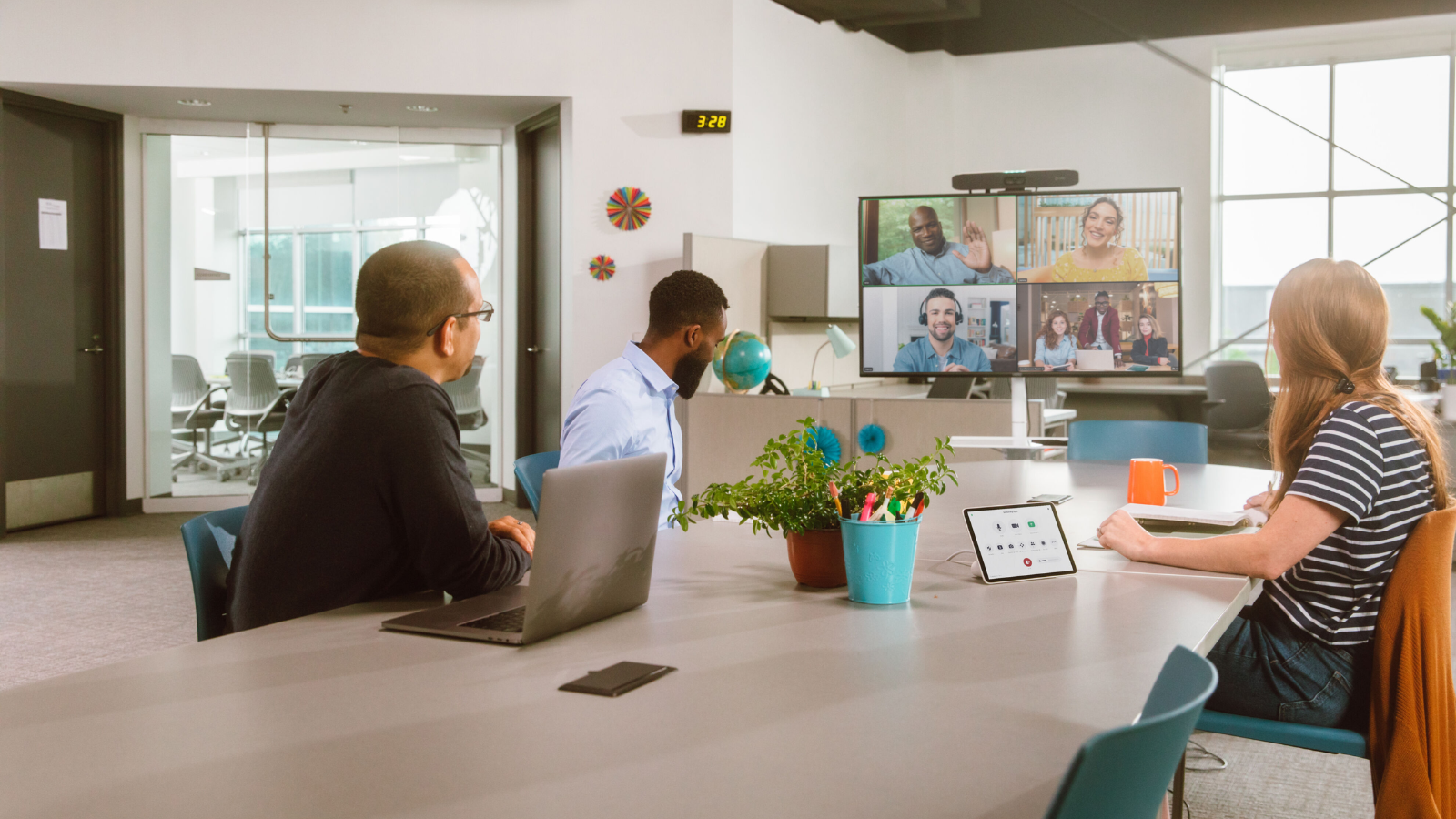
Focus rooms and smaller meeting spaces are being leveraged with the help of plug-and-play solutions, like all-in-one video bars and reconfigurable furniture.
Increasingly, bring your own meeting, and bring your own device solutions are also becoming more popular. These allow employees to connect to existing meeting room technology with their own choice of conferencing apps and devices (smartphones, tablets, etc).
The goal isn’t just adaptability. It’s speed and scale. Facilities teams need spaces that can be reset quickly. IT teams need technology that can be supported centrally. Employees need rooms that work instantly, whether they're in the office full-time or a few days a week.
[button_cta link="https://www.uctoday.com/collaboration/the-best-byom-solution-providers-for-2024/"]Best BYOM Providers[/button_cta]
4. Environmental Design, Comfort and Wellbeing
Environmental design and wellbeing aren’t always the first things to come to mind when you’re looking at the latest meeting room trends.
But sensory experiences remain crucial to productivity, year after year. From an environmental perspective, companies are investing in spaces that respond to the senses. That might mean tunable lighting systems that adjust based on time of day, weather, or task type.
In today’s hybrid world, how a meeting space is set up can make or break the conversation. Good lighting and sound don’t just polish appearances, they help everyone feel heard and included, especially when people are dialling in from different places.
From the perspective of wellbeing and employee experience, meeting rooms are becoming more customizable and inclusive. AI-powered systems can adapt room configurations based on meeting type or even known user preferences, automatically adjusting layouts for presentations versus standups, for example.
Accessibility is also improving. Real-time captioning, translation, and transcription are available in more languages and across more platforms. Sensors are a big change too. They can adjust brightness and contrast for those with visual impairments, and track air quality in real-time.
5. AV and Display Innovation
Screens, hardware, and endpoints have always been essential components of meeting room design for any organization. However, today’s meeting room trends push companies to look beyond simple systems. Today’s meeting room screens, for instance, don’t just “display information.”
Interactive touchscreens are everywhere, making planning, and design sessions more immersive. All-in-one displays, combining speakers, microphones, cameras, and AI assistants are becoming more common too. These systems are also becoming more flexible, capable of being moved and deployed in various settings, for the age of on-demand meeting rooms.
In larger conference meeting rooms, we’re seeing integrated AV walls and environments with in-ceiling microphone arrays, and noise blocking systems. Video and audio systems are increasingly being equipped with software that offers companies access to AI and intelligent optimization and allows each user to personalize their meeting experience. What’s more, we’re seeing the rise of various add-on solutions designed to improve AV experiences.