As someone fascinated by how breakthrough technologies emerge from the intersection of academic research and real-world application, I believe we're witnessing something remarkable unfold in the XR industry. If you're an innovation leader or tech strategist wondering when AI and immersive technology will finally deliver transformative workplace value, this conversation with Illumix founder & CEO Kirin Sinha reveals why 2026 might be the year everything changes.
The Quiet Revolution in XR's Foundation Layer
While the industry has been caught up in debates about VR headsets versus AR glasses, Illumix has spent eight years solving a more fundamental challenge: how do we enable cameras and computing devices to understand the context around them with minimal computational overhead?
"The core of our company is how can we enable cameras to better understand the context around them, and therefore produce or relay content that's most relevant for the user at any given time," explains Sinha, whose background spans MIT, Stanford, Cambridge, and the London School of Economics.
This focus on what Sinha calls the "perception stack" – essentially the eye-to-brain connection for AI devices – positions Illumix at the center of several converging technology trends that are reshaping how we think about immersive experiences in the workplace.
[caption id="attachment_58428" align="alignright" width="200"] Kirin Sinha, Illumix's Founder & CEO[/caption]
From Theme Parks to Enterprise: Real-World Deployment at Scale
Unlike many XR startups still seeking their first major deployment, Illumix has already proven its technology works at enterprise scale. The company powers immersive experiences for Six Flags, Disney, and Harry Potter experiences in the Middle East, with fully deployed systems that are actively expanding globally.
Bloomberg's coverage of Illumix's Disney partnership demonstrates how the technology delivers what Sinha describes as "real time integration on a regular mobile device of digital and physical without pre mapping or pre scanning" – a capability that creates seamless AR experiences using just a smartphone camera.
Making Complex Technology Accessible
What makes Illumix's approach particularly compelling for enterprise applications is its focus on accessibility. Rather than requiring specialized hardware or separate app downloads, the technology can be integrated into existing applications and even websites. This reduces deployment friction significantly compared to traditional AR solutions that demand dedicated hardware investments.
These aren't experimental pilot programs – they represent live, revenue-generating applications that demonstrate how contextual AI can enhance real-world environments. When visitors at theme parks point their devices at specific objects, Illumix's technology instantly recognizes what they're looking at and delivers precisely relevant AR content, creating seamless integration between physical and digital experiences.
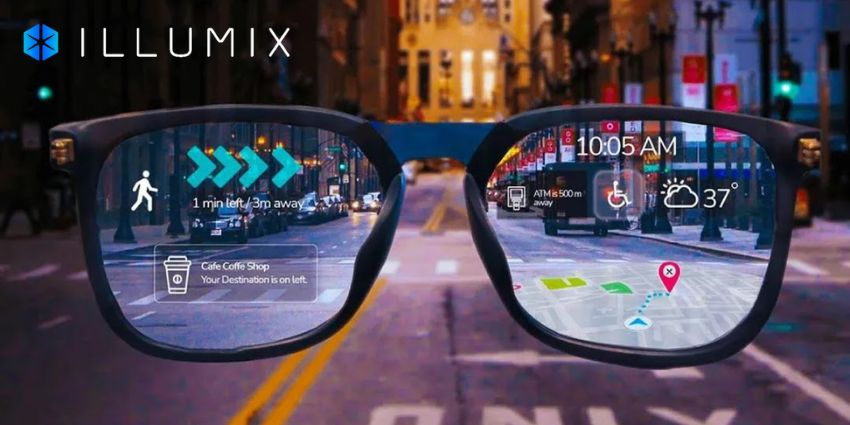
The implications for enterprise environments are profound. Imagine maintenance technicians receiving instant, contextually relevant information when they point their smart glasses at industrial equipment, or training programs that adapt in real-time based on what employees are observing in their actual work environment.
The AI Wearables Explosion: Perfect Timing for Edge Computing
What makes Sinha's perspective particularly compelling is how recent developments in AI wearables have suddenly expanded Illumix's addressable market. The success of Meta Ray-Ban smart glasses, the emergence of Snap Spectacles, and Google's partnership with Warby Parker represent just the beginning of a hardware revolution.
"We've gone from functionally having one hardware delivery system to like 15," Sinha notes. "Right now, especially in the last several months, we've been seeing a huge uptick in interest because the rapid growth and evolution of what AI models are capable of has fueled different ways we can deliver those AI models in terms of form factor."
This hardware diversity creates opportunities that extend far beyond traditional XR applications. Illumix is now partnering with robotics companies and defense technology firms, all of whom need the same fundamental capability: devices that can quickly understand their environment and respond appropriately.