
The rise of robocalling, scam calls and fraudulent voice calling has led to users losing faith in voice communications. The situation has got so bad that people routinely don’t answer a ringing phone, to the extent that legitimate organisations, such as insurers, banks and healthcare providers, find it hard to connect with customers, even though they would welcome the call. Governments across the world have put legislation in place to combat this activity, but the loss of trust in voice communication is now deep-seated and requires sustained activity to rebuild.
“It is madness that scam calling is happening at this scale, but it’s good to see the industry trying to do something about it with respect to some standards and regulations being introduced,” says Tony Martino, the Chief Executive Officer of Tollring. “However, do not make the mistake of thinking the challenges have been addressed. The sophistication around voice-based fraud is intense, and there are highly professional organisations behind much of it.”
Technical advances are being harnessed to help eliminate scam calls. By applying artificial intelligence (AI) and machine learning (ML) to carriers’ traffic data, it is possible to identify various scams. These tools are augmented by growing awareness of the problem, which has led to organisations prioritising solutions that offer some protection. However, solutions must go beyond simple identification of scam calls and give service providers the ability to report irregularities, download critical data and prevent future recurrences.
One example of regulation attacking scam calling is the Reducing Scam Calls Code, introduced in Australia in December 2020. In Australia, A$48 million was lost in 2020 to scam calls, with scam calls accounting for 48% of all scams reported. To fight back and better protect their customers, local carrier Vocus has adopted Tollring’s new Scam Protect solution across its entire network.
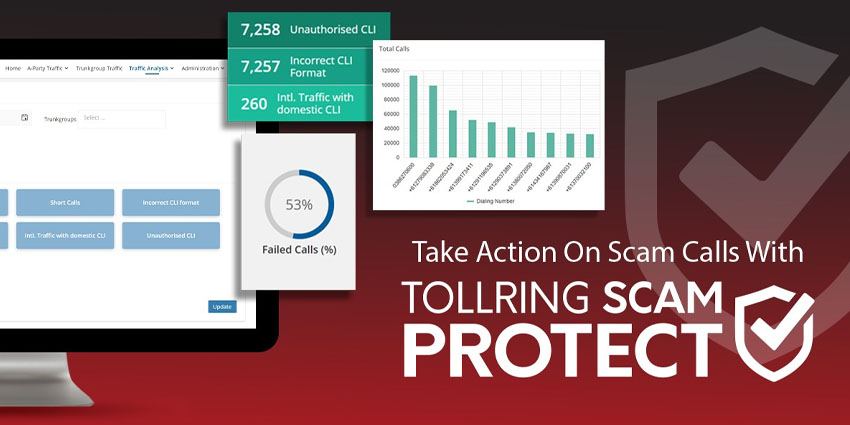
Scam Protect automatically monitors millions of daily calls across a carrier’s network, and presents analytics on alerts and type of potential scam calls that come into the network. Identification of potential scam calls enables the telco to understand scam calling profiles and take appropriate action. By providing this visibility, Scam Protect assists carriers in complying with regulations and enables them to have the information to enable the necessary collaboration across the industry to reduce scam calls.


