
powering productive workplaces
Front page
NewsUC&C1 Feb 2021 · 2 min read

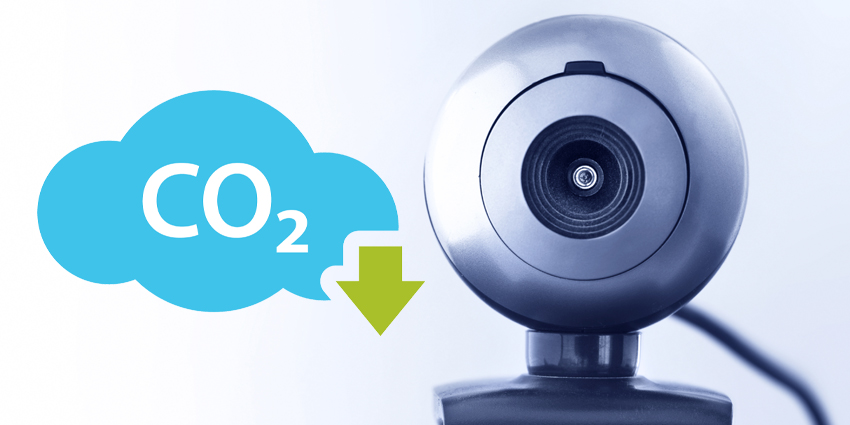
Turning Cameras Off on Zoom Could Help Save the Planet

A Zoom camera-off call could cut carbon emissions by 96%, as videoconferencing, Netflix and streaming drive internet use.

Zoom camera use and environmental impact

Looking on the bright side of a tough 12 months, one benefit from our on-and-off spells in lockdown has been the positive effect on the environment.

People are travelling less, both locally and international, meaning pollution from vehicles has lowered dramatically.

In fact, a new study recently found that global carbon emissions in 2020 saw a record drop.

But that’s not to say it’s all good news…

Research from a clan of universities has found that a one-hour video conference on Zoom could emit up to 1,000 grams of carbon.

By way of comparison, using one gallon of petrol in a car would equate to 8,000 grams of carbon.

So, the carbon emitted during eight hours of video conferencing could equate to the same as driving around 50 miles in an average Ford Focus.

Kaveh Madani, who led the research, said: “Banking systems tell you the positive environmental impact of going paperless, but no one tells you the benefit of turning off your camera or reducing your streaming quality.

"So without your consent, these platforms are increasing your environmental footprint”

There is however a caveat. The research estimates the carbon usage to be between 150g-1000g, so the calculations above are something of a worst-case scenario.


There are also things users can do to reduce this figure. The report claims that by turning off their camera a user can slash the carbon emissions they contribute by up to 96 per cent.

So if you don’t have time to make yourself presentable for that 9am Zoom call, or you haven’t tidied the lounge, keep the camera off and help save the planet.

The surge in the use of videoconferencing tools during the pandemic has contributed to an increased usage of the internet over the same period. A number of countries have reported an increase of at least 20 per cent since March.

But videoconferencing isn’t necessarily the biggest culprit, with streaming services such as Netflix potentially emitting far greater amounts of carbon.

The study said that switching the quality down from HD to standard definition could cut emissions by 86 per cent.


rate this story
helps rank stories across uc today
The discussion0 takes · attributed & checked

Does this reflect your experience?

opening the room…
Read nextordered by techtelligence · every pick explained
same beat · UC&C

GoTo CX Complete: Is GoTo Building the SMB AI-Powered UC+CC Layer Before Rivals Catch Up?

13 Aug 2026
matches this topicInside the Smart Stadium That Never Sleeps21 Jul 2026matches this topicInfoComm 2026: Iowa State's Mike Pedersen on Why Higher Ed AV Must Embrace AI Fast23 Jun 2026
