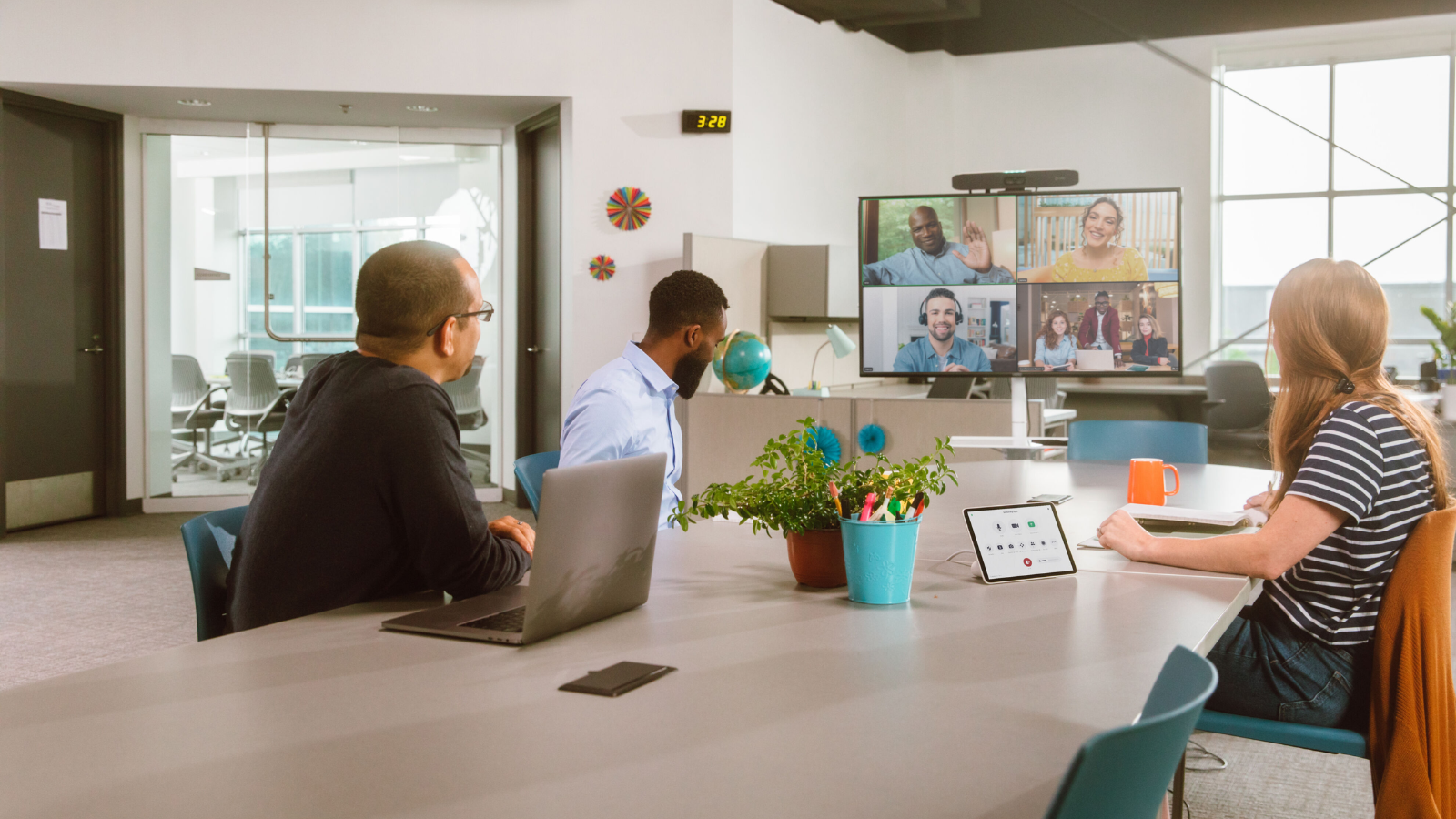
Hybrid work is here to stay. There are precious few businesses in 2023 with illusions of returning wholesale to pre-pandemic work processes, so the conversation turns to how organizations can enable the most productive, collaborative and fulfilling environments for employees and leaders, whether remote or on-premises.
One such solution is immersive collaboration. While immersive collaboration technology can span everything from workflow productivity tools to virtual reality hardware, the underlying purpose is to bridge the gap between remote and on-premises working — to recreate the connection of in-office collaboration, regardless of where workers are based.
Although exciting technology already exists within the immersive collaboration space, from Zoom's Avatar feature to Webex's Spatial Audio, we have only scratched the surface of its possibilities.
With our latest Round Table subject, “Immersive Collaboration” we spoke with experts and executives from Zoom and Webex by Cisco about the latest trends in immersive collaboration technology, the challenges of implementing immersive collaborative solutions, the most exciting developments in the space, and how immersive collaboration might evolve over the next five years.
What are the latest trends in immersive collaboration technology?

John Beckmann, Group Product Manager, Head of Meetings, Zoom
Beckmann highlighted that immersive collaboration falls along a spectrum, from tools that enhance today’s workflows to high-touch virtual reality technology. This breadth of innovation is important, offering flexibility to adjust to the needs of a hybrid workforce.
"A recent Gallup survey found that more than 50 percent of U.S. adults working remote-capable jobs utilize a hybrid style — and 80 percent of those who can work remotely do so at least some of the time," Beckmann said. "Today’s workforce is hybrid and distributed, and with employers looking for ways to engage employees, immersive technologies offer a range of solutions that go beyond the fundamentals of communication."
"Our employees love to use the Avatar feature while eating, to get a quick break from being on camera, or simply to inject a spark of fun into a meeting. On the high-touch side, we’re working with Meta to help employees connect in virtual reality through Zoom with our Horizon Workrooms integration."
Chris Rowen, VP of Engineering, Webex Collaboration AI
Rowen argued that immersive collaboration tech is essential to making those workers uncertain about permanent hybrid work more comfortable. He noted:
To make hybrid work, we want great experiences whether they are in the office or remote. The office environment and remote environments should encourage rich collaboration and community-building experiences that people flock to – making the office a magnet, not a mandate. This starts by creating a more immersive and intimate connection between people through advanced audio and video technology."
Rowen cites Webex's Spatial Audio as an example of his company's available immersive collaboration technology. It provides immersive aural cues that guide employee attention to the person who is speaking. "In a meeting," Rowen expanded, "all participants hear the person’s voice coming from the loudspeaker nearest their image on the screen so everyone can understand the flow of the conversation in dynamic meetings and create a more natural experience."
Rowen added that Webex research suggests that, in the future, 98 percent of meetings will have at least one virtual attendee, necessitating the need for employees to "have a stellar, seamless video meeting experience whether they’re at home or in a conference room."
What challenges do companies face when implementing immersive collaboration solutions?

Chris Rowen, VP of Engineering, Webex Collaboration AI
Rowen returned to his fundamental point that for hybrid work to succeed, employees and leaders need fulfilling human-to-human connections and experiences. "Whether in-person or virtual, these experiences must be familiar, frictionless, consistent, and non-fatiguing," he said.
"Business leaders will need to address the cultural, spatial and technological changes they can make to create a more inclusive, flexible, and collaborative workplace. Implementing seamless, secure technology — in the office and remotely — that dissolves the distance between people will be essential to ensure employee happiness and empower collaboration."